



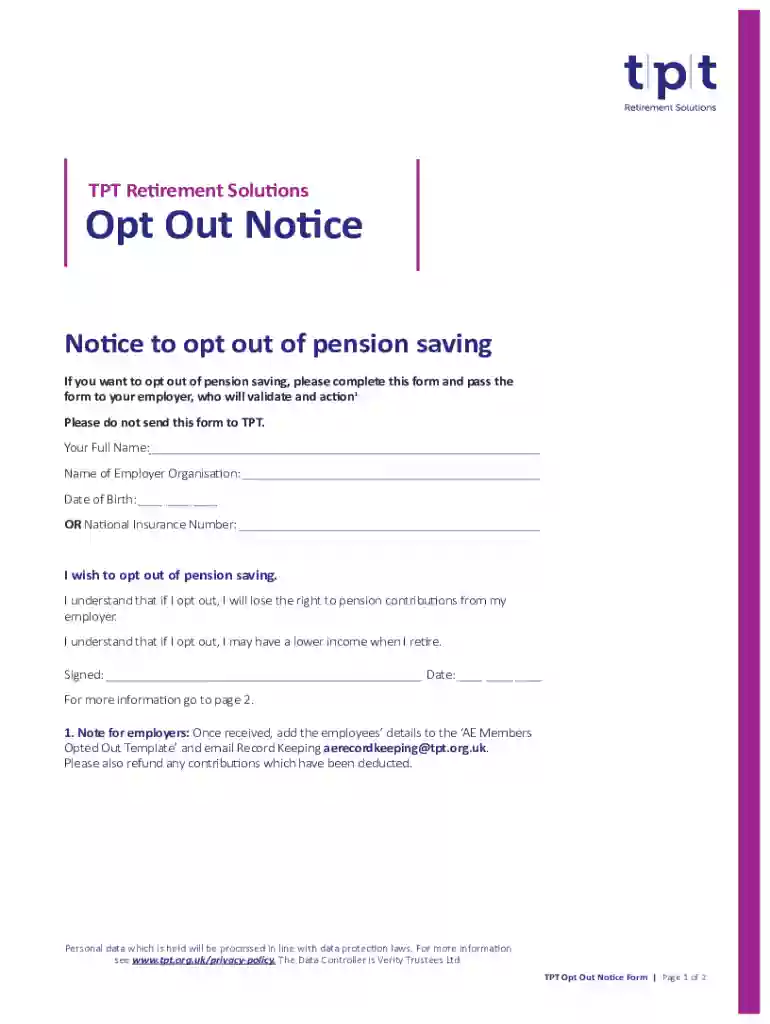
01. Edit your pension opt out form template online
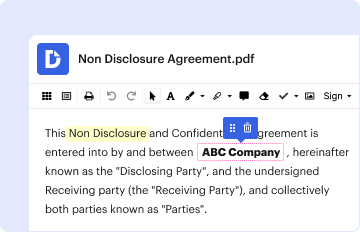
Type text, add images, blackout confidential details, add comments, highlights and more.

Type text, add images, blackout confidential details, add comments, highlights and more.
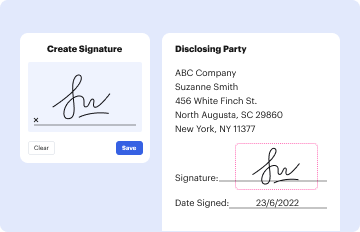
Draw your signature, type it, upload its image, or use your mobile device as a signature pad.
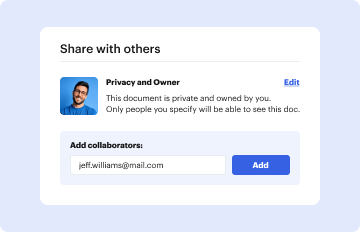
Send sample letter to opt out of pension scheme via email, link, or fax. You can also download it, export it or print it out.
The UK opt out pension form is a formal document used by employees to decline participation in a workplace pension scheme. By submitting this form, individuals indicate their choice to not contribute to a pension plan that is typically set up by their employer. Understanding the implications of opting out is critical, as it can affect long-term financial security.
Opting out may seem attractive for immediate financial gains, but it is essential to consider the long-term impact on retirement savings.
Gather Necessary Information: Before filling out the form, ensure you have your personal and employment details readily available.
Request the Form: Obtain the opt out pension form from your employer or the pension provider. Many companies provide this electronically for ease of access.
Fill Out the Form: Complete all required fields accurately. This typically includes:
Review for Accuracy: Double-check filled information to avoid errors that could delay the opt-out process.
Submit the Form: Send it back to the designated department in your company, generally the HR or payroll division. Confirm with a supervisor or HR representative that it has been received.
Confirmation: After submission, request a confirmation of opt-out status for your records.
Legally, the UK opt out pension form enables employees to express their choice voluntarily and ensures that employers comply with employee preferences regarding pension contributions. The Equalities Act and other employment laws protect employees from being coerced into participating in pension schemes. It is crucial that employees understand their rights concerning this opt-out process.
Using the UK pension opt out form can arise in various scenarios. For instance, a young employee in their early twenties may choose to maximize current disposable income rather than contribute to a pension scheme. Another situation could involve an individual nearing retirement who finds the contributions unfeasible given their financial situation.
Such examples illustrate the flexibility that the form provides, enabling individuals to make financial decisions based on their current needs and future objectives.
The UK pension opt-out form is typically utilized by various employee demographics within an organization, including:
Recognizing these patterns can help organizations provide better financial guidance and support for employees navigating pension decisions.


We've got more versions of the pension opt out form template form. Select the right pension opt out form template version from the list and start editing it straight away!
At DocHub, your data security is our priority. We follow HIPAA, SOC2, GDPR, and other standards, so you can work on your documents with confidence.
An agreement between the United States and the United Kingdom (U.K.) improves Social. Security protection for people who work or have worked in both countries.
Once you have been automatically enrolled, you will need to obtain an opt-out form from the pension scheme provider, complete it and return it to the
Mar 16, 2021 Eligible drivers in the UK also will automatically be enrolled into a pension plan with contributions from Uber.


