




01. Edit your form 5500 online
Type text, add images, blackout confidential details, add comments, highlights and more.

Type text, add images, blackout confidential details, add comments, highlights and more.

Draw your signature, type it, upload its image, or use your mobile device as a signature pad.

Send form 5500 annual via email, link, or fax. You can also download it, export it or print it out.
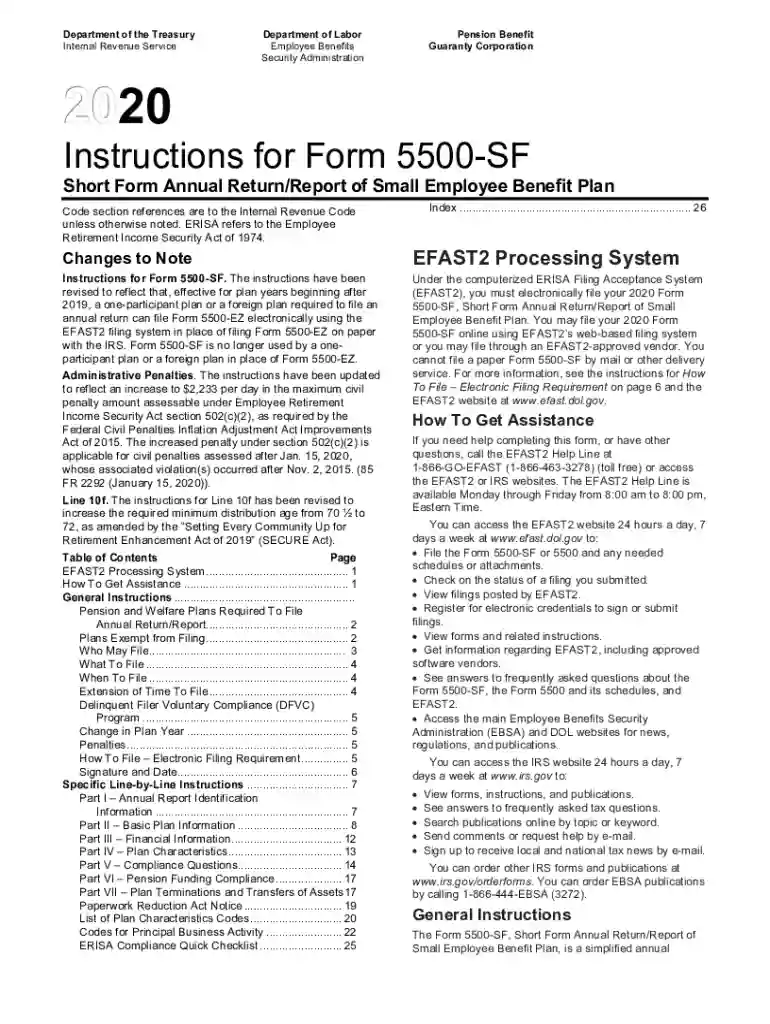
The IRS Form 5500 Plan is an essential annual report required for employee benefit plans, including pension and welfare benefits. These forms are mandated by the Employee Retirement Income Security Act (ERISA) and are used to ensure compliance with regulations and to disclose crucial financial and operational details of the plans. They serve as a key document for the Department of Labor, the Internal Revenue Service, and the Pension Benefit Guaranty Corporation to monitor and enforce compliance. The form acts as a transparency tool that allows regulators and plan participants to understand the financial health and management of employer-sponsored benefit plans.
Completing the IRS Form 5500 involves several critical components that must be accurately detailed to comply with ERISA requirements:
To determine if a plan needs to file the IRS Form 5500, several factors must be considered:


The legal standing of Form 5500 is rooted in its role in monitoring ERISA compliance and safeguarding participants' retirement benefits. Non-compliance or inaccuracies can lead to legal scrutiny and penalties. Therefore, employers are legally obligated to ensure the details provided are current and truthful. This form acts as a safeguard for participant interests, allowing for accountability and oversight over retirement and health benefits.
Typically, Form 5500 must be submitted by the last day of the seventh month following the end of the plan year. For a calendar year plan, this deadline is July 31. Extensions to file can be obtained through Form 5558, providing an additional two and a half months. Adhering to these deadlines is critical to avoid hefty penalties for late filing.
Significant financial penalties can accrue for non-compliance, ranging from delayed submissions to incomplete or incorrect forms. The IRS may impose penalties up to $250 per day, with a maximum of $150,000 per annual report if non-compliance issues are not corrected in a timely manner. Therefore, precision and timeliness are of immense importance.
The IRS provides detailed guidelines for the accurate completion and submission of Form 5500. Submission must be done electronically through the EFAST2 system. This platform not only facilitates submission but also ensures compliance with mandatory electronic filing requirements. The system requires specific software or online tools to upload and manage submissions effectively.
Form 5500 can be prepared using a variety of software tools and platforms that are compatible with the EFAST2 electronic filing system. Major accounting and business software like QuickBooks and others offer features that help prepare the necessary financial records intended for this form. These integrated tools assist in data collection, compilation, and validation, streamlining the filing process for businesses and plan administrators.
We've got more versions of the form 5500 form. Select the right form 5500 version from the list and start editing it straight away!
At DocHub, your data security is our priority. We follow HIPAA, SOC2, GDPR, and other standards, so you can work on your documents with confidence.
Apr 24, 2026 File Form 5500 to report information on the qualification of the plan, its financial condition, investments and the operations of the plan.Read more
Aug 5, 2025 The requirement to file a Form 5500, Annual Return/Report of Employee Benefit Plan, applies to a broad range of retirement plans, but not all.Read more


