






Definition & Meaning
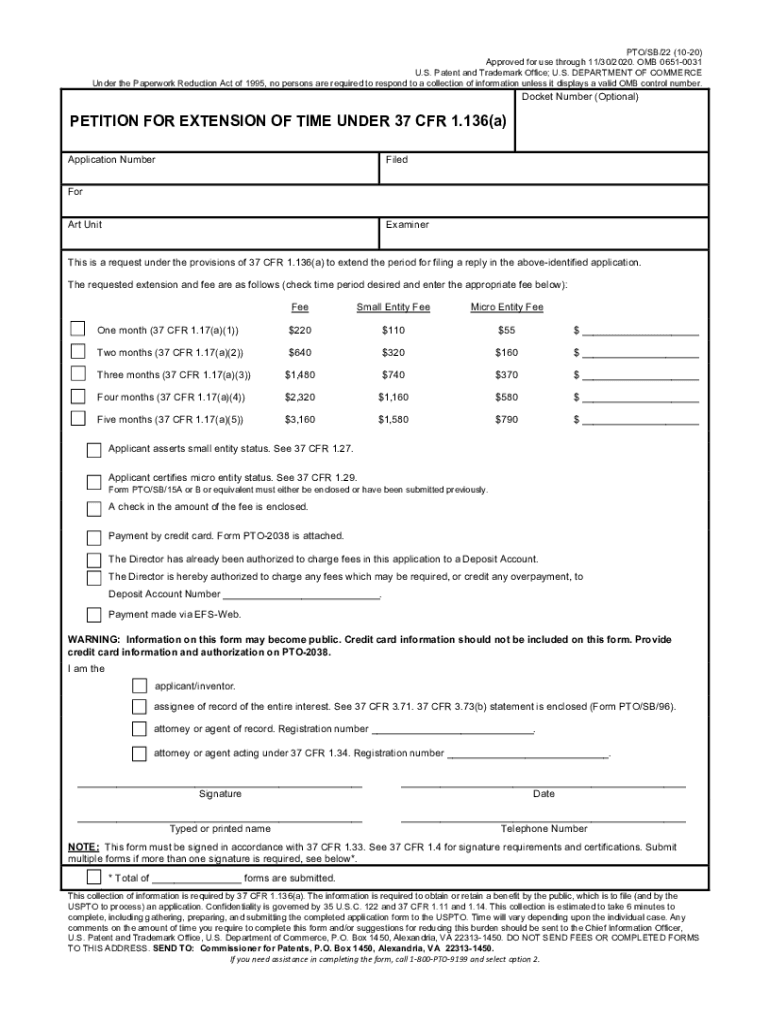
"Petition time" refers to the structured period allotted for requesting an extension concerning certain legal or administrative processes, particularly within the field of patent applications under 37 CFR 1.136(a). The petition typically involves submitting a formal document—such as the PTO/SB/22 form—to request additional time for filing a reply to a patent office action. This procedure is essential for applicants who require more time to adequately prepare their response. Understanding petition time is crucial for ensuring compliance with procedural requirements and safeguarding application rights.
How to Use the Petition Time
Using the petition time involves a clear understanding of the applicable procedures. Typically, a petitioner must first identify whether their specific situation qualifies for a time extension under governing rules, such as 37 CFR 1.136(a). Once eligibility is confirmed, the next step usually involves drafting and submitting the appropriate form, like the PTO/SB/22, accompanied by the requisite fee if applicable. It's essential to remain aware of deadlines and ensure that the submission is complete with all necessary certifications regarding entity status and privacy considerations. Timely and accurate completion of the form is vital to avoid potential filing penalties.
Steps to Complete the Petition Time
-
Review Eligibility Requirements: Before initiating a petition request, applicants must verify that their circumstances justify an extension. This involves understanding the specific criteria outlined under the governing body, such as the US Patent and Trademark Office.
-
Prepare Necessary Documentation: Gather all necessary forms, including the primary extension request document and any supporting materials. This may involve certifications about the entity status and privacy compliance.
-
Complete the Petition Form: Carefully fill out each section of the form, ensuring that all fields are accurately completed. Include all necessary information regarding the extension period being requested.
-
Calculate and Pay Fees: Calculate the appropriate fee based on the extension period requested. Payment can often be completed through various methods, ensuring that it aligns with provided guidelines.
-
Submit the Petition: File the completed form through the designated submission method, whether online or by mail, ensuring that it meets all protocol requirements.
-
Monitor Status: After submission, track the status of your petition time request to ensure that it is progressing correctly. Respond promptly to any requests for additional information.
Key Elements of the Petition Time
-
Form Identification: The PTO/SB/22 form is specifically designed for filing extension requests. Ensuring you use the correct form is vital for complying with procedural norms.
-
Fee Structure: Understanding the fee structure for different periods is key, as extensions of varying lengths may incur different costs.
-
Privacy Information: The form involves collecting personal data; knowing the privacy implications and how data will be used is important for compliance with the Privacy Act.
Legal Use of the Petition Time
Petition time is legally utilized to ensure that applicants have sufficient opportunity to respond to patent office actions while maintaining procedural integrity. It requires adherence to specific regulations and includes the necessary certifications that establish the basis of the extension request. Failure to comply with legal standards can result in dismissal or denial of the extension request. Consequently, it is crucial for petitioners to fully understand the legal framework governing petition time to maintain application validity.
Filing Deadlines / Important Dates
Adhering to filing deadlines is critical when managing petition time. Each stage of the process, from the initial request to final submission, is bound by specific timeframes. Missing a deadline can result in missed opportunities or penalty fees. Applicants must be vigilant about keeping track of dates associated with their petition to avoid non-compliance.
State-Specific Rules for the Petition Time
While the form and process are generally applicable across the United States, certain states may have specific regulations or interpretations affecting the petition time process. For instance, additional paperwork or certifications might be required in some states. It is advisable for applicants to review any state-specific requirements to ensure full compliance and avoid unexpected hurdles.
Software Compatibility
For those handling their tax or legal tasks digitally, understanding software compatibility with petition time forms is important. Platforms like TurboTax and QuickBooks may offer features to simplify the petition process, such as automated form completion or integrated fee calculators. Leveraging compatible software can enhance efficiency and accuracy in filing your petition.
Examples of Using the Petition Time
One common scenario involves a patent applicant who receives an office action from the USPTO requiring a detailed reply. If more time is needed to draft a thorough response, the applicant would use the petition time to formally request an extension. Another example might be a business facing tax filing deadlines, wherein timely petition submission can alleviate the pressure by extending the time available to gather necessary documents and prepare a complete response.
Who Typically Uses the Petition Time
Petition time is predominantly used by individuals, businesses, and entities involved in patent applications or seeking regulatory extensions. This could include inventors needing more time for comprehensive responses to patent queries or corporations requiring additional processing time for tax-related submissions. Understanding who benefits from the petition process helps in identifying cases where filing a petition is advantageous.


Penalties for Non-Compliance
Failing to adhere to petition time regulations can result in significant penalties, such as the loss of application rights, financial fines, or other legal repercussions. It underscores the importance of precision and conformity within the petition process. Petitioners are advised to thoroughly check all submitted documentation and processes to mitigate the risk of non-compliance penalties.