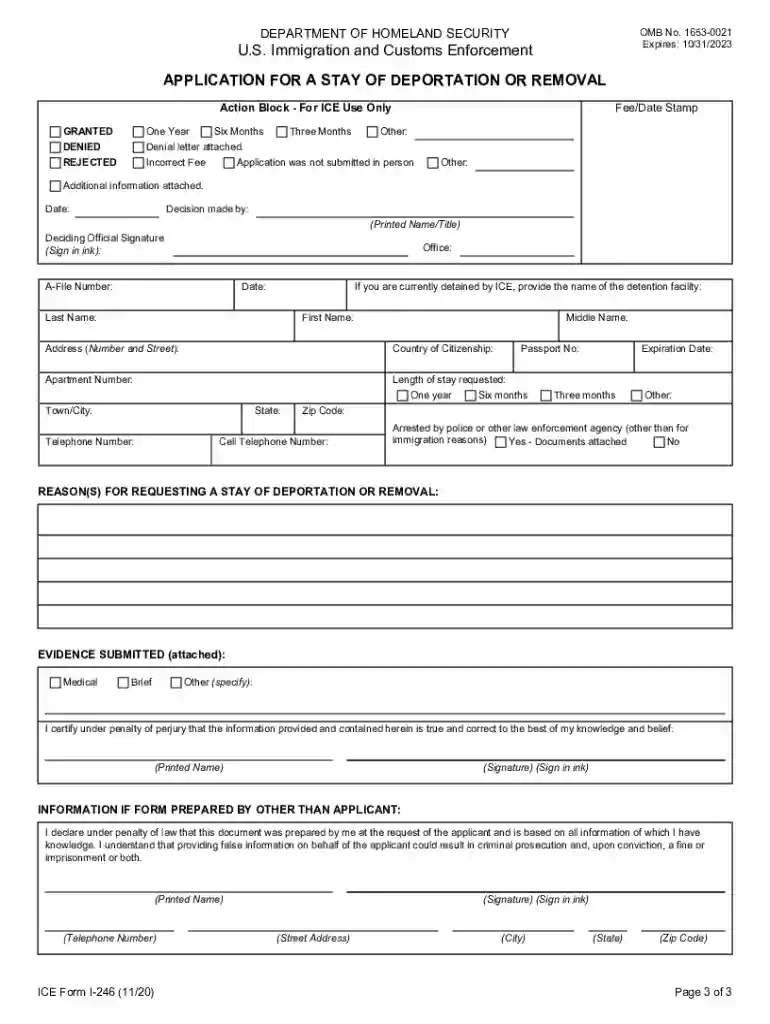
Definition and Purpose of the I-246 Form
The I-246 form, officially known as the "Application for Stay of Removal," is primarily used by individuals who wish to temporarily halt their deportation or removal proceedings from the United States. This form is crucial for individuals currently facing deportation who can demonstrate compelling reasons for their request. It provides applicants an opportunity to present their case for why they should be allowed to remain in the U.S. temporarily, particularly when they warrant consideration for broader immigration relief or are undergoing legal processes that may affect their status.
Key Purposes of the I-246 Form
- Stay of Deportation: The primary function is to request a stay of deportation, allowing individuals to remain in the U.S. while their cases are considered.
- Eligibility for Relief: It enables applicants to make their cases for potential relief from removal based on hardship, public interest, or significant family ties.
- Compliance with U.S. Law: Filing this form ensures that individuals are taking a legal approach to their immigration status, showcasing their willingness to comply with U.S. immigration laws.
Steps to Complete the I-246
Completing the I-246 form requires careful attention to detail and adherence to specific instructions provided by USCIS. Applicants must ensure all required information is accurately filled out to avoid delays or potential denial of their request.
Step-by-Step Instructions
- Obtain the Form: Download the I-246 form from the USCIS website or acquire it at a local immigration office.
- Fill Out Personal Information: Include complete details such as name, date of birth, nationality, and A-number (if applicable).
- Provide Information About Your Situation:
- Deportation Details: Explain your current deportation proceedings and basis for the request.
- Compelling Circumstances: Clearly state the reasons for seeking a stay, citing any pertinent personal or family circumstances.
- Gather Supporting Documentation: Attach all required documents, including any evidence supporting your claims, such as proof of hardship or family statements.
- Review Your Application: Double-check for completeness and accuracy before submission.
- Submit the Form: Send the completed I-246 form and all accompanying documents to the designated address provided by USCIS.
Required Documents for the I-246
Submitting the I-246 form necessitates multiple supporting documents to substantiate your claims and enhance your chances of approval. Failure to include the necessary documents can lead to delays or denial of the application.
Essential Supporting Documents
- Personal Identification: Copies of passports or identification cards that verify identity.
- Notice of Deportation/Removal: A copy of any documents received as part of your deportation process.
- Evidence of Hardship: Documents demonstrating the impact of deportation on your life, such as medical records, financial statements, or affidavits.
- Family Ties: Proof of family relationships in the U.S., such as birth certificates, marriage licenses, or custody agreements.
Legal Use of the I-246 Form
The I-246 form must be utilized within the guidelines set forth by U.S. immigration law. Legally submitting this form allows individuals under removal proceedings to actively participate in their immigration process.
Legal Framework and Considerations
- Statutory Basis: The I-246 is grounded in the Immigration and Nationality Act, providing the legal basis for requesting stays of removal.
- Legal Rights: Applicants have the right to contest their removal and present their case through the I-246 form before immigration authorities.
- Representation: Individuals may seek legal counsel to assist with the completion and submission of the I-246 form, enhancing their chances of success through expert guidance.
Frequently Encountered Scenarios with the I-246 Form
Recognizing the varied contexts in which the I-246 form is applied helps potential applicants understand its use and implications. Various scenarios illustrate how individuals may find the I-246 relevant to their circumstances.
Common Use Cases
- Family Unity: An individual facing deportation while having strong family ties to U.S. citizens or lawful permanent residents may file the I-246 to argue for the need to remain for family support.
- Health Considerations: Individuals with significant health issues that would make deportation detrimental may utilize the I-246 to seek a stay based on medical grounds.
- Ongoing Legal Proceedings: If an applicant is involved in another immigration process, such as an asylum claim, they may apply for a stay to prevent deportation until a decision is made.
Important Terms Related to the I-246
Understanding the terminology associated with the I-246 can provide clarity on the form’s implications and the immigration process it engages with.
Key Terms
- Stay of Removal: A temporary suspension of deportation proceedings, granting individuals time to remain in the U.S. while their case is evaluated.
- Removal Proceedings: The legal process that determines whether a person can be removed from the U.S. due to immigration violations.
- Compelling Circumstances: Significant personal situations or factors that justify the need for a stay of removal, often highlighted in the I-246 application.
Filing Deadlines for the I-246
Timely submission of the I-246 form is essential for maintaining legal status and the possibility of relief from deportation. Awareness of applicable deadlines ensures compliance with immigration regulations.
Critical Filing Information
- Immediate Submission: The I-246 should be submitted as soon as you receive a notice of deportation to maximize your chances for approval.
- Ongoing Proceedings: If further legal matters are pending or have deadlines that coincide with the submission, remain alert to these dates to ensure proper timing of your request.
- No Late Filings: Failure to submit within the required timeframe can result in automatic denial of the stay request, making timely action paramount.