






Definition & Meaning
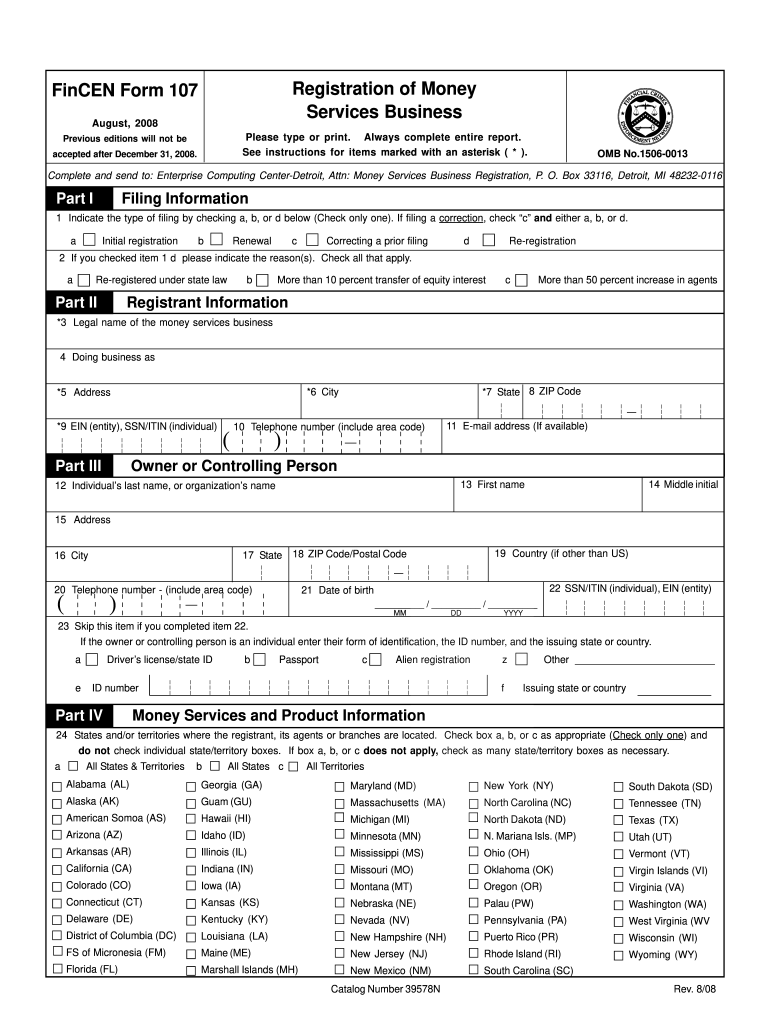
FinCEN Form 107, known formally as the "Registration of Money Services Business," serves as a critical document for identifying and evaluating money services businesses (MSBs) operating within the United States. As part of the regulatory framework set by the Financial Crimes Enforcement Network (FinCEN), this form is crucial for maintaining compliance with the Bank Secrecy Act. By registering with FinCEN, MSBs affirm their commitment to monitoring and preventing financial crimes such as money laundering or terrorist financing.
How to Use the FinCEN Form 107
Navigating the proper use of FinCEN Form 107 is essential for MSBs. This form must be filled out accurately and submitted to the Enterprise Computing Center in Detroit. It outlines the specific details required from MSBs, such as identifying information about the business and its owners, the nature of the financial services offered, and any changes in registration status. The form is used both for initial registration and for subsequent updates or corrections to existing registrations.
- Initial Registration: Newly established MSBs must complete the form to officially register with FinCEN. This is a foundational step before beginning operations.
- Renewal: MSBs are required to renew their registration every two years, ensuring that all information remains current.
- Correction or Re-registration: If there are any changes in the business's details, such as ownership or operational scope, an updated form must be filed.
Steps to Complete the FinCEN Form 107
Completing FinCEN Form 107 involves several key steps:
- Obtain the Form: Access the form via the official FinCEN website or request a paper copy through the relevant channels.
- Provide Business Details: Enter basic information about the business, including its name, address, and contact information.
- Detail Ownership Structure: Include details about the business's owners and managers, verifying their identities and roles.
- Specify Business Activities: Clearly outline the types of financial services the MSB provides, such as currency exchange or check cashing.
- Submit the Form: Once completed, the form must be submitted to the Enterprise Computing Center in Detroit within the required deadlines.
Who Typically Uses the FinCEN Form 107
The primary users of FinCEN Form 107 are businesses classified as MSBs. These can include:
- Currency Dealers and Exchangers
- Check Cashers
- Issuers of Traveler's Checks, Money Orders, and Stored Value
- Money Transmitters
- U.S. Postal Service Agents when acting as MSBs
Each of these entities must comply with the registration and reporting requirements to prevent and detect money laundering and other financial crimes.


Legal Use of the FinCEN Form 107
The legal implications of FinCEN Form 107 are significant, as they ensure that MSBs are monitored under the frameworks of U.S. law. Compliance with the form:
- Supports government efforts in tracking illicit financial activities.
- Aids in the overall prevention of money laundering and terrorist financing.
- Guarantees that MSBs operate within the legal and regulatory boundaries established by the Bank Secrecy Act.
Failure to complete or update the form accurately can result in penalties and legal action against the business.
Key Elements of the FinCEN Form 107
The FinCEN Form 107 requires several vital elements that help appropriately classify an MSB. These include:
- Comprehensive business information: Legal name, address, and nature of operations.
- Ownership and management details: Names, addresses, and Social Security Numbers (SSN) or Taxpayer Identification Numbers (TIN) for key personnel.
- Financial activity disclosure: The specific financial services offered and the geographical scope of service.
Each section must be completed with precise attention to detail to uphold accuracy and compliance.
Required Documents
When submitting FinCEN Form 107, MSBs may need to include various documents to support their registration, such as:
- Proof of legal formation, like articles of incorporation.
- Identification documents for owners and key stakeholders.
- Previous versions of the form for renewals or corrections.
- Any additional state-specific documentation required by local regulations.
The submission of thorough documentation ensures the accuracy and completeness of the registration process.
Penalties for Non-Compliance
Non-compliance with the requirements outlined by FinCEN for MSBs can lead to severe consequences. Penalties might include:
- Fines and financial penalties for failing to register or renew on time.
- Potential criminal charges for knowingly omitting or falsifying information.
- Suspension or revocation of business licenses, prohibiting further operations.
Therefore, adhering to the regulatory requirements is critical to maintaining operational legality and avoiding financial or legal repercussions.