


South carolina change order 2026

Get Form
change order form Preview on Page 1

Here's how it works

01. Edit your change order form online
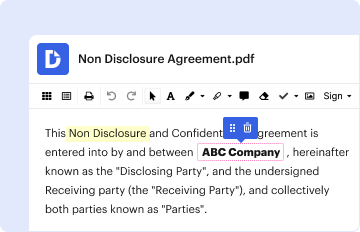
Type text, add images, blackout confidential details, add comments, highlights and more.
02. Sign it in a few clicks
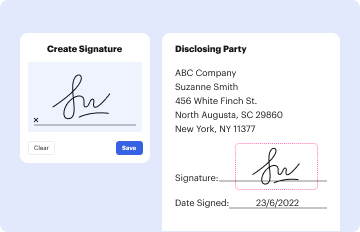
Draw your signature, type it, upload its image, or use your mobile device as a signature pad.
03. Share your form with others
Send pool order form via email, link, or fax. You can also download it, export it or print it out.

How to use or fill out South Carolina Change Order with our platform

Form edit decoration
9.5
Ease of Setup
DocHub User Ratings on G2
9.0
Ease of Use
DocHub User Ratings on G2
  1. Click ‘Get Form’ to open the South Carolina Change Order in the editor.
  2. Begin by entering the date and total number of pages included at the top of the form.
  3. In Section 1, provide your contact information on the left, including your name, company name, address, city, state, zip code, phone number, fax number, and email. On the right side, enter the facility owner's details.
  4. Move to Section 2 and fill in the facility's information: name, address, city, state, zip code. Include pool details such as permit number, county, pool type (A-G), surface area in square feet, volume in gallons, and recirculation flow rate.
  5. In Section 3, describe the project changes. Indicate if costs exceed $5,000 and provide your LLR contractor license number if applicable. Note whether additional plans are attached.
  6. For Section 4, list existing equipment make and model on the left and proposed equipment on the right. Include details for pumps and filters as necessary.
  7. Finally, ensure you sign at the bottom of the form before submission.

Start using our platform today to easily complete your South Carolina Change Order for free!

See more south carolina change order versions

We've got more versions of the south carolina change order form. Select the right south carolina change order version from the list and start editing it straight away!
Versions Form popularity Fillable & printable
2020 4.8 Satisfied (72 Votes)
2002 4.4 Satisfied (339 Votes)
be ready to get more

Complete this form in 5 minutes or less

Get form

Got questions?

We have answers to the most popular questions from our customers. If you can't find an answer to your question, please contact us.
Contact us
In essence, a change order is a formal document that amends the original terms of a contract. It serves as a legally binding modification to the initial agreement between parties, altering various aspects of the project, such as the scope of work, project timeline, or costs.
The typical process for change orders involves submitting a written request that outlines the proposed changes, reviewing the request for its impact on scope, time, and cost, obtaining approvals from relevant parties, and documenting any agreed modifications through formal contracts.
The Process in Construction Step 1: Identification of Need for Change. Step 2: Request Documentation. Step 3: Architect Review and Evaluation. Step 4: Negotiation Between Parties. Step 5: Formal Documentation Using AIA Forms. Step 6: Approval and Signatures. Step 7: Implementation and Log Tracking.
As with a change order, a Construction Change Directive (CCD) amends the construction contract. The difference is that a CCD is enforceable without the contractors agreement. Change orders are agreements between the owner and prime contractor that modify the original construction contract.
6 things every change order should include Project and contact information. Dates of the change. Details of the work. Updated schedule. Cost of the change. Updated contract value. Match the payment application. Get it in writing and save it.

Security and compliance

At DocHub, your data security is our priority. We follow HIPAA, SOC2, GDPR, and other standards, so you can work on your documents with confidence.

Learn more
ccpa2
pci-dss
gdpr-compliance
hipaa
soc-compliance

People also ask

South Carolina Name Change Laws To obtain a legal name change in South Carolina, an applicant must submit a petition to the court. The applicant must be fingerprinted and undergo a background check for criminal convictions or financial obligations. The court may require a hearing. No publication is required.

Related links