




01. Edit your 2848 form 2012 online
Type text, add images, blackout confidential details, add comments, highlights and more.

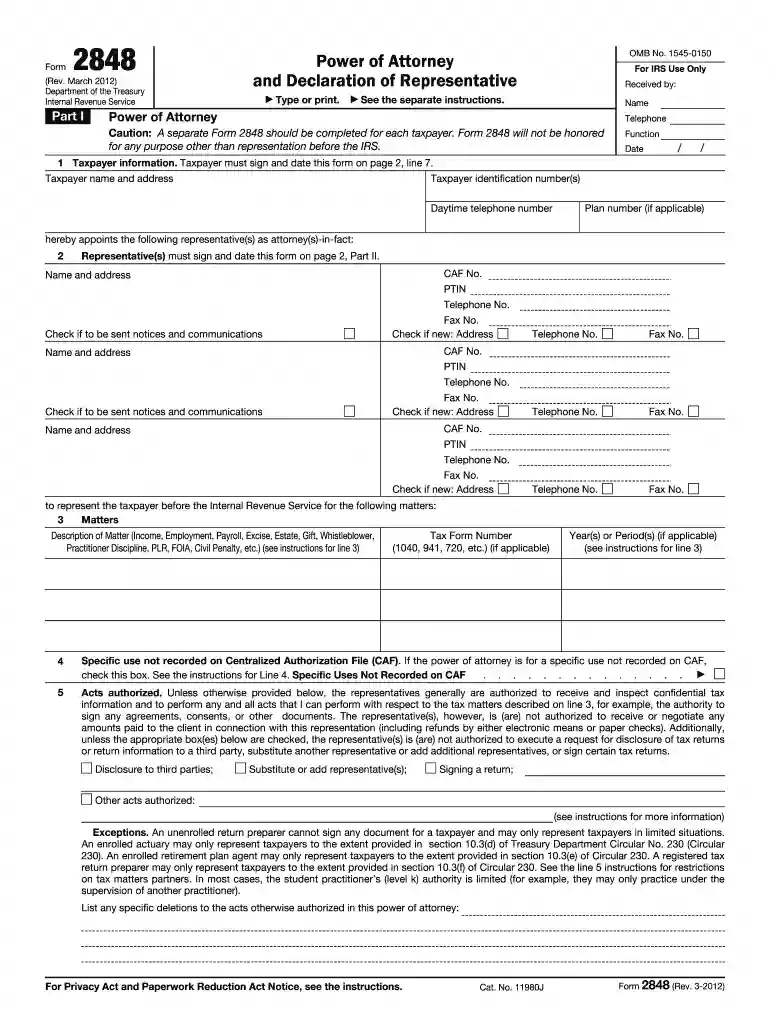
Type text, add images, blackout confidential details, add comments, highlights and more.

Draw your signature, type it, upload its image, or use your mobile device as a signature pad.

Send irs form 2848 power of attorney via email, link, or fax. You can also download it, export it or print it out.
Form 2848 is known as the Power of Attorney and Declaration of Representative. It is used by taxpayers in the United States to appoint one or more individuals to represent them before the Internal Revenue Service (IRS). This form allows designated representatives to perform specific acts on behalf of the taxpayer, including the ability to receive confidential tax information, perform analyses, and engage in tax-related discussions with the IRS. By utilizing this form, taxpayers ensure that their affairs are handled in a professional manner, with representatives who are authorized to act in their best interest.
Using Form 2848 requires careful completion and submission to the IRS. The taxpayer must specify the extent of authority granted to their representative, which can include specific tax years, types of filings, and actions allowed. Once filled out, the form can be submitted through various channels, depending on the urgency and nature of the representation needed.
Form 2848 is primarily utilized by individuals who anticipate the need for external representation in dealings with the IRS. This includes:


Understanding specific terminology is crucial for accurately completing and using Form 2848. Important terms include:
The authorized representative, once appointed through Form 2848, must adhere to legal and ethical standards. This involves accurately representing the taxpayer's interests, maintaining confidentiality, and not exceeding the powers granted by the form. Misuse or overstepping of boundaries could result in penalties or revocations.
Several critical sections within the form define its comprehensiveness and ensure it is processed correctly by the IRS:
The IRS has specific guidelines that dictate how Form 2848 should be completed and submitted. These include:
Understanding these guidelines ensures that the Form 2848 is completed according to federal tax laws, preventing any unnecessary delays in processing.
We've got more versions of the 2848 form 2012 form. Select the right 2848 form 2012 version from the list and start editing it straight away!
At DocHub, your data security is our priority. We follow HIPAA, SOC2, GDPR, and other standards, so you can work on your documents with confidence.




Part I. Power of Attorney. Caution: A separate Form 2848 should be completed for each taxpayer. Form 2848 will not be honored.Read more
Dec 6, 2017 authorization to Form 1045. For this purpose, you can use Form 2848,. Power of Attorney and Declaration of. Representative. Disallowance ofRead more


