






Definition and Purpose of the Financial Declaration Form in Indiana
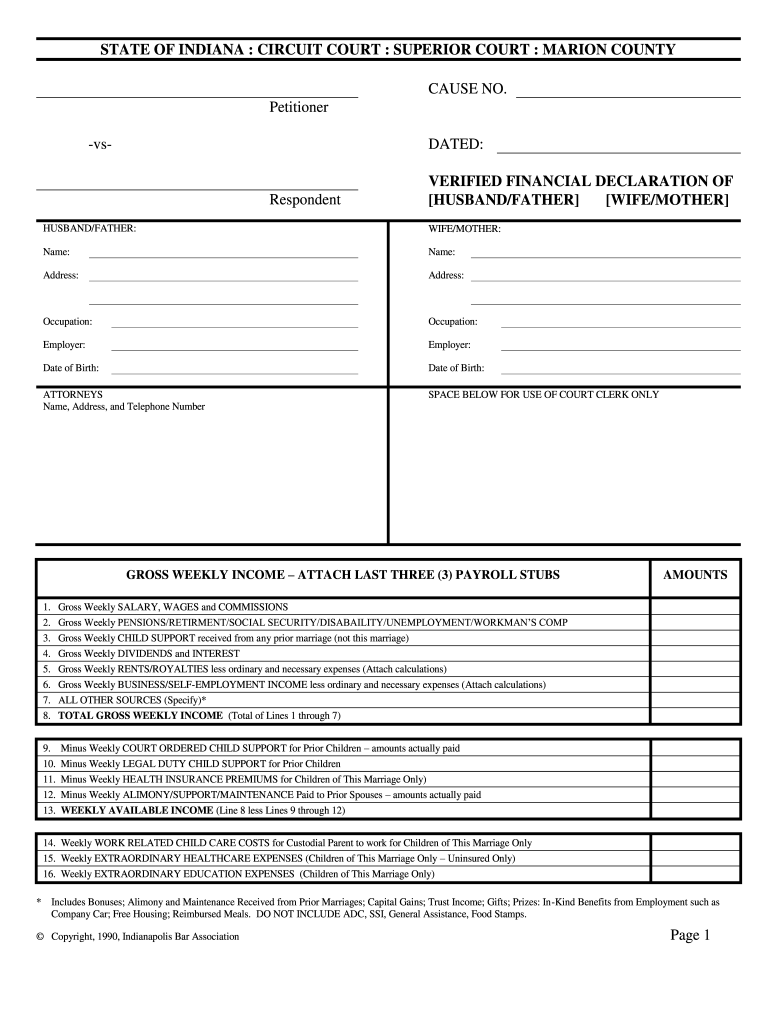
The financial declaration form in Indiana is a critical document used in legal proceedings, particularly in divorce and custody cases. This form serves to disclose the complete financial picture of individuals involved, including details about income, expenses, assets, and liabilities. By requiring both parties to provide a comprehensive account of their financial situations, the form aids the court in making informed decisions regarding child support, spousal support (alimony), and the distribution of marital assets.
- The form is often used in Marion County, Indiana, and is specifically tailored for use in Circuit and Superior Courts.
- It aims to promote transparency and fairness in financial matters related to divorce settlements and custody arrangements.
Steps to Complete the Financial Declaration Form in Indiana
Filling out the financial declaration form correctly is essential to ensure compliance with court requirements. Follow these steps to complete the form:
- Gather Financial Information: Collect all relevant financial documents, including pay stubs, tax returns, bank statements, and records of debts.
- Outline Income: List all sources of income, detailing amounts from employment, self-employment, investments, and any other financial resources.
- Detail Monthly Expenses: Break down monthly living expenses, categorizing them into necessities such as housing, utilities, food, and transportation.
- List Assets: Provide a thorough inventory of assets, including real estate, vehicles, savings accounts, and any investments.
- Disclose Liabilities: Clearly state all liabilities, including mortgages, loans, credit card debts, and other obligations.
- Complete Signature Section: Ensure that the form is signed and dated by the individual submitting it, which may be necessary for it to be considered valid in court.
Specific attention to detail during completion can prevent future legal complications.
Important Terms Related to the Financial Declaration Form in Indiana
Understanding key terms associated with the financial declaration form is vital for accurate completion and comprehension:
- Expenses: The costs incurred for living necessities or personal obligations, which must be documented in detail.
- Assets: Any valuable property or possessions owned by an individual, such as real estate or vehicles.
- Liabilities: Financial obligations or debts owed to others that must be disclosed on the form.
- Income: All sources of revenue, whether from employment, investments, or other financial avenues.
- Court Compliance: Adherence to the legal requirements surrounding the completion and submission of the form, ensuring it meets court standards.
Familiarity with these terms helps in properly filling out the document and understanding its implications.
Legal Use of the Financial Declaration Form in Indiana
The financial declaration form is not merely an administrative requirement; it holds significant legal weight in Indiana. Here's how it is legally utilized:
- Court Submissions: The form is mandated by the courts in divorce and custody cases, requiring both parties to submit their financial disclosures before proceedings.
- Evidence in Legal Proceedings: The information provided can be used as evidence during hearings to establish fair financial arrangements between parties.
- Enforcement of Orders: Accurate completion enhances the court's ability to enforce financial support orders or settlements subsequently established.
- Protecting Rights: Failing to disclose accurate financial information can lead to legal penalties or unfavorable rulings, making it imperative that individuals take this process seriously.
Engaging with the financial declaration form legally and transparently is crucial for those undergoing legal actions concerning family law.
Key Elements of the Financial Declaration Form in Indiana
To ensure the accuracy and legality of the financial declaration form, several key elements must be included:
- Personal Identification Information: Full name, address, and contact information of the individual filling out the form.
- Income Section: A detailed account of all income sources, including wages, bonuses, and passive income.
- Expense Breakdown: Categorization of monthly expenses, looking at both fixed and variable costs.
- Assets Listing: Documentation of all assets, including their estimated values and ownership details.
- Liabilities Enumeration: Comprehensive disclosure of all outstanding debts, with associated amounts and creditors.
These components provide a complete financial overview and empower the court to render fair decisions based on the disclosed information.
How to Obtain the Financial Declaration Form in Indiana
Obtaining the financial declaration form is straightforward in Indiana. Follow these methods:
- Online Resources: The form can typically be downloaded from the official Indiana courts website. This provides the latest version and any related instructions.
- Local Courthouses: Physical copies are available at Circuit and Superior Courts across Indiana, including those in Marion County.
- Legal Aid Organizations: Various non-profit legal assistance entities can provide forms and guidance, particularly for individuals who may need support in completing it.
Ensuring you have the correct version of the form is crucial for compliance with legal requirements.
Examples of Using the Financial Declaration Form in Indiana
Understanding how the financial declaration form functions in practice can clarify its importance:
- Divorce Proceedings: In contested divorce cases, both spouses may be required to submit the form to ensure transparency regarding their financial situations.
- Child Support Arrangements: Courts utilize the financial declaration to establish fair child support amounts based on parents' financial capabilities.
- Modification Requests: Individuals seeking to modify existing support orders may need to file an updated financial declaration form to reflect changes in financial status.
- Asset Division Cases: During property settlements, the form provides necessary financial data to facilitate equitable distribution of marital assets.
These examples highlight the practical applications of the form in various legal situations.
Who Typically Uses the Financial Declaration Form in Indiana
The financial declaration form is primarily utilized by individuals involved in legal proceedings concerning family law. Typical users include:
- Divorcing Spouses: Individuals undergoing divorce proceedings must submit the form to provide an overview of their financial situations.
- Custodial Parents: Parents seeking custody may be required to disclose their financial information to assess their ability to support their children.
- Individuals Requesting Modifications: Parties wishing to modify existing child support or alimony obligations will need to provide updated financial disclosures.
Understanding the target audience ensures that the form is completed and submitted appropriately, safeguarding the interests of all parties involved.