




Here's how it works

01. Edit your form online
Type text, add images, blackout confidential details, add comments, highlights and more.

02. Sign it in a few clicks
Draw your signature, type it, upload its image, or use your mobile device as a signature pad.

03. Share your form with others
Send it via email, link, or fax. You can also download it, export it or print it out.
How to use or fill out reflecting entity maine with our platform

- Click ‘Get Form’ to open the reflecting entity maine in the editor.
- Begin by entering your name, address, and ZIP code in box a. This information is essential for identifying the member or recipient.
- In box b, provide your Member/Recipient ID number. This helps link your tax information accurately.
- For box c, input the name, address, and ZIP code of the entity or payer. Ensure this matches official records for accuracy.
- Select the type of entity in box d by checking the appropriate option: Partnership/LLC, S Corporation, or Other.
- Fill in boxes 1 through 4 with the relevant amounts withheld as specified in the instructions. Be meticulous to avoid errors that could affect your tax return.
Start using our platform today to simplify your document editing and form completion process for free!
Fill out reflecting entity maine online
It's free
See more reflecting entity maine versions
We've got more versions of the reflecting entity maine form. Select the right reflecting entity maine version from the list and start editing it straight away!
| Versions | Form popularity | Fillable & printable |
|---|---|---|
| 2024 | 4.1 Satisfied (58 Votes) | |
| 2023 | 4.5 Satisfied (29 Votes) | |
| 2022 | 4.9 Satisfied (46 Votes) | |
| 2021 | 4.8 Satisfied (199 Votes) | |
| 2020 | 4.2 Satisfied (70 Votes) | |
| 2019 | 4.3 Satisfied (38 Votes) | |
| 2018 | 4.4 Satisfied (51 Votes) | |
| 2017 | 4.3 Satisfied (29 Votes) | |
| 2016 | 4.3 Satisfied (182 Votes) | |
| 2012 | 4 Satisfied (23 Votes) |
Got questions?
We have answers to the most popular questions from our customers. If you can't find an answer to your question, please contact us.
Contact us
At what age do you stop paying property tax in Maine?
To be eligible for the program, you must be at least 65 years old or unable to work due to a disability. In addition, all owners must have combined liquid assets of less than $150,000 ($100,000 if a single owner) and combined income of less than $80,000.
What town in Maine has the highest property taxes?
Androscoggin County has the highest property tax rate in the state of Maine. The countys average effective property tax rate is 1.35%. Androscoggin is also home to two of Maines most populous cities in Lewiston and Auburn.
Why did I get a letter from the Department of Revenue?
The IRS sends notices and letters for the following reasons: You have a balance due. The IRS changed your return - You are due a larger or smaller refund The IRS has a question about your tax return. The IRS needs to verify your identity. The IRS needs additional information.
Why am I getting a letter from the Maine Revenue Service?
You will receive written notification from Maine Revenue Services that you have been scheduled for an audit. In this notification, you will be informed about the type of audit, the tax being audited, the periods being audited and will be provided with auditor contact information.
What is the 183 day rule in Maine?
If you maintained a permanent place of abode in Maine, but claim you were domiciled elsewhere and that you were not present in Maine for more than 183 days in the tax year (as is the case with many so-called snowbirds, for example), you should keep adequate records to verify that more than half of the year was spent in
Security and compliance
At DocHub, your data security is our priority. We follow HIPAA, SOC2, GDPR, and other standards, so you can work on your documents with confidence.
Learn more


Related forms

Vtr 467
The document outlines the requirements for maintaining acceptable distance records for audit by the Texas Department of ...
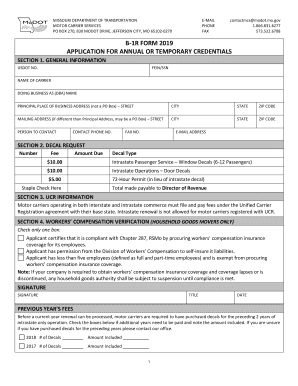
Mo dot form
The document is an application form (B-1R) from the Missouri Department of Transportation for motor carriers seeking ann ...
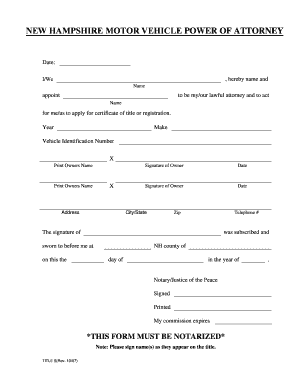
Free New Hampshire Motor Vehicle Power of Attorney Form
The document is a New Hampshire Motor Vehicle Power of Attorney form, which authorizes an individual to act on behalf of ...

Alabama driver abstract state bar form
The document is a request form from the Alabama Law Enforcement Agency for obtaining a Driver Abstract for the State Bar ...
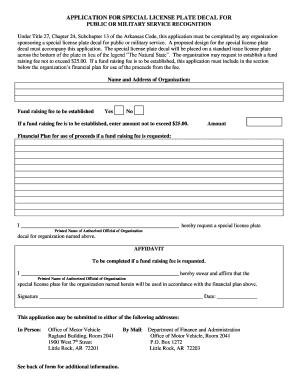
BMW USA: Luxury Sedans, SUVs, Convertibles, Coupes and Wagons
The document outlines the application process for organizations seeking a special license plate decal in Arkansas to rec ...

Arkansas affidavit license
The document is an affidavit for the issuance of a special license plate for Custom Vehicles and Street Rods in Arkansas ...
People also ask
Why would I get a letter from the Massachusetts Department of Revenue?
The Massachusetts DOR has various types of notices and bills that are issued to individuals and businesses if it is determined that additional taxes might be or are owed. Notices and bills ask for and provide information and request payment when necessary.
Why would I be getting a letter from the Department of Treasury?
Your payment may be less than you expected because you owed an overdue debt to a federal or state agency. If that is the case, you should have received a letter explaining what happened. Treasury may withhold money to satisfy an overdue (delinquent) debt.