






Definition and Meaning
The International Fuels Tax Agreement (IFTA) is a tax collection agreement among the contiguous United States and Canadian provinces. It simplifies the reporting of fuel use by motor carriers that operate in more than one jurisdiction. Under IFTA, carriers can use a single fuel tax license, significantly reducing the paperwork and compliance burden. This is particularly beneficial for businesses with fleets traveling across state lines, as it enables centralized tax reporting and administration.
How to Obtain the IFTA License
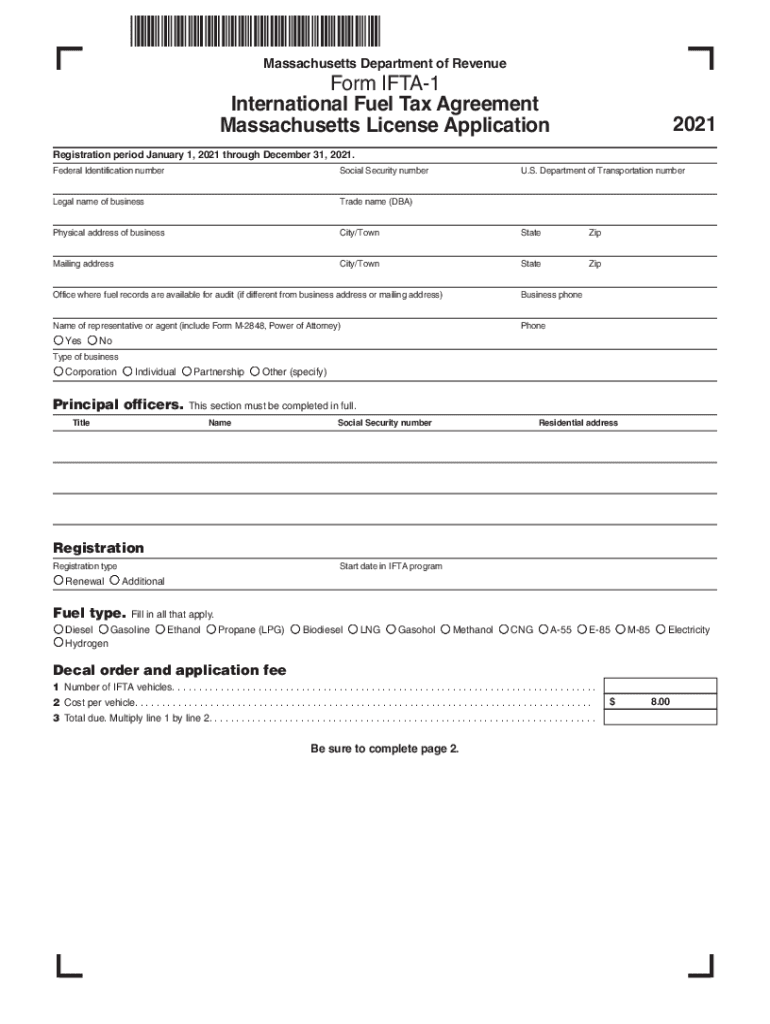
To obtain an IFTA license, carriers must submit a completed application to their base jurisdiction, which is typically where the carrier operates the most business or has its principal place of business. The application requires detailed information, including the carrier's business name, address, and types of operations. Additionally, applicants must pay a licensing fee. Once approved, the carrier receives an IFTA license and decals for each vehicle, which must be displayed to demonstrate compliance.
Steps to Complete the IFTA Application
-
Gather Required Information:
- Business Identification Numbers (like IRS EIN)
- Vehicle details
- Jurisdictions of operation
- Fuel types used
-
Fill Out the Application:
- Provide details about the business, including the legal name, type of operation, and primary contact.
-
Calculate Fees:
- Determine the cost for the license and any additional decals required.
-
Submit the Application:
- Send the completed application to your base jurisdiction, either online or by mail, along with the applicable fee.
-
Receive License and Decals:
- After approval, display the decals on each qualified vehicle.
Important Terms Related to IFTA
- Base Jurisdiction: The member jurisdiction where the carrier is registered.
- Qualified Motor Vehicle: A vehicle used for transportation of persons or property that meets specific weight criteria.
- Taxable Fuel: Includes all motor fuels used in the operation of qualified motor vehicles.
- Jurisdictions: Refers to the states and provinces that participate in the IFTA program.
Legal Use of IFTA
The IFTA license legally authorizes carriers to operate across multiple jurisdictions while reporting all fuel taxes through their base jurisdiction. This provides a legal framework that ensures fair tax distribution based on fuel use. It is crucial for carriers to maintain accurate records of miles traveled and fuel purchased in each jurisdiction to comply with these legal requirements.
Filing Deadlines and Important Dates
Carriers must file quarterly IFTA fuel tax returns to their base jurisdiction. These returns usually coincide with the following filing periods:
- Quarter 1: January to March, due end of April
- Quarter 2: April to June, due end of July
- Quarter 3: July to September, due end of October
- Quarter 4: October to December, due end of January
Filing deadlines may vary slightly by state, so checking specific state deadlines is vital.
Required Documents
When applying for an IFTA license or filing returns, you need:
- Completed IFTA Application Form
- Vehicle title and registration
- Proof of business operation, such as invoices or tax returns
- Fuel purchase receipts and mileage logs for reporting periods
Penalties for Non-Compliance
Failing to comply with IFTA regulations or missing filing deadlines can result in penalties, such as:
- Revocation of the IFTA license
- Late filing penalties
- Additional interest charges on unpaid taxes
- Fines for not displaying vehicle decals
State-by-State Rules for IFTA
While IFTA provides for a standardized interstate fuel tax agreement, each state may have specific rules covering:
- License fee structure
- Decal replacement policies
- Additional state-specific compliance requirements
Carriers must be aware of these local variations to manage their operations effectively within each jurisdiction.