






Definition and Purpose of the PA LS-1
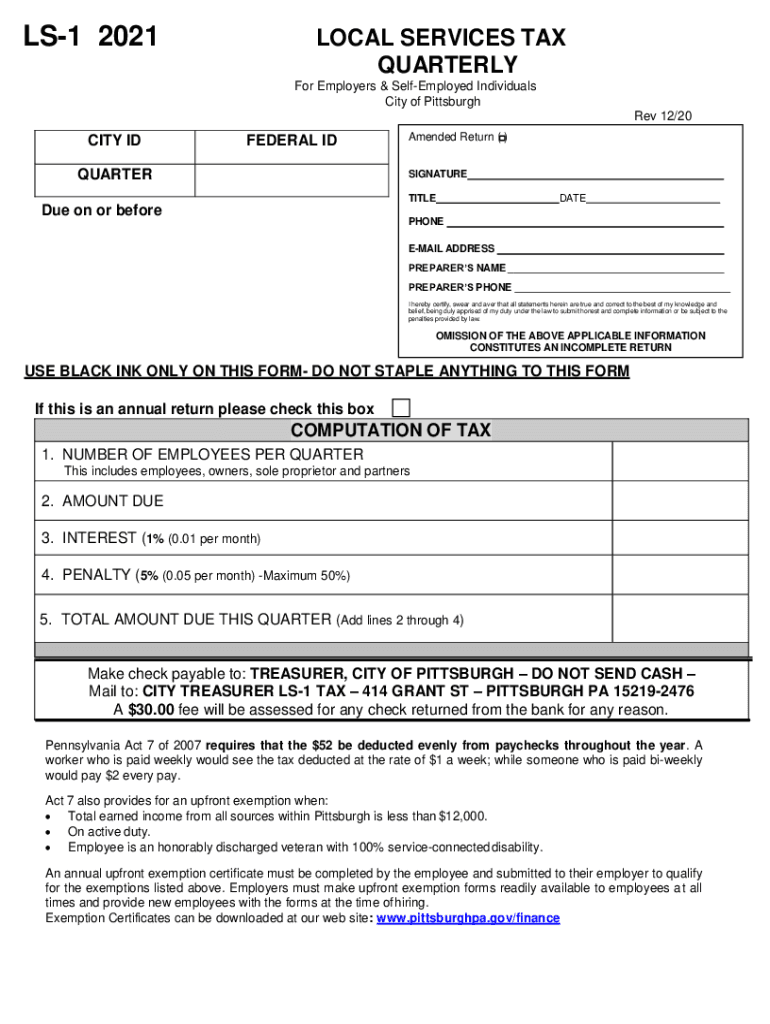
The PA LS-1 is the Local Services Tax (LST) Quarterly Return form used by employers and self-employed individuals within the City of Pittsburgh. This form is part of a requirement to report and remit taxes related to local services funding. The significance of the PA LS-1 lies in its role in helping municipalities manage the collection of a $52 annual tax from individuals working within their jurisdiction. By understanding the PA LS-1, users can ensure compliance with local tax obligations and contribute to municipal services funding, which benefits community infrastructure and facilities.
Using the PA LS-1 in Practice
Employees and employers utilize the PA LS-1 to align with local taxation requirements systematically. Primary actions required when using the form include accurately recording employee data and calculating due taxes. The process involves organizing employee information, calculating the tax based on salaries, and making necessary withholdings for the quarterly submission. The form requires details such as employee name, social security number, and the amount withheld. Employers must ensure that these entries accurately reflect quarterly periods to avoid any discrepancies.
Obtaining the PA LS-1 Form
The PA LS-1 can be sourced through municipal offices or downloaded directly from relevant city websites. Employers and self-employed individuals can access the form online, which provides a convenient method for obtaining the necessary documentation without requiring physical visits to local offices. This availability simplifies the preparatory steps involved in quarterly filings. Upon acquiring the form, users should ensure they are using the most current version to align with any updated municipal regulations.
Step-by-Step Guide to Completing the PA LS-1
Completing the PA LS-1 form requires systematic attention to detail. Here is a detailed step-by-step guide on how to do it:
- Gather Employee Data: Collect essential employee information, including full name, social security number, and salary details for the tax period.
- Calculate Tax Obligations: Calculate the total local services tax due for each employee based on provided earnings, ensuring the correct rate of $52 annually.
- Complete the Form: Fill out all sections of the form accurately, inputting employee details and calculated tax amounts.
- Verify Entries: Double-check the details for accuracy and consistency to prevent submission errors.
- Submit the Form: Choose an appropriate submission method, whether via mail, online, or in-person, ensuring it meets the municipal deadline for submissions.
Importance of Filing the PA LS-1
Filing the PA LS-1 is essential not merely for compliance but to support local government functions funded by the LST. Regular submission allows municipalities to maintain financial stability and improve community services such as road maintenance, emergency services, and public safety. By participating in this system, taxpayers contribute positively to their local community, enabling ongoing infrastructure development and quality service provision.
Typical Users of the PA LS-1
The PA LS-1 is primarily directed at employers with individuals working in the City of Pittsburgh and self-employed persons operating within the same jurisdiction. Business owners across various sectors from retail, hospitality, to professional services are required to submit this form. Self-employed individuals and small business owners form a notable portion of users, given their dual role as both owner and employee within their enterprises.
Legal Framework Surrounding the PA LS-1
The legal guidelines governing the PA LS-1 derive from local tax legislation intended to distribute communal tax responsibilities fairly among individuals benefiting from municipal services. Employers must adhere to outlined requirements to avoid penalties, as non-compliance can result in interest charges and fines. Legal statutes offer an exemption criterion for certain individuals, which include low-income earners and certain student demographics as prescribed by local ordinances.
Key Elements Found in the PA LS-1
Understanding the critical elements within the PA LS-1 can facilitate accurate completion. These elements include:
- Employee Information: Name and social security number ensuring clear identification.
- Tax Computation: The section detailing the calculated local services tax based on earnings.
- Signature: Authorized signatures from the employer or responsible officer to validate the submission.
- Payment Details: Information related to the remittance of collected taxes.
Familiarity with these sections ensures a straightforward filing process, reducing potential errors and supporting organized submissions.
Penalties for Non-Compliance with PA LS-1
Failing to comply with PA LS-1 requirements can lead to significant penalties. Municipal tax departments may impose fines for late submissions or inaccurate filings. Persistent non-compliance could escalate to more severe penalties such as additional interest on unpaid taxes or legal action. To avoid such outcomes, diligence in meeting deadlines and ensuring systematic accuracy is crucial.
Submission Methods: Online, Mail, and In-Person
The PA LS-1 allows for versatile submission methods to accommodate diverse access preferences.
- Online Submission: Utilizes digital platforms for fast, straightforward filing.
- Mail Submission: Involves sending completed hard copies to designated municipal addresses.
- In-Person Submission: Facilitates face-to-face submission at municipal offices, ideal for those requiring personal assistance or immediate confirmation.
This flexibility affords users the opportunity to select the most convenient and reliable method for their situation.