




Here's how it works
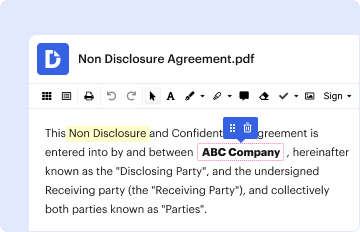
01. Edit your ctgovjud online
Type text, add images, blackout confidential details, add comments, highlights and more.
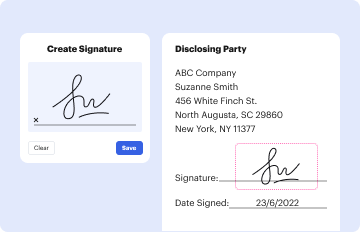
02. Sign it in a few clicks
Draw your signature, type it, upload its image, or use your mobile device as a signature pad.
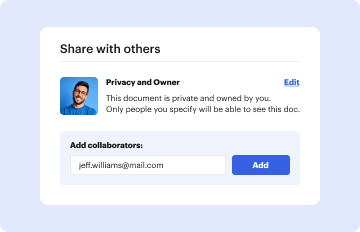
03. Share your form with others
Send ct govjud via email, link, or fax. You can also download it, export it or print it out.
How to use or fill out JD-SC-6 - CT.gov - jud ct with our platform

- Click ‘Get Form’ to open the JD-SC-6 document in the editor.
- Begin by filling in the Supreme Court Docket Number and the Date of Argument at the top of the form. Ensure these details are accurate for proper identification.
- Next, provide your name and address, including zip code. This information is crucial for communication regarding your case.
- Indicate the name of the case and the names of all counsel involved, including titles if applicable. Make sure to include a legible email address as notifications will be sent electronically.
- In the section labeled 'Representing', mark all applicable boxes to clarify your role in the case, such as Appellant or Appellee.
- Once completed, review all entries for accuracy before submitting it to the clerk in the Supreme Court courtroom on the date of argument.
Start using our platform today to fill out your JD-SC-6 form online for free!
Fill out JD-SC-6 - CT.gov - jud ct online
It's free
It's free
See more JD-SC-6 - CT.gov - jud ct versions
We've got more versions of the JD-SC-6 - CT.gov - jud ct form. Select the right JD-SC-6 - CT.gov - jud ct version from the list and start editing it straight away!
Got questions?
We have answers to the most popular questions from our customers. If you can't find an answer to your question, please contact us.
Contact us
What are 5 types of cases that are tried by the judicial branch?
Trial Courts All civil cases (family law, probate, juvenile, and other civil cases); All criminal cases (felonies, misdemeanors, and infractions, like traffic tickets); Small claims cases and appeals of small claims cases; Appeals of civil cases involving $35,000 or less; and.
What does the CT Judicial Branch do?
determining the guilt or innocence of persons accused of breaking the law; resolving disputes involving civil or personal rights; interpreting constitutional provisions of laws enacted by the legislature and deciding what is to be the law of the state when none exists for certain situations.
Can I pay fines online through CT Judicial?
Case Look-up CT Judicial Branch. This section of the website provides users with information about Supreme and Appellate, civil, family, criminal, motor vehicle, housing, and small claims cases.
What types of cases does CT Judicial handle?
Divisions of Superior Court - CT Judicial Branch. The Superior Court hears civil, criminal, family and juvenile matters. Civil Division hears cases in which someone is being sued to protect civil, personal or property rights.
In what type of cases does judicial Power apply?
The judicial Power shall extend to all Cases, in Law and Equity, arising under this Constitution, the Laws of the United States, and Treaties made, or which shall be made, under their Authority;to all Cases affecting Ambassadors, other public Ministers and Consuls;to all Cases of admiralty and maritime Jurisdiction;
Security and compliance
At DocHub, your data security is our priority. We follow HIPAA, SOC2, GDPR, and other standards, so you can work on your documents with confidence.
Learn more


Related forms

Public War, Private Fight - carl army
The document 'Public War, Private Fight? The United States and Private Military Companies' by Deborah C. Kidwell explore ...
Interested parties are advised that the following Cease and Desist Orders were - mvn usace army
Interested parties are advised that the following Cease and Desist Orders were - mvn usace army
The document outlines the Cease & Desist Orders and permits issued by the New Orleans District in March 2004. It details ...

The Professional Bulletin of the Armor Branch, Headquarters
The document is the Professional Bulletin of the Armor Branch, PB 17-11-3, published by the U.S. Army Armor School. It i ...

2nd Battalion, 29th Infantry Regiment
The document outlines the Basic Combatives Course (Level I) conducted by the 2nd Battalion, 29th Infantry Regiment of th ...

June RJ - USAREC - U S Army
The June 2001 issue of the Recruiter Journal highlights various aspects of U.S. Army recruiting, including the establish ...
Recruiter training - US Army Recruiting Command - Army mil
The Recruiter Journal for September-October 2012 covers various topics related to the U.S. Army Recruiting Command, incl ...
Early Mining History: Fort Wainwright and Fort - U S Army Alaska - usarak army
The document provides a comprehensive overview of the early mining history at Fort Wainwright and Fort Greely in Alaska, ...

Laboratory Diagnostic Testing for
The document discusses laboratory diagnostic testing for Borrelia burgdorferi, the causative agent of Lyme disease. It e ...
People also ask
What types of cases do CT courts handle?
Connecticut courts are courts of general jurisdiction, meaning that they handle most criminal matters and a variety of civil matters, including contracts, personal injury cases, divorce (called dissolution of marriage) and other legal disputes.
What happens if you miss jury duty in CT?
The State of Connecticut Centralized Infractions Bureau now allows you to pay infractions online. The link below will take you to the State of Connecticut Judicial Branch to pay your infraction.