




01. Edit your storenumber 2848 online
Type text, add images, blackout confidential details, add comments, highlights and more.

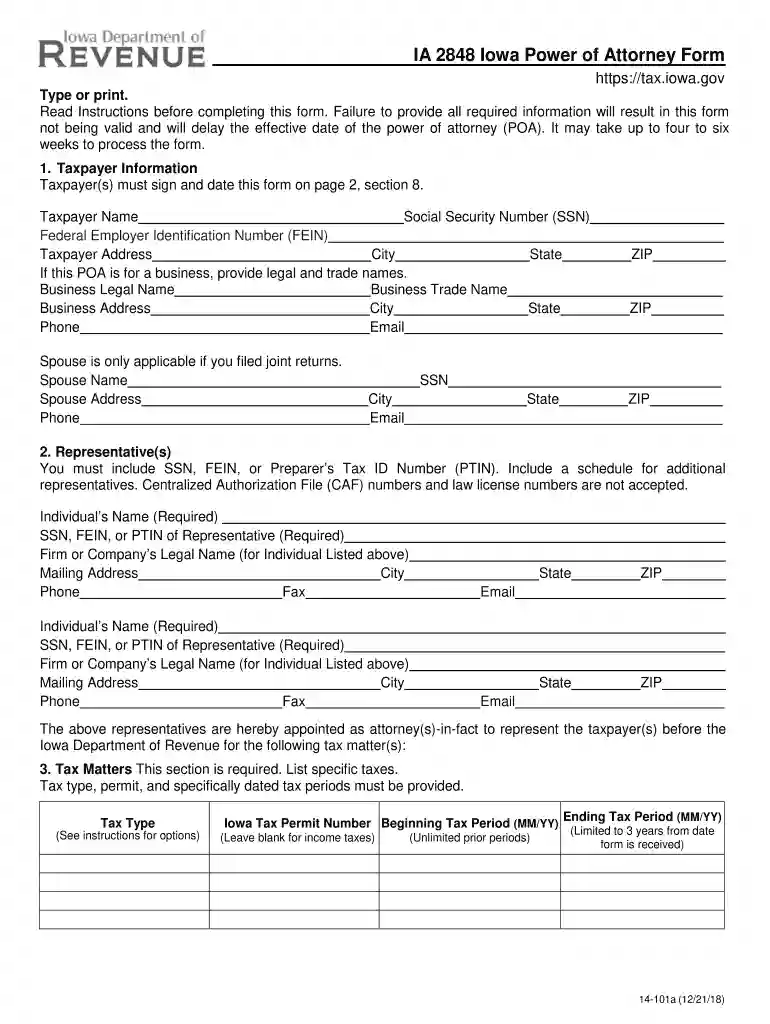
Type text, add images, blackout confidential details, add comments, highlights and more.

Draw your signature, type it, upload its image, or use your mobile device as a signature pad.

Send it via email, link, or fax. You can also download it, export it or print it out.
The IA 2848, Iowa Power of Attorney Form, authorizes taxpayers to appoint representatives to handle tax matters with the Iowa Department of Revenue. This form is akin to the IRS's Form 2848 but is specific to Iowa's state tax affairs. It's critical to use this form when a taxpayer wants someone else to negotiate or sign documents on their behalf concerning their taxes. The representative can act in various capacities, such as discussing tax returns or handling tax audits.
Completing the IA 2848 involves a series of detailed steps to ensure accuracy and compliance:
Identify the Taxpayer: Begin by providing the taxpayer's full name, Social Security Number, and address. Double-check for any input errors that could delay the approval process.
Designate the Representative: Fill in the representative's name, address, and contact information. Ensure this is someone trustworthy and knowledgeable about Iowa tax matters.
Specify Authorized Actions: Clearly indicate what actions the representative can take, such as accessing tax returns or communicating with the Department of Revenue.
Sign and Date the Form: The taxpayer must sign and date the form. If a joint return is involved, both spouses should sign.
Submit the Completed Form: Send the form to the Iowa Department of Revenue using the appropriate submission method.
Various individuals and entities require the IA 2848 for tax representation:


There are several reasons why completing an IA 2848 is vital:
Understanding the core components of the IA 2848 is crucial:
The IA 2848 plays a pivotal role in legal compliance:
Specific rules govern the use of the IA 2848 in Iowa:
Adhering to deadlines associated with the IA 2848 is critical:
To better understand its application, consider these scenarios:
The process may necessitate additional documentation:
This comprehensive guide aims to empower users to not only understand the IA 2848 form but to navigate its intricacies effectively, ensuring all submission and compliance aspects are thoroughly addressed.
We've got more versions of the storenumber 2848 form. Select the right storenumber 2848 version from the list and start editing it straight away!
At DocHub, your data security is our priority. We follow HIPAA, SOC2, GDPR, and other standards, so you can work on your documents with confidence.
Form 2848 is signed by the manager under state law or the TMP. Generally Any opinions, findings, conclusions or recommendations expressed in the materialRead more
Jul 31, 2025 This form gives the representative(s) listed in section. 2, and on any attached IA2848-A Supplemental Iowa. Department of Revenue Powers ofRead more
Ph: (206) 850-2848. Pella, IA 50219 Ph: (515) 628-3141. This chapter discusses pneumatic and hydraulic fracturing technologies used to enhance SVE, as well as


