



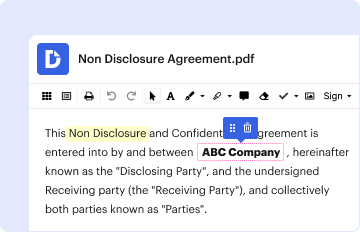
01. Edit your what is a w3 online
Type text, add images, blackout confidential details, add comments, highlights and more.

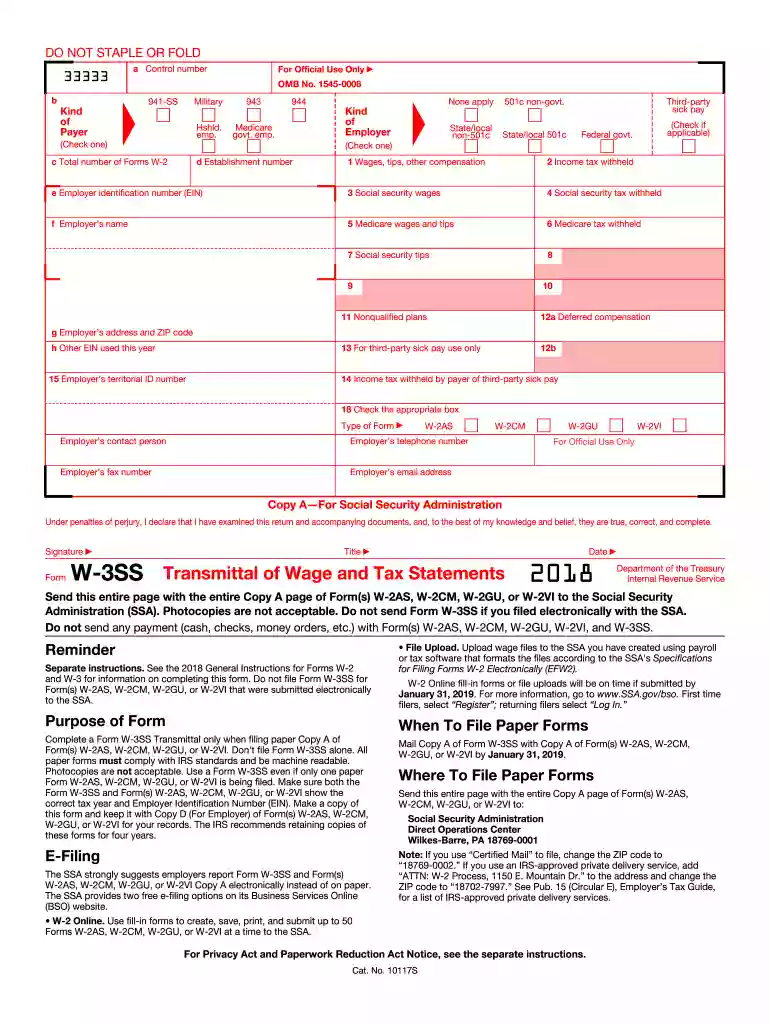
Type text, add images, blackout confidential details, add comments, highlights and more.
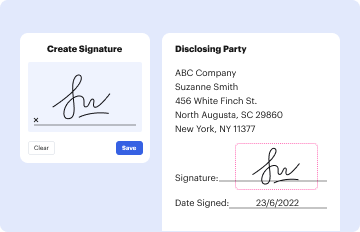
Draw your signature, type it, upload its image, or use your mobile device as a signature pad.

Send what is a w3 tax form via email, link, or fax. You can also download it, export it or print it out.
The Form W-3, often referred to as the "Transmittal of Wage and Tax Statements," is a critical document used in the United States for reporting employee wage and tax information to the Social Security Administration (SSA). It serves as a summary or transmittal form that accompanies multiple Forms W-2, which report earnings for individual employees. Employers are required to file Form W-3 to ensure that the SSA receives accurate and comprehensive data, crucial for calculating social security benefits and verifying compliance with tax laws. The "blank W-3 form 2017" refers to the version used for the 2017 tax year.
Employers file the blank W-3 form 2017 to transmit employee W-2 forms to the SSA. Begin by ensuring that all W-2 forms for your employees are complete and accurate. The W-3 form itself summarizes total wages, tips, and other compensations paid by the employer during the tax year. It also includes total taxes withheld. It is crucial to pay attention to details like employer name, address, and Employer Identification Number (EIN), as these should accurately reflect the registered business information. When filling out the form, ensure that each box aligns correctly with the corresponding details on the W-2 forms.
The blank W-3 form 2017 can typically be obtained from various sources. Employers can order physical copies directly from the IRS, ensuring they receive official and scannable forms. Alternatively, the SSA's Business Services Online website often provides downloadable versions suitable for e-filing. It's imperative to use forms suitable for scanning and filing to avoid penalties.
The IRS guidelines mandate that all Forms W-3 must be submitted along with W-2 forms by the end of January following the tax year. The guidelines emphasize accurate and complete reporting, specifying that W-3 forms should be used solely for SSA submissions. Employers must adhere to these deadlines and filing procedures to avoid penalties.
The deadline for submitting the W-3 form is typically the same as that for W-2s: January 31st of the year following the tax year. If January 31 falls on a weekend or holiday, the deadline extends to the next business day. Employers must ensure timely submissions to comply with IRS and SSA requirements.
Failing to submit the W-3 form accurately and on time can result in significant penalties. The IRS imposes fines that vary based on the lateness and the number of affected forms, exacerbating the cost to businesses. Inaccuracies on the form can also trigger fines, emphasizing the importance of precision and compliance during preparation.
We've got more versions of the what is a w3 form. Select the right what is a w3 version from the list and start editing it straight away!
| Versions | Form popularity | Fillable & printable |
|---|---|---|
| 2025 | 4.7 Satisfied (44 Votes) | |
| 2024 | 4.8 Satisfied (30 Votes) | |
| 2023 | 4.8 Satisfied (40 Votes) | |
| 2022 | 4.3 Satisfied (23 Votes) | |
| 2021 | 4.8 Satisfied (89 Votes) | |
| 2020 | 4.3 Satisfied (167 Votes) | |
| 2019 | 4.4 Satisfied (209 Votes) | |
| 2018 | 4.2 Satisfied (108 Votes) | |
| 2017 | 4.3 Satisfied (101 Votes) | |
| 2016 | 4.3 Satisfied (164 Votes) | |
| 2015 | 4.4 Satisfied (670 Votes) | |
| 2014 | 4 Satisfied (53 Votes) | |
| 2013 | 4 Satisfied (49 Votes) | |
| 2012 | 4 Satisfied (59 Votes) | |
| 2011 | 4 Satisfied (50 Votes) |
With DocHub, it’s pretty simple. The editor offers users an add-on called DocHub for Gmail, which you can locate in the Google Workspace Marketplace free of charge. Install it and grant it access to your Google account. Open your email with your blank w3 form 2017 attached and click on the add-on button in the right-side panel. Log in to your DocHub account, and upload the form to our editor, where you can complete it and sign.
It is a no-brainer on a computer or via a mobile device to complete a blank w3 form 2017 with DocHub. All you need to do is open any installed browser on your smartphone and proceed to the DocHub site. Once authenticated, add your file and open it in editing mode. Use our toolbar to make your edits and save adjustments. Optionally, keep your file in your files or send it to a recipient on the spot.
At DocHub, your data security is our priority. We follow HIPAA, SOC2, GDPR, and other standards, so you can work on your documents with confidence.
Jun 15, 2022 If you check the box on line or below, and the amount on that line for the return being filed with this form was blank, then leave line or.Read more
Use a Form W-3 even if only one paper Form W-2 is being filed. Make sure both the Form W-3 and. Form(s) W-2 show the correct tax year and EmployerRead more
May 2, 2017 Do not use these forms to report wages subject to U.S. income tax withholding. Instead, use Form W-2 to show U.S. income tax withheld. TreatmentRead more


