






Definition and Meaning
Form 8802 is a crucial document for U.S. taxpayers seeking residency certification to access benefits under tax treaties. The form serves to establish your status as a U.S. resident for tax purposes, allowing individuals and businesses to qualify for reduced withholding rates on foreign income that would otherwise be subject to higher taxation. It is widely used by those requiring a U.S. tax residency certificate, which facilitates the process of obtaining certain tax advantages in international transactions. This certificate is recognized internationally, making it essential for maintaining compliance with varied jurisdictional tax laws.
How to Use Form 8
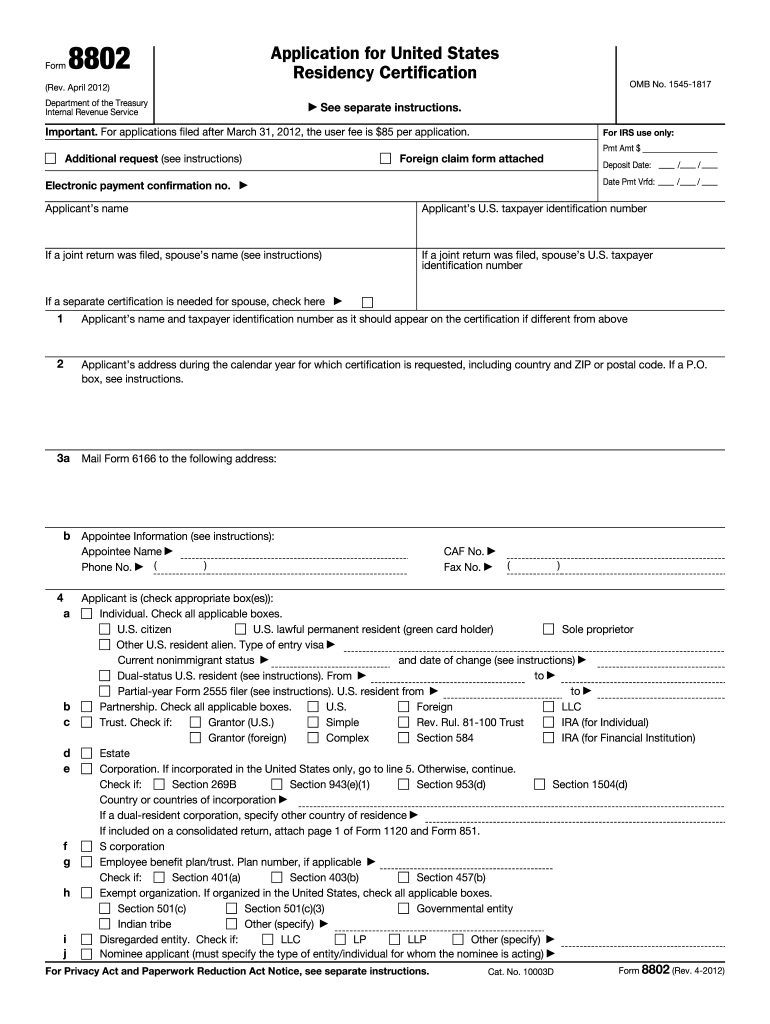
To effectively use Form 8802, taxpayers must first assess their need for residency certification. Typically, this need arises when involved in international business dealings or investments requiring proof of U.S. residency to obtain treaty benefits. The form is used to apply for a U.S. Residency Certification, which validates your right to claim these benefits in foreign entities. Once you have determined your eligibility, accurately complete the form by providing essential details such as your taxpayer identification number and the purpose of the certification. Ensure all information is correct to avoid delays in processing.
Obtaining Form 8
Accessing Form 8802 is straightforward. The form is available for download directly from the IRS website, providing a convenient way for taxpayers to obtain the document. Given its importance in securing tax residency certification, ensuring you have the latest version is crucial. Alternatively, you may contact the IRS to request a mailed copy. When seeking this document, it is vital to consider any associated fees and ensure you meet all prerequisites to streamline the application process, thus avoiding unnecessary delays.
Steps to Complete Form 8
Completing Form 8802 involves careful attention to detail. Follow these steps:
-
Gather Required Information: Collect your taxpayer identification number and details regarding the tax treaty benefits you are seeking.
-
Fill Out Applicant Information: Enter your primary and mailing addresses to ensure correspondence is sent to the correct location.
-
Specify Certification Purpose: Clearly state the reason for your application, aligning with tax treaty benefits.
-
Calculate and Pay Fees: Submit the user fee, which varies depending on the type and number of certifications requested.
-
Attach Necessary Documents: Include any additional documentation required, like prior year returns if necessary for your scenario.
-
Review and Submit: Double-check all entries for accuracy before submitting online or via mail to the designated IRS address.
Importance of Form 8
Utilizing Form 8802 provides tangible benefits, particularly for entities involved in international trade or investment. Obtaining a U.S. Residency Certification helps in minimizing withholding taxes on foreign income, often significantly reducing the tax burden in transactions involving treaty countries. This form is essential for maintaining good standing with foreign tax authorities and leveraging the benefits afforded by bilateral tax treaties. By successfully applying for this certification, taxpayers can maximize their savings and ensure compliance with both U.S. and international tax regulations.
Typical Users of Form 8
Several categories of taxpayers commonly utilize Form 8802:
-
Individual Taxpayers: U.S. residents with foreign investments needing tax treaty benefits to reduce foreign withholding taxes.
-
Business Entities: Corporations and partnerships engaging in cross-border operations seeking to optimize tax outcomes and comply with international regulations.
-
Trusts and Estates: Those managing U.S.-source income distributions to foreign beneficiaries who require residency certification for correct tax treatment.
-
Tax Professionals: Accountants and tax advisors often facilitate the use of this form for clients involved in international financial transactions.
Key Elements of Form 8
Form 8802 comprises core sections vital for processing:
-
Applicant Information: Includes personal identifiers such as Social Security Number or Employer Identification Number.
-
Certification Purpose and Details: Articulates the specific treaty benefits and tax residency status being claimed.
-
Fee Submission and Payment Details: Outlines the associated costs and methods for payment of the application fees.
-
Attachments and Declarations: Includes any additional documentation required to substantiate the application claims under penalty of perjury.
IRS Guidelines for Form 8
The IRS provides strict guidelines to ensure the accuracy and compliance of Form 8802 submissions. Adhering to these guidelines involves maintaining familiarity with tax treaties, providing complete and correct information on the form, and meeting all payment requirements. The IRS emphasizes the importance of timely submission to process applications efficiently. Understanding these guidelines and integrating them fully into your form completion process is critical in securing U.S. Residency Certification promptly and effectively.