






Definition & Meaning
The "Colorado Excise Tax Alcohol" refers to a state-imposed tax collected from manufacturers and wholesalers of alcoholic beverages in Colorado. This tax is applied to alcoholic products both produced and distributed within the state. It is designed to generate revenue that supports state infrastructure and public services. The Colorado Department of Revenue oversees the regulation and collection of this excise tax. Understanding this tax is crucial for businesses involved in the alcohol industry within the state, as compliance with these regulations is mandatory.
How to Use the Colorado Excise Tax Alcohol
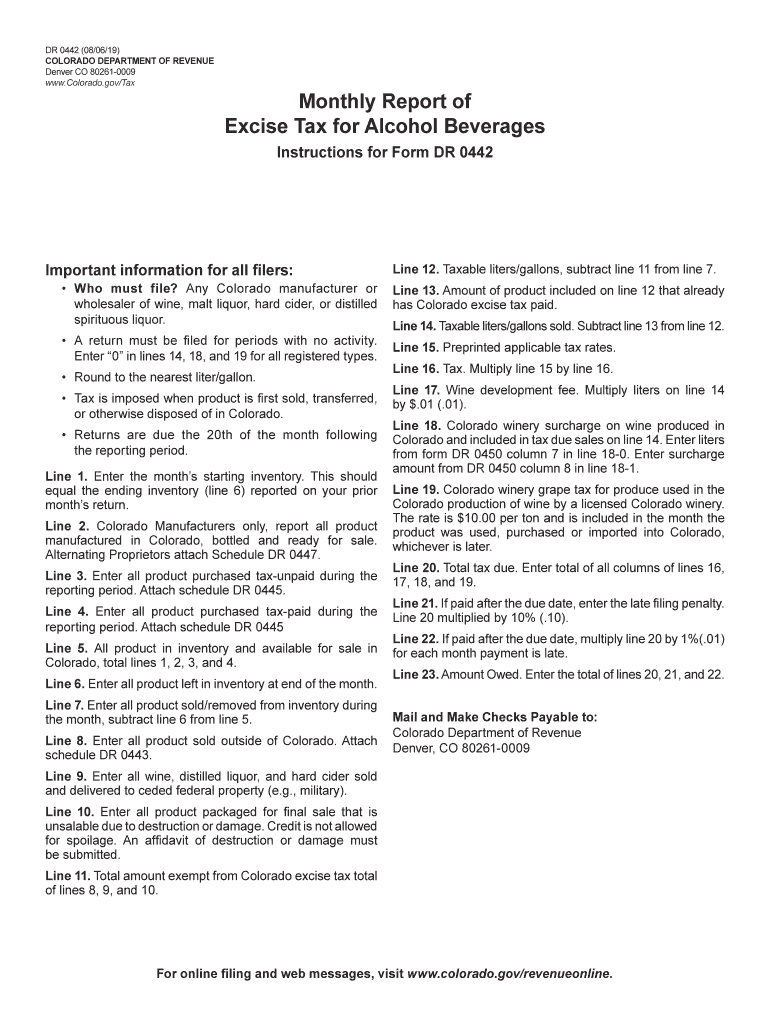
Businesses that manufacture or wholesale alcohol need to accurately calculate and report their excise taxes using the correct forms, such as the Colorado Department of Revenue's Form DR 0442. The steps typically involve:
- Inventory Accounting: Determine the amount of alcohol produced or distributed.
- Tax Calculation: Apply the appropriate tax rates to the taxable volume of alcohol.
- Form Completion: Fill out Form DR 0442 with all required details including inventory, sales, and taxes due.
- Submission: Ensure that the completed form and any payment due is submitted by the deadline to avoid penalties.
Steps to Complete the Colorado Excise Tax Alcohol
Completing the Colorado excise tax alcohol documentation involves a precise understanding of the form requirements. Here is a detailed guide:
-
Gather Required Information:
- Total liters/gallons of each type of alcoholic beverage produced and distributed.
- Applicable tax rates.
-
Form DR 0442 Completion:
- Start with the taxpayer information section.
- Enter details about volume sold or produced.
- Calculate and report the excise taxes due for each category of alcohol.
-
Double-check Entries: Mistakes in reporting can lead to penalties, so ensure accuracy.
-
Signature & Date: Authorized personnel should sign and date the form.
-
Submission: Submit the form via the preferred method (online, mail, or in-person).
Important Terms Related to Colorado Excise Tax Alcohol
Understanding key terms helps ensure accurate compliance:
- Taxable Liters/Gallons: The volume of alcohol that is subject to taxation.
- Wholesaler: An entity engaged in the sale of alcoholic beverages to retailers or other wholesalers.
- Manufacturer: A company or person involved in the production of alcoholic beverages.
- Form DR 0442: The specific form used by the Colorado Department of Revenue to report alcohol excise tax.
- Due Date: The deadline for filing the excise tax return and remittance of payment.
Penalties for Non-Compliance
Failure to comply with Colorado's excise tax laws can result in significant penalties, including:
- Late Payment Penalties: Fees for failing to pay the tax by the due date.
- Interest Accumulation: Interest charged on overdue taxes.
- Legal Consequences: Persistent non-compliance may lead to legal actions and potential revocation of business licenses.
These penalties emphasize the importance of timely and accurate excise tax submissions.
State-Specific Rules for the Colorado Excise Tax Alcohol
Colorado has its own set of regulations and tax rates for alcohol, which differ from federal and other state guidelines. Noteworthy points include:
- Alcohol Type: Different types of alcoholic beverages are taxed at varying rates.
- Volume-Based Taxation: Tax is based on the volume produced or sold.
- Reporting Requirements: Businesses must meet specific criteria for reporting and documentation unique to Colorado.
Filing Deadlines / Important Dates
Adherence to filing deadlines is critical:
- Monthly Filing: Typically, businesses must file the Colorado excise tax on alcohol monthly.
- Payment Due Dates: Taxes are generally due on the 20th of each month for the prior month's activities.
Staying informed on all deadlines ensures compliance and avoids penalties.
Required Documents
Complete and accurate reporting for the Colorado Excise Tax Alcohol necessitates several documents:
- Form DR 0442: The primary document for reporting taxes.
- Sales and Inventory Records: Detailed logs of alcohol sold and remaining stock.
- Previous Tax Returns: Useful for cross-checking current submissions with past data to ensure consistency.