




Here's how it works
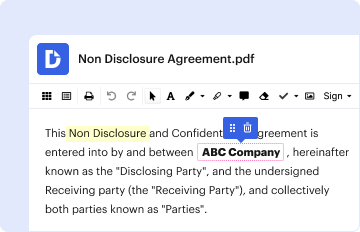
01. Edit your form online
Type text, add images, blackout confidential details, add comments, highlights and more.
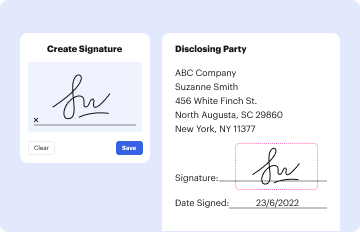
02. Sign it in a few clicks
Draw your signature, type it, upload its image, or use your mobile device as a signature pad.

03. Share your form with others
Send it via email, link, or fax. You can also download it, export it or print it out.
How to use or fill out Treasury, IRS issue final regulations on the Foreign Tax Credit with our platform

- Click ‘Get Form’ to open it in the editor.
- Begin by entering your name(s) as shown on your return and your business type. Ensure that you provide the identifying number and the date you started your business in New York State.
- In Part 1, compute your credit by filling in the amounts from previous lines. Pay attention to whether you are filing as an individual or fiduciary, and ensure accurate entries for lines 1 through 9.
- Continue to Part 2, where you will summarize any addbacks of credit on early dispositions. Fill in each relevant line carefully based on your records.
- In Part 3, list investments in qualified property. Provide descriptions and investment details for each asset, ensuring all calculations align with the instructions provided.
- Complete Parts 4 through 6 by following the instructions closely for early dispositions and application of credits. Double-check all figures before submission.
Start using our platform today to streamline your form completion process for free!
Fill out Treasury, IRS issue final regulations on the Foreign Tax Credit online
It's free
It's free
See more Treasury, IRS issue final regulations on the Foreign Tax Credit versions
We've got more versions of the Treasury, IRS issue final regulations on the Foreign Tax Credit form. Select the right Treasury, IRS issue final regulations on the Foreign Tax Credit version from the list and start editing it straight away!
Got questions?
We have answers to the most popular questions from our customers. If you can't find an answer to your question, please contact us.
Contact us
Can I choose not to claim foreign tax credit?
You can choose whether to take the amount of any qualified foreign taxes paid or accrued during the year as a foreign tax credit or as an itemized deduction. You can change your choice for each years taxes.
What are the rules for claiming foreign tax credit?
Form 67 is used to claim foreign tax credit. It should be filed before the income tax return if you have foreign income and have paid taxes on it abroad. Under rule 128, Form 67 must be filed on or before the end of the assessment year for which foreign income is filed for the financial year.
Who qualifies for FTC?
General Eligibility: The FTC is available to any U.S. taxpayerindividual, estate, trust, or corporationwho has foreign income and has paid or accrued tax to a foreign government on that income. This includes foreign taxes paid on wages, dividends, interest, and rental income, among other types of foreign earnings.
What is the IRS foreign tax credit?
The foreign tax credit is intended to relieve you of the double tax burden when your foreign source income is taxed by both the United States and the foreign country. The foreign tax credit can only reduce U.S. taxes on foreign source income; it cannot reduce U.S. taxes on U.S. source income.
What qualifies for foreign tax credit?
A foreign country includes any foreign state and its political subdivisions. Income, war profits, and excess profits taxes paid or accrued to a foreign city or province qualify for the foreign tax credit.
Security and compliance
At DocHub, your data security is our priority. We follow HIPAA, SOC2, GDPR, and other standards, so you can work on your documents with confidence.
Learn more


Related forms
SHORT FORM PRIME CONTRACT BETWEEN OWNER and CONTRACTOR - ccneca
The document is a short form prime contract between an Owner and a Contractor outlining the terms of construction work. ...
Residential property disclosure statement - Dulles Area
This document is a disclosure regarding the validity of a septic system operating permit for a property in Virginia. It ...

Efficient Conversion of X Y Surround Sound Content to Binaural Head-Tracked Form for HRTF-enabled Pl
Efficient Conversion of X Y Surround Sound Content to Binaural Head-Tracked Form for HRTF-enabled Pl
The document presents a novel method for efficiently converting X.Y surround sound content into binaural, head-tracked a ...

TA Evaluation Form TA name
The document is a TA Evaluation Form designed for instructors to assess the performance of teaching assistants (TAs) in ...

Formal Approaches to Teamwork
The document 'Formal Approaches to Teamwork' by John Grant, Sarit Kraus, and Don Perlis provides a comparative overview ...
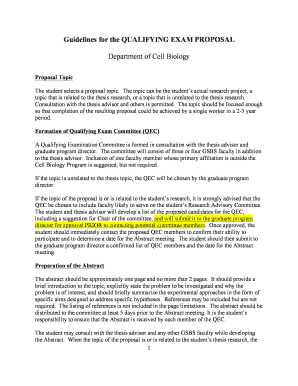
Guidelines for the QUALIFYING EXAM PROPOSAL
The document outlines the guidelines for preparing a Qualifying Exam Proposal in the Department of Cell Biology. It deta ...

Link Layer
Chapter 5 of 'Computer Networking: A Top-Down Approach' focuses on the link layer, detailing its principles and services ...
People also ask
What countries are sanctioned for the foreign tax credit?
U.S. possessions include Puerto Rico and American Samoa. The following are sanctioned countries: Iran, North Korea, Sudan, and Syria. In most cases, only foreign income taxes qualify for the foreign tax credit.
What are final treasury regulations?
Final regulations are effective regulations issued with the force of law after the IRS has considered and responded to public comments on proposed regulations through their NPRMs.
Does the IRS allow unused foreign tax credits?
Unused/excess foreign taxes are qualified foreign taxes paid or accrued that exceed the FTC limitation. Unused/excess taxes produce no benefit in the year they arise but may be carried back or forward. The unused/excess foreign taxes eligible to be carried back or forward are reported on Form 1116.