01. Edit your illinois inheritance tax waiver form pdf download online
Type text, add images, blackout confidential details, add comments, highlights and more.
02. Sign it in a few clicks
Draw your signature, type it, upload its image, or use your mobile device as a signature pad.
03. Share your form with others
Send illinois inheritance tax waiver form via email, link, or fax. You can also download it, export it or print it out.
How to use or fill out Illinois Form 700 with DocHub
Ease of Setup
DocHub User Ratings on G2
Ease of Use
DocHub User Ratings on G2
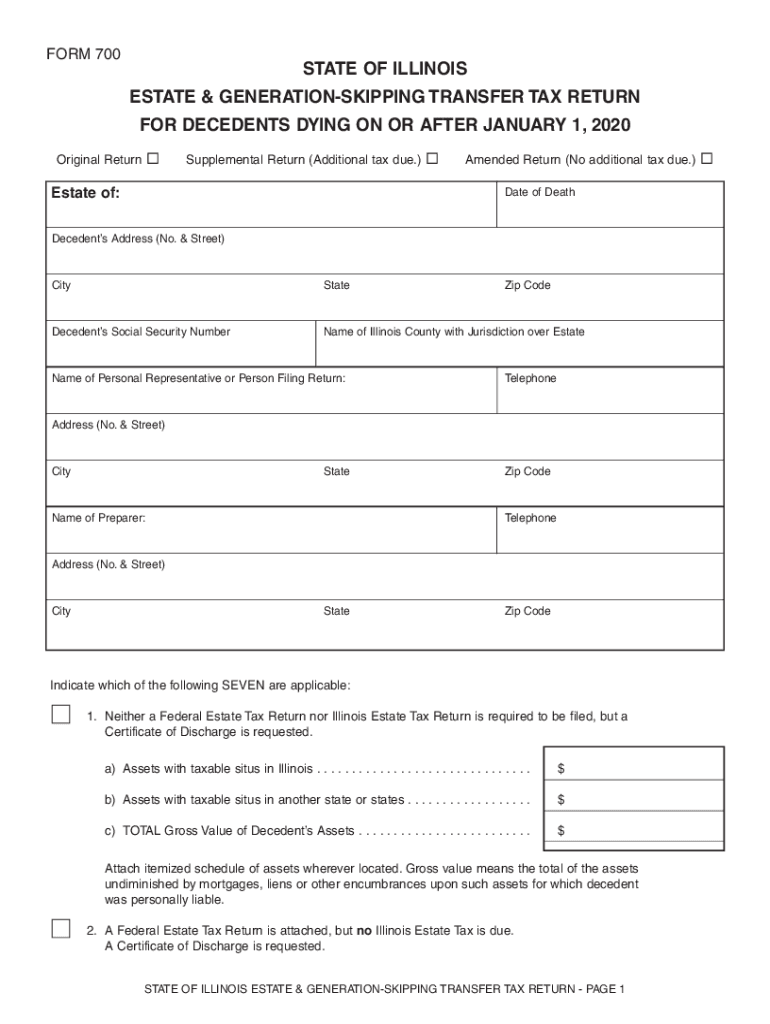
Click ‘Get Form’ to open the Illinois Form 700 in our editor.
Begin by filling in the decedent's information, including their name, date of death, and address. Ensure accuracy as this information is crucial for processing.
Indicate whether you are submitting an Original Return, Supplemental Return, or Amended Return by checking the appropriate box.
Complete the section regarding the estate's gross value. Enter values for assets located in Illinois and other states, ensuring to attach an itemized schedule of assets.
If applicable, check the box for any elections such as QTIP or Section 6166 Election and provide necessary details like amounts and social security numbers.
Review all entries for accuracy before signing. Use our platform’s features to add your signature electronically.
Start using our platform today to fill out your Illinois Form 700 easily and for free!
Illinois form 700 instructionsIllinois form 700 instructions pdfIllinois form 700 pdfIllinois form 706Illinois form 700 onlineIllinois estate tax calculatorIllinois form 700 downloadIllinois form 700 2022
Security and compliance
At DocHub, your data security is our priority. We follow HIPAA, SOC2, GDPR, and other standards, so you can work on your documents with confidence.
Overview. In addition to submitting an annual COI disclosure, principal investigators of privately-funded research projects must also complete the Form 700U.Read more
The estate representative should prepare and submit the Illinois Form 700 with a Federal Form. 706, including all schedules, appraisals, wills, trustsRead more
Cookie consent notice
This site uses cookies to enhance site navigation and personalize your experience.
By using this site you agree to our use of cookies as described in our Privacy Notice.
You can modify your selections by visiting our Cookie and Advertising Notice.