Icwa information form online 2026

Get Form
icwa information form online Preview on Page 1

Here's how it works

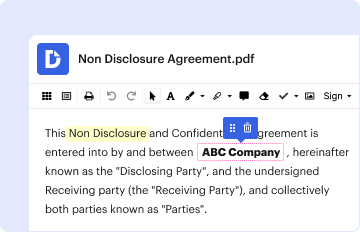
01. Edit your form online
Type text, add images, blackout confidential details, add comments, highlights and more.

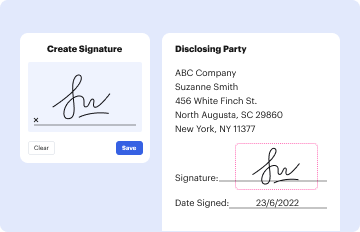
02. Sign it in a few clicks
Draw your signature, type it, upload its image, or use your mobile device as a signature pad.

03. Share your form with others
Send it via email, link, or fax. You can also download it, export it or print it out.

How to use or fill out icwa information form online

Form edit decoration
9.5
Ease of Setup
DocHub User Ratings on G2
9.0
Ease of Use
DocHub User Ratings on G2
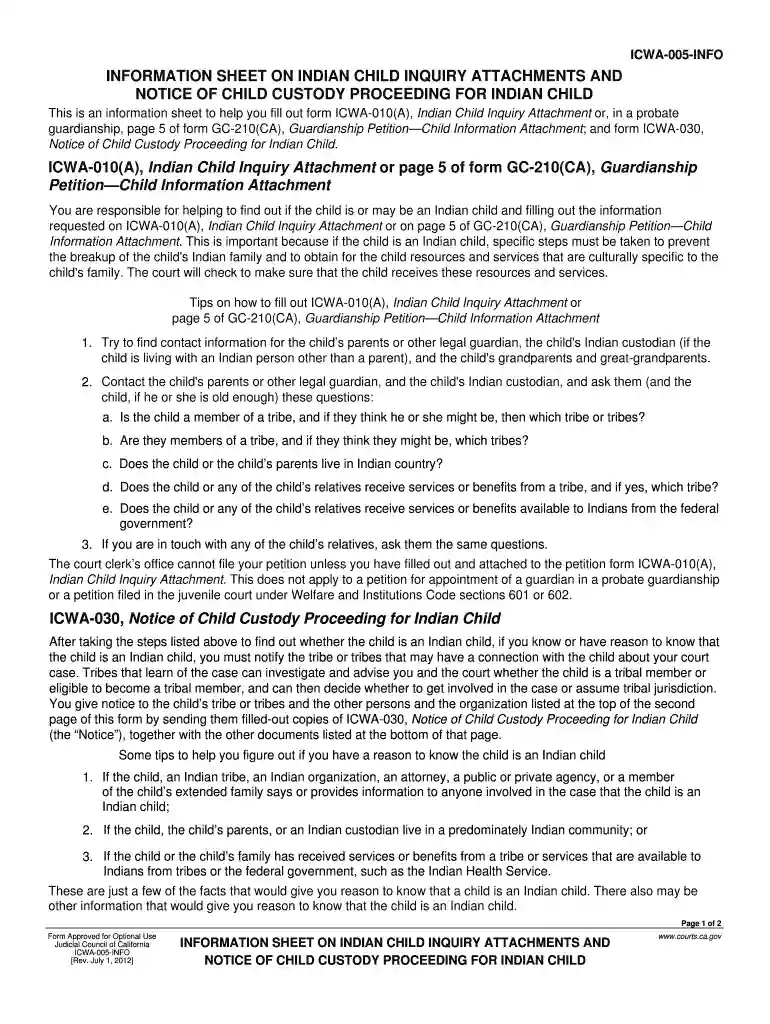
  1. Click ‘Get Form’ to open the ICWA information form in our editor.
  2. Begin by entering the child's basic information, including their name, date of birth, and any known tribal affiliations. This is crucial for determining if the child qualifies as an Indian child.
  3. Next, gather contact details for the child's parents, legal guardians, and any Indian custodians. This information is essential for notifying relevant parties about the custody proceedings.
  4. Proceed to answer questions regarding the child's connection to any tribes. Be thorough in your responses to ensure compliance with ICWA requirements.
  5. Once all sections are completed, review your entries for accuracy. Utilize our platform's editing tools to make any necessary adjustments before finalizing.
  6. Finally, save your completed form and follow the instructions for submission as outlined in the document. Ensure you have copies ready for mailing as required.

Start filling out your ICWA information form online today for free using our platform!

See more icwa information form online versions

We've got more versions of the icwa information form online form. Select the right icwa information form online version from the list and start editing it straight away!
Versions Form popularity Fillable & printable
2022 4.4 Satisfied (24 Votes)
2020 4.8 Satisfied (103 Votes)
2012 4.4 Satisfied (254 Votes)
be ready to get more

Complete this form in 5 minutes or less

Get form

Got questions?

We have answers to the most popular questions from our customers. If you can't find an answer to your question, please contact us.
Contact us
The Indian Child Welfare Act imposes a higher evidentiary burden for terminating parental rights. The Department of Social Services must prove beyond a reasonable doubt that continued custody is likely to result in serious emotional or physical damage to the child. See 25 U.S.C. 1912(f).
Yes, ICWA still applies. Even if a tribal nation does not actively participate in the case, the state is legally required to follow ICWA requirements to protect the rights of Native children and families.
It is the policy of this Nation to protect the best interests of Indian children and to promote the stability and security of Indian tribes and families by the establishment of minimum Federal standards for the removal of Indian children from their families and the placement of such children in foster or adoptive homes
The Indian Child Welfare Act (ICWA) gives Native American/Alaska Native individuals and tribes particular rights in child welfare cases. ICWA applies to Indian children who are involved in a state child custody preceding.
This legislation affects California dependency, delinquency, guardianship and some family proceedings involving Indian children. The Indian Child Welfare Act (ICWA) was enacted in 1978 in response to a crisis affecting American Indian and Alaska Native children, families, and tribes.

Security and compliance

At DocHub, your data security is our priority. We follow HIPAA, SOC2, GDPR, and other standards, so you can work on your documents with confidence.

Learn more
ccpa2
pci-dss
gdpr-compliance
hipaa
soc-compliance

People also ask

ICWA at a Glance This resource provides a brief overview of the five provisions of ICWA that fulfill the intended purpose of the law: inquiry and notice, active efforts, proper placement, concurrent planning and qualified expert witness.
ICWA sets minimum federal standards for child custody cases involving Native children, prioritizing their best interests and strengthening family and tribal stability.

Related links