
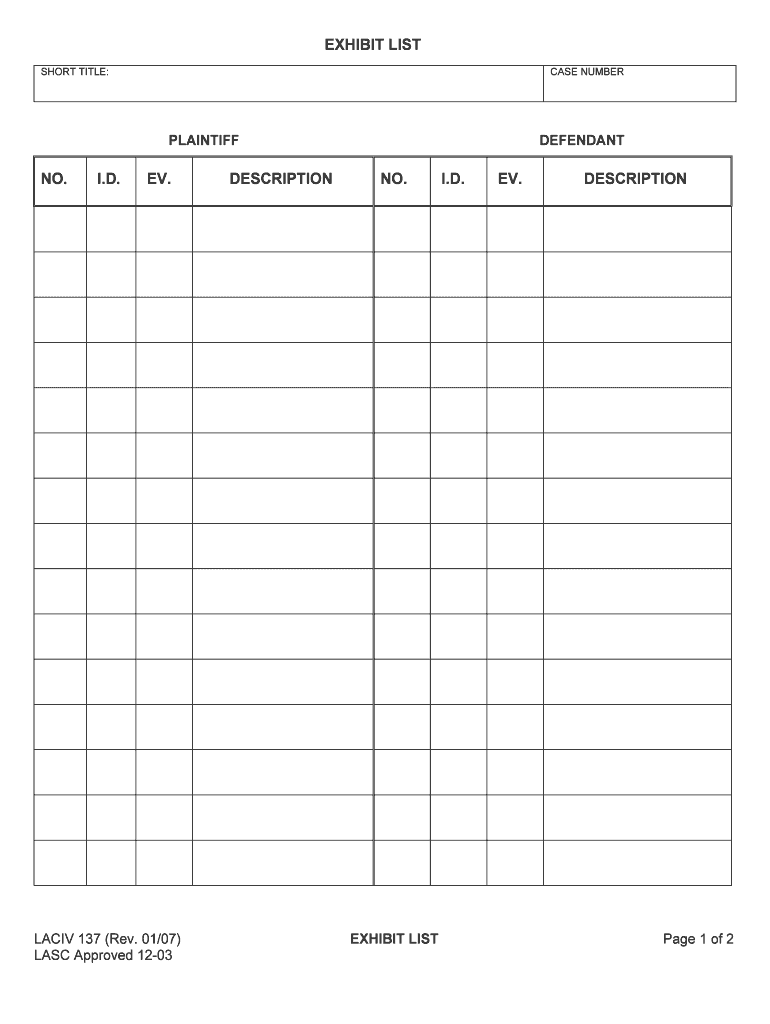







Definition & Meaning of the California Exhibit List Form
The California exhibit list form is a critical document used in various legal proceedings, especially in trial settings. It serves to catalog and organize physical or digital evidence presented in court, detailing each item and its relevance to the case. This form typically includes essential sections for the case number, names of the parties involved (plaintiff and defendant), a list of exhibits with descriptions, and the expected purpose of each exhibit in supporting the respective argumentations during the trial. By clearly outlining the exhibits, the form aids in ensuring that all parties involved possess a comprehensive understanding of the evidence being brought forth.
In litigation, the exhibit list plays a fundamental role as it helps streamline the presentation of evidence for judges, juries, and opposing counsel. It brings clarity and structure to the trial process by allowing for organized reference to each piece of evidence. Furthermore, the legal significance of each exhibit is enhanced by its inclusion in the official court records, thus impacting the outcome of the case.
Key Elements of the California Exhibit List Form
An effective California exhibit list form should encompass several vital elements to ensure its functionality and compliance with legal standards. These may include:
-
Case Information: The form must begin with relevant identifying information such as the case title, case number, and names of the plaintiff and defendant.
-
Exhibit Number: Each exhibit should be assigned a unique number for easy reference during the trial proceedings.
-
Description of Exhibit: This section should provide a detailed, yet concise explanation of the exhibit, including its nature and content.
-
Purpose of Exhibit: Specify how the exhibit supports a specific claim or argument in the case, enhancing its legal relevance.
-
Authentication: Indication of whether the exhibit has been authenticated, confirming its legitimacy and admissibility as evidence.
These elements collectively enhance the clarity and structure of the exhibit list, contributing to a more coherent legal process.
Steps to Complete the California Exhibit List Form
Filling out the California exhibit list form requires attention to detail and an understanding of the specific requirements pertinent to the case. The steps involved in completing the form are as follows:
-
Gather Case Information: Collect all necessary details regarding the case including the title, number, and the names of respective parties involved.
-
List All Exhibits: Compile a comprehensive list of all exhibits intended for submission. Each item must be carefully evaluated and selected based on its relevance to the case.
-
Assign Exhibit Numbers: Sequentially number each exhibit to maintain order and facilitate reference during trial discussions.
-
Draft Descriptions: Write clear and precise descriptions for each exhibit. These should include details that encapsulate what the exhibit is and why it is important.
-
State Exhibit Purpose: For each exhibit, provide contextual information on how it will support claims made during the trial, such as demonstrating a fact or supporting a legal argument.
-
Review and Revise: Ensure all entries are accurate, complete, and align with legal expectations. Any errors or omissions can lead to complications during submission.
-
Finalize the Form: Once confirmed, the exhibit list can be printed or saved in accordance with court submission guidelines.
Following these steps not only assists in properly assembling the exhibit list but also fortifies the case being presented.
Important Terms Related to the California Exhibit List Form
Understanding the terminology associated with the California exhibit list form can significantly enhance comprehension and efficacy in legal processes. Key terms include:
-
Exhibit: Any physical or digital evidence presented in court to support a party's argument.
-
Admissibility: The legality of whether an exhibit can be accepted as evidence in a court of law.
-
Authentication: The process of verifying the legitimacy of an exhibit, establishing its appropriateness for trial consideration.
-
Discovery: The pre-trial phase in which parties exchange information and evidence, including exhibits, that may be pertinent to the case.
-
Hearsay: Testimony or evidence not directly based on a witness's personal knowledge, potentially affecting the admissibility of various exhibits.
Comprehending these terms assists in navigating the complexities of the legal landscape, ultimately facilitating better case management.
Legal Use of the California Exhibit List Form
The California exhibit list form is designed to support lawful and orderly procedures in court. It is legally significant in various respects:
-
Organizational Framework: By listing exhibits systematically, the exhibit list form serves as an organizational tool for legal professionals, allowing for easier management and reference.
-
Evidence Clarity: The form provides clarity on what exhibits will be presented, which is crucial for all parties involved in the case, contributing to transparent legal practices.
-
Court Acceptance: Courts require a properly filled exhibit list to allow the inclusion of evidence during trials, highlighting the form’s critical role in ensuring compliance with judicial rules.
-
Foundation for Objections and Arguments: The exhibit list acts as a reference point for opposing counsel and allows both parties to prepare adequately for their respective arguments regarding the admissibility of evidence.
As such, the California exhibit list form functions not only as a record inside the courtroom but also as an essential element in maintaining the integrity of legal proceedings.




