






Definition & Meaning of Certification of Previous Health Care Coverage
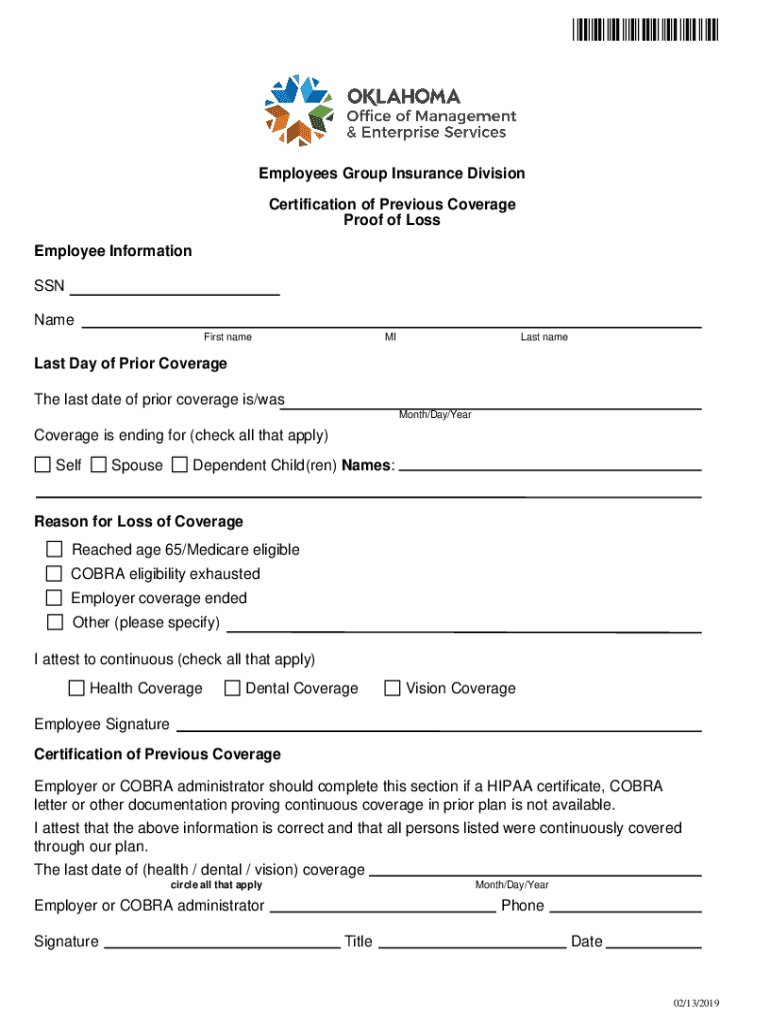
The Certification of Previous Health Care Coverage serves as an official document indicating an individual's previous health insurance coverage. This document is particularly relevant for employees transferring between jobs or those who have lost their health coverage due to specific life events, such as aging out of a parent's plan or a change in employment status. It typically includes vital information such as the name of the insurance provider, the coverage period, and any specific conditions or exclusions that may apply.
Having a clear certification is essential for ensuring continuity of care and benefits when enrolling in a new health insurance plan. This certification can affect premium costs and the availability of certain benefits, emphasizing its importance in the healthcare transition process.
How to Obtain the Certification of Previous Health Care Coverage
To obtain the Certification of Previous Health Care Coverage, individuals primarily need to request the document from their previous employer or insurance provider. This process typically involves the following steps:
-
Contact Your Previous Employer: Reach out to the human resources (HR) department or the insurance administrator. This is often the first point of contact for obtaining the necessary documentation.
-
Provide Necessary Information: Be prepared to provide personal details such as your name, Social Security number, and any information related to your previous coverage period. Specific requests may vary based on the employer’s policies.
-
Wait for Processing: After your request, there may be a processing time during which the HR department prepares the certification. Be sure to ask about the expected timeline.
-
Review the Certification: Once you receive the document, review it carefully to ensure all information is accurate, including the coverage dates and any relevant plan details.
-
Keep a Copy for Your Records: It’s advisable to maintain a copy of this certification for your records, which can be necessary for future health coverage transitions or disputes.
By following these steps, you can efficiently obtain your Certification of Previous Health Care Coverage, ensuring a smooth transition into new health insurance.
Key Elements of the Certification of Previous Health Care Coverage
The Certification of Previous Health Care Coverage encompasses several crucial components that provide comprehensive visibility into an individual's prior health coverage. The key elements typically include:
- Personal Information: This includes the insured individual's name, dates of coverage, and sometimes the Social Security number.
- Insurer Information: The name of the insurance company and policy number are prominently displayed, allowing for easy verification.
- Coverage Period: The specific dates during which the individual had health coverage must be documented to establish continuous coverage.
- Type of Coverage: A breakdown of the type of health coverage (e.g., health, dental, vision) being certified is often included.
- Employer or Administrator's Attestation: The document should be signed and dated by a representative, such as an HR personnel or benefits administrator, affirming that the details are accurate and true.
These elements are vital for ensuring that the certification meets the necessary legal standards and provides the information required for any future health insurance applications or transitions.
Steps to Complete the Certification of Previous Health Care Coverage
Completing the Certification of Previous Health Care Coverage involves several detailed steps to ensure that all relevant information is accurately presented. Here’s a structured guideline:
-
Gather Required Information: Collect all necessary documents, such as previous insurance cards and records of coverage dates.
-
Access the Certification Form: Obtain the certification form from your employer or relevant insurance provider. This might be a physical document or available through their online portal.
-
Fill in Personal and Coverage Details: Input your personal information and the specific details regarding your previous health care coverage, including start and end dates.
-
Include Coverage Types: Clearly specify the types of insurance (e.g., medical, dental, vision) included in the coverage period.
-
Review for Accuracy: Before submission, carefully review all entered information to ensure it is accurate. Errors can lead to complications in enrolling in new insurance plans.
-
Submit the Certification: Once reviewed, submit the completed certification to your new employer or insurance provider. Keep a copy for your records.
Following these steps will help ensure that the Certification of Previous Health Care Coverage is completed accurately and effectively, facilitating a smooth transition to new health coverage.
Important Terms Related to Certification of Previous Health Care Coverage
Understanding the important terms related to the Certification of Previous Health Care Coverage can enhance clarity and help navigate potential complexities. Key terms include:
- COBRA: The Consolidated Omnibus Budget Reconciliation Act allows individuals to continue their health insurance coverage after employment loss, often relevant when discussing previous coverage.
- Continuous Coverage: Refers to having health insurance without any gaps, essential for avoiding penalties when transitioning to a new plan.
- Dependent Coverage: Coverage that includes family members, which might affect the certification if dependents are also transitioning.
- Health Insurance Portability and Accountability Act (HIPAA): Protects an individual's health information and can influence how previous coverage is certified.
- Enrollment Period: The designated time frame during which individuals can enroll in a new health plan, underscoring the value of having the certification ready.
These terms serve as fundamental components of the health care coverage landscape in the United States, aiding in understanding and effectively utilizing the certification process.