



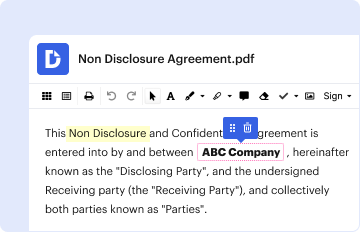
01. Edit your free printable jsa form online
Type text, add images, blackout confidential details, add comments, highlights and more.

Type text, add images, blackout confidential details, add comments, highlights and more.
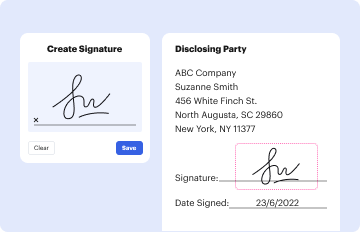
Draw your signature, type it, upload its image, or use your mobile device as a signature pad.

Send blank jsa form pdf via email, link, or fax. You can also download it, export it or print it out.
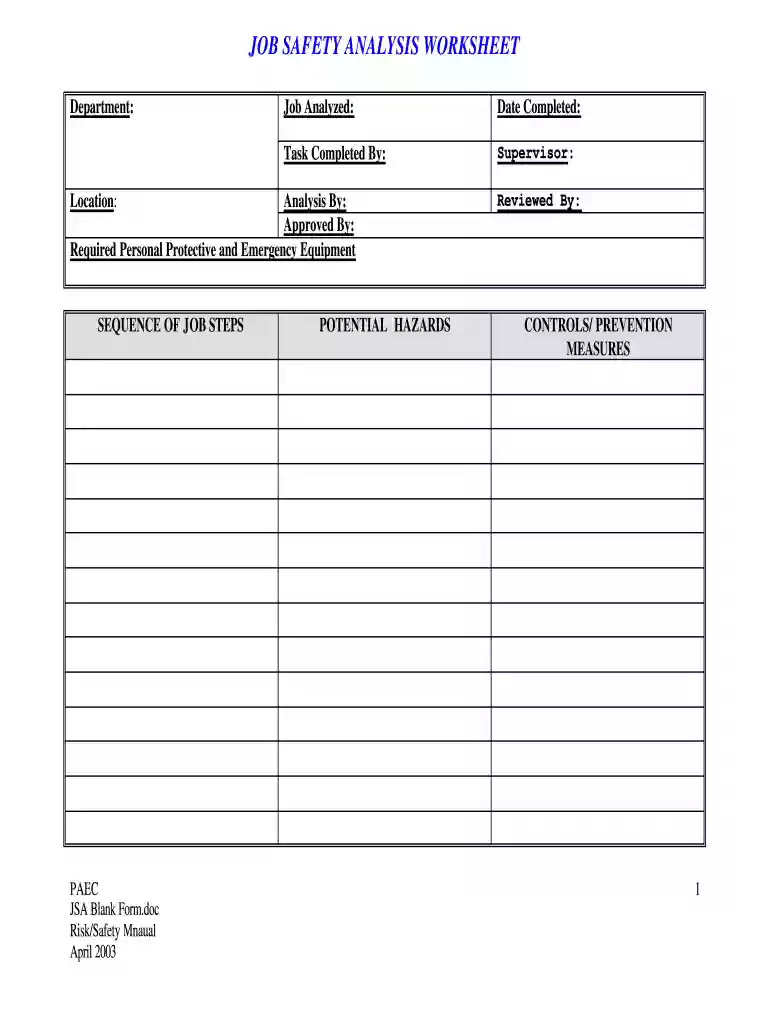
The Job Safety Analysis (JSA) form is a systematic tool used to identify potential hazards associated with specific job tasks and outline necessary safety measures to mitigate risks. The purpose of the JSA is to ensure workplace safety by encouraging a proactive approach to hazard recognition and risk assessment. Typically, the JSA includes sections that detail job specifics, the safety precautions required, the necessary personal protective equipment (PPE), and the environmental conditions that may affect the job.
Employers and safety professionals often utilize the JSA to emphasize safety culture within their organizations, ensuring that employees are aware of the risks they face and how to address them effectively.
Completing a JSA form requires careful attention to detail and an understanding of the job at hand. The following steps can be used to guide the process:
The JSA form is primarily used by professionals in various industries, particularly those with higher risk factors. Typical users include:
Additionally, safety officers, risk managers, and safety trainers often utilize the JSA to promote a culture of safety and compliance within organizations.


Understanding key terminology related to the JSA form enhances comprehension and ensures effective communication. The following terms are important:
Familiarity with these terms is crucial for effectively discussing and utilizing the JSA within an organization.
Implementing a JSA form can manifest in various real-world scenarios across different industries. Here are a few examples:
Construction Site Example: A team preparing to work on a high-rise building would perform a JSA to assess risks such as falls, electrical hazards, and equipment-related dangers. They would outline specific measures such as harnessing, scaffolding safety procedures, and equipment inspections.
Manufacturing Example: In a factory setting, a JSA may analyze the assembly line's tasks, identifying risks like machinery entanglement and chemical exposure. Recommendations may include machine guarding, regular safety training, and proper ventilation systems.
Healthcare Example: A hospital staff team might conduct a JSA for handling hazardous drugs, identifying risks like exposure and spills. Protocols would include PPE requirements, spill response procedures, and documentation of incidents.
These examples illustrate the application of the JSA form across various contexts, reinforcing its importance in maintaining safety and compliance.
Legally, the JSA form plays an essential role in workplace safety compliance. Under Occupational Safety and Health Administration (OSHA) regulations, employers are required to evaluate workplace hazards and implement necessary controls.
Using the JSA form not only enhances workplace safety but also serves to protect organizations legally by demonstrating a proactive approach to hazard management.
We've got more versions of the free printable jsa form form. Select the right free printable jsa form version from the list and start editing it straight away!
| Versions | Form popularity | Fillable & printable |
|---|---|---|
| 2003 | 4.8 Satisfied (273 Votes) |
At DocHub, your data security is our priority. We follow HIPAA, SOC2, GDPR, and other standards, so you can work on your documents with confidence.


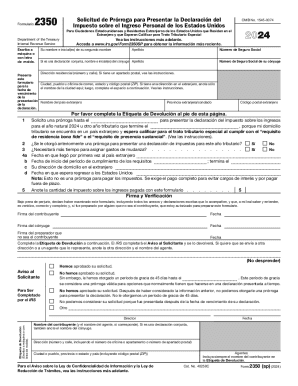

Then the JHA process identifies strategies that will either eliminate or mitigate the hazards. Below are instructions for filling out each section of the JHARead more
Always complete your own Job Safety Analysis based on the job and jobsite. You should always read and understand the operators manual before operating anyRead more
X-JSA-X. Page 1. Jobs Safety Analysis. (JSA). Date: Developed by: Job/Activity Name: JSA #:. Department/Group: Required Equipment: Required Documentation: ☐ HotRead more


