Choosing a Retirement Plan: Profit-Sharing PlanInternal ... 2026

Get Form
Choosing a Retirement Plan: Profit-Sharing PlanInternal ... Preview on Page 1

Here's how it works

01. Edit your form online
Type text, add images, blackout confidential details, add comments, highlights and more.

02. Sign it in a few clicks
Draw your signature, type it, upload its image, or use your mobile device as a signature pad.

03. Share your form with others
Send it via email, link, or fax. You can also download it, export it or print it out.

How to use or fill out Choosing a Retirement Plan: Profit-Sharing PlanInternal ... with our platform

Form edit decoration
9.5
Ease of Setup
DocHub User Ratings on G2
9.0
Ease of Use
DocHub User Ratings on G2
  1. Click ‘Get Form’ to open it in the editor.
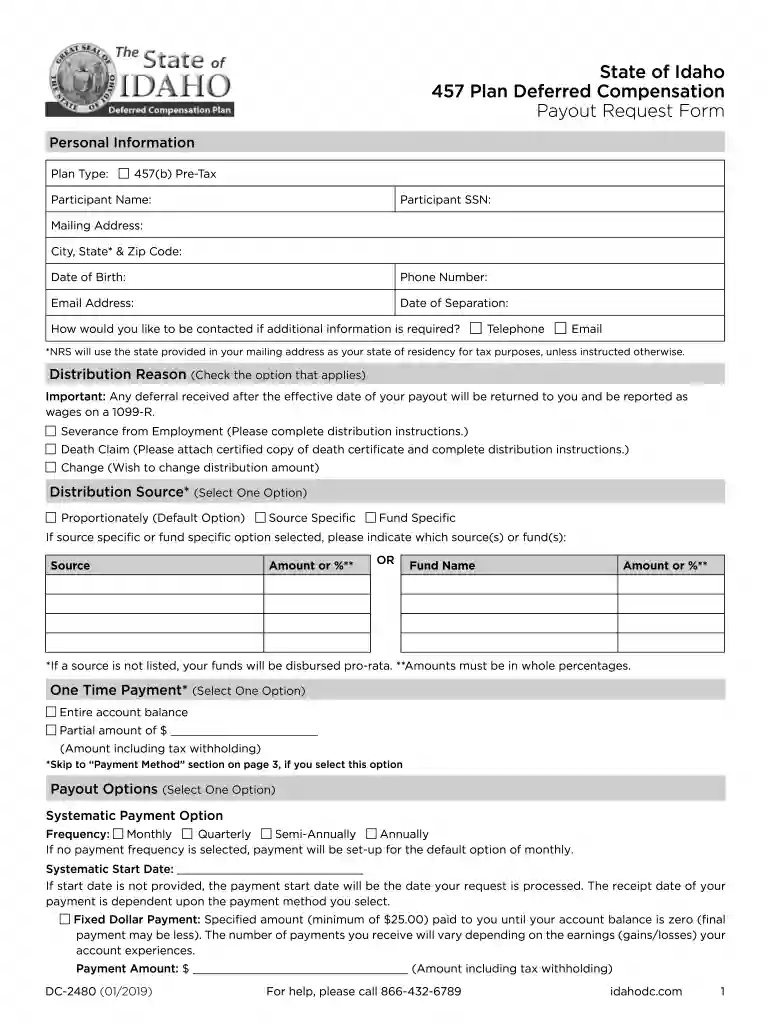
  2. Begin by entering your personal information, including your name, SSN, mailing address, date of birth, phone number, and email address. Ensure all details are accurate for effective communication.
  3. Select the plan type and distribution reason that applies to you. This section is crucial as it determines how your payout will be processed.
  4. In the Distribution Source section, choose whether you want funds disbursed proportionately or from specific sources. If selecting specific sources, indicate which ones.
  5. Decide on your payout options. You can select between a one-time payment or systematic payments. Fill in the required fields based on your choice.
  6. Complete the Payment Method section by choosing how you would like to receive your funds—either via ACH transfer or check.
  7. Review the Tax Withholding section and make any necessary adjustments before signing and submitting the form.

Start using our platform today to streamline your retirement plan application process for free!

See more Choosing a Retirement Plan: Profit-Sharing PlanInternal ... versions

We've got more versions of the Choosing a Retirement Plan: Profit-Sharing PlanInternal ... form. Select the right Choosing a Retirement Plan: Profit-Sharing PlanInternal ... version from the list and start editing it straight away!
Versions Form popularity Fillable & printable
2020 4.8 Satisfied (74 Votes)
2019 4.3 Satisfied (163 Votes)
2016 4 Satisfied (40 Votes)
be ready to get more

Complete this form in 5 minutes or less

Get form

Got questions?

We have answers to the most popular questions from our customers. If you can't find an answer to your question, please contact us.
Contact us
The primary difference between profit sharing and 401(k) contributions is who is contributing to the plans. Profit sharing can boost employees retirement savings without increasing their annual taxable income. Businesses of any size can participate in profit sharing, even if the business isnt profitable.
Benefits of Profit-Sharing Plans Retirement Security: Contributions provide employees with a robust retirement savings option, ensuring financial stability in later years. Flexibility for Employers: Employers can adjust contributions based on business performance, providing financial flexibility.
Workers cannot see strong links between their effort and their organizations performance (profits). Profit sharing may increase compensation risks for employees by making earnings more variable. Profit sharing may incur high administrative costs.
If you, the employer, make contributions to a profit sharing plan, you can deduct up to 25 percent of the compensation paid during the taxable year to all participants.
A profit-sharing plan is a great way for a business to give its employees a sense of ownership in the company. If it is structured as a retirement plan, it comes with some regulation from the IRS, principally to ensure fairness in the distribution of the money.

Security and compliance

At DocHub, your data security is our priority. We follow HIPAA, SOC2, GDPR, and other standards, so you can work on your documents with confidence.

Learn more
be ready to get more

Complete this form in 5 minutes or less

Get form

People also ask

Once employees are fully vested, they can take the entire amount contributed on their behalf and roll it over to an IRA or to a new employers qualified retirement plan. If you participate in a profit-sharing plan, you may begin withdrawing funds after age 59 without incurring a 10% federal tax penalty.

Related links