






Definition and Meaning of DRS CTEITC
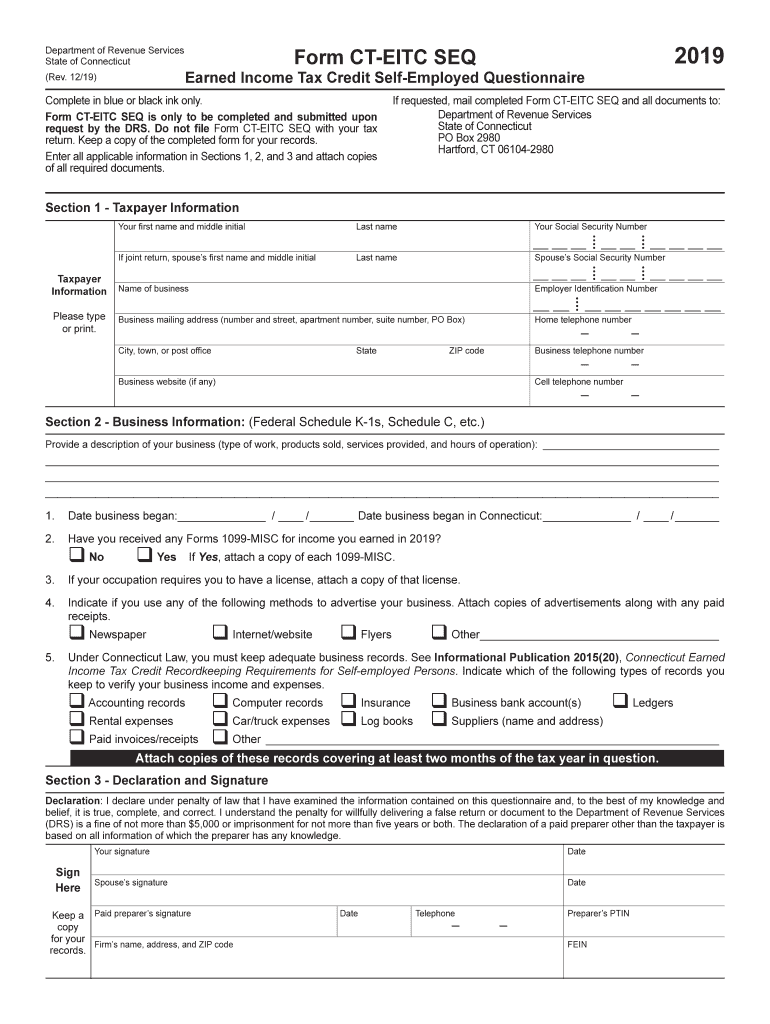
The "DRS CTEITC" is the acronym for the Connecticut Department of Revenue Services' form specifically designed for self-employed individuals applying for the Earned Income Tax Credit (EITC). This form helps tax authorities collect detailed information about the applicant's personal and business finances to determine their eligibility for the EITC. The primary aim is to verify income levels and ensure compliance with state tax laws.
Purpose and Importance
The form supports Connecticut-based self-employed individuals who intend to benefit from the state’s EITC program. By gathering comprehensive financial information, it helps to prevent fraudulent claims and ensures that only eligible taxpayers receive the credit. This system ultimately aims to supplement the federal EITC in aiding low to moderate-income workers.
Components of the Form
Comprising various sections, the DRS CTEITC asks for:
- Personal information: Name, Social Security Number, and contact details.
- Business details: Name, type of operation, and ownership structure.
- Financial documentation: Income statements and expenses.
These components ensure a thorough assessment of the applicant's financial situation.
Steps to Complete the DRS CTEITC
Completing the DRS CTEITC form requires a methodical approach to avoid errors and delays in processing.
- Gather Necessary Documents: Ensure that you have all required financial and personal documents ready. This includes proof of income and business-related expenses.
- Complete Personal Details: Accurately fill in your name, address, and Social Security Number. Double-check for typos.
- Enter Business Information: Provide comprehensive details about your business, including its nature, operational status, and ownership.
- Document Financials: Record all sources of income and expenses related to your business. Ensure that these appear consistent with your tax filings.
- Review and Attach Required Documents: Verify that all attachments, such as income records, are included.
- Submit the Form: Follow the submission guidelines, whether online, by mail, or in person, as specified by the Connecticut Department of Revenue Services.
It's vital to ensure accuracy across all fields to support timely processing and approval.
How to Obtain DRS CTEITC
You can acquire the DRS CTEITC form through various mediums provided by the Connecticut Department of Revenue Services.
Online Access
- Department Website: The most direct method is downloading the form from the official DRS website. It offers a user-friendly platform for accessing multiple forms and guidelines.
Physical Copies
- Local Offices: Visit a local DRS office where physical copies are available. It is advisable to confirm office hours beforehand.
- Postal Request: If unable to visit a local office or access online resources, you can request a form by mail.
Digital Support
Opting for online downloads is encouraged due to its convenience and the immediate availability of digital tools for form completion and submission.
Required Documents for DRS CTEITC
Completing the DRS CTEITC requires specific documents to verify the information submitted.
Primary Documents Needed
- Income Statements: Includes annual earnings, profit-and-loss statements, and any 1099 forms received.
- Business Receipts: Proof of business-related expenses to substantiate claims of operational costs.
- Personal Identification: Such as a photocopy of a valid driver's license or state ID.
Additional Documentation
- Advertising Materials: Examples of ads used for business, illustrating marketing efforts.
- Bank Statements: Detailed records demonstrating financial transactions related to business operations.
These documents are crucial for validating eligibility and supporting the integrity of the application process.
Eligibility Criteria for the DRS CTEITC
To qualify for the Connecticut DRS CTEITC, specific eligibility criteria must be met, focusing on financial thresholds and residency requirements.


Financial Thresholds
- Income Limits: Your annual income must align with state-specific EITC income guidelines for self-employed taxpayers.
- Filing Status: Only certain filing statuses, like single or married filing jointly, are eligible.
Residency Requirements
Applicants must reside in Connecticut for the majority of the tax year, cementing their state ties and confirming their eligibility for state-based credits.
Legal Use and Compliance
Legal compliance with the DRS CTEITC form involves understanding the privacy, security, and legal reporting obligations associated with its submission.
Security Protocols
- Privacy Assurance: Use 256-bit SSL encryption when submitting forms online to protect sensitive information.
- Authentication and Verification: Implement OAuth 2.0 for secure document access, ensuring only authorized individuals can view or modify the submissions.
Reporting Obligations
Failure to complete the form accurately or submit false information could result in penalties, including fines and the forfeiture of tax credits.
Penalties for Non-Compliance
Non-compliance with the DRS CTEITC regulations may incur significant repercussions.
Financial Consequences
- Monetary Penalties: Inaccuracies or misleading information may result in fines.
- Repayment of Credits: Any unlawfully acquired credits must be repaid in full.
Legal Repercussions
Persistent non-compliance can lead to further legal action, including audits and additional penalties imposed by the DRS.
Understanding these penalties underscores the importance of accuracy and honesty in tax reporting and form completion.