





Definition & Purpose of the IRS Form W-12
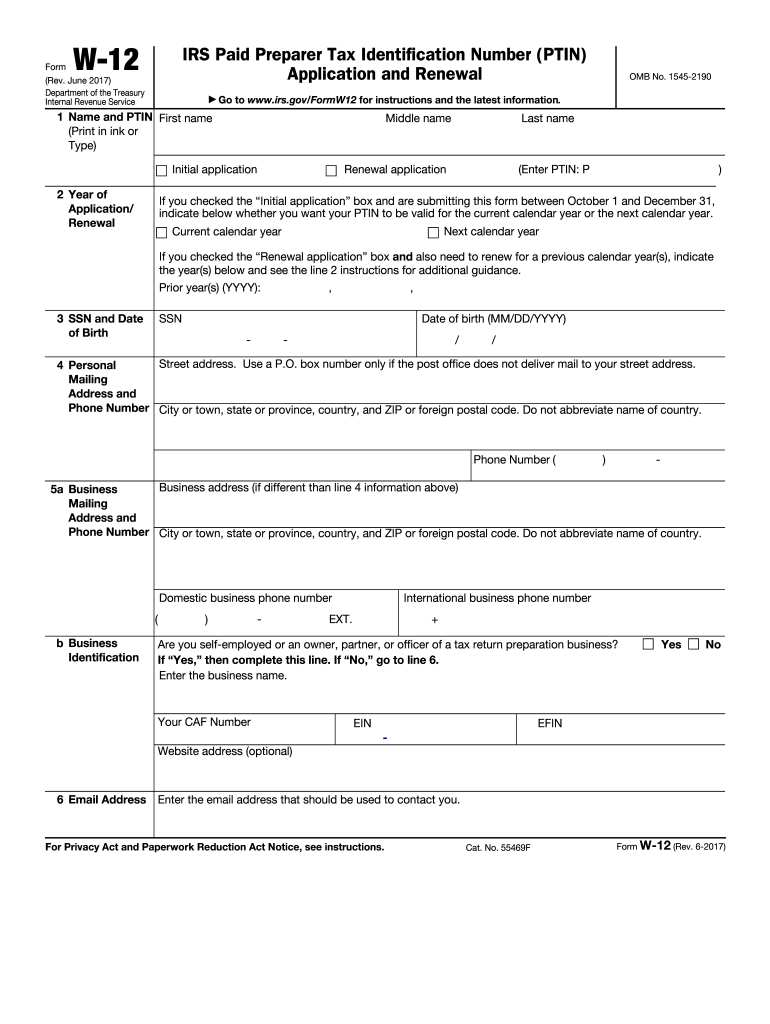
The IRS Form W-12, often referred to as the "gov ptin 2017 form," is specifically designed for applying or renewing the Paid Preparer Tax Identification Number (PTIN). This federal requirement is aimed at professionals who prepare tax returns for compensation. It is critical for registered tax preparers to have a PTIN to comply with IRS mandates and continue practicing legally.
Key Components
- Personal Information: Applicants must provide identification details such as their name, social security number, and contact information.
- Tax Compliance: This section ensures the applicant's compliance with past tax obligations, promoting integrity within the tax preparation industry.
- Professional Credentials: Relevant professional designations that qualify the preparer for certain tax filing responsibilities are included here.
Practical Application
Understanding the specific sections within the form and their respective roles provides clarity for accurate submission, reducing processing errors and ensuring compliance.
Steps to Complete the IRS Form W-12
Completing the IRS Form W-12 accurately is crucial to avoid delays or rejections. Here's a step-by-step guide:
- Gather Required Information: Before beginning, collect personal identification details, any professional certifications, and past tax records.
- Fill Personal Details: Start by entering your name, social security number, and contact details precisely as requested.
- Provide Tax Compliance History: Ensure you report any past tax compliance issues diligently.
- Include Professional Credentials: List all relevant certifications that qualify you to prepare taxes.
- Review Thoroughly: Double-check all entries for accuracy and completeness.
- Submission: Choose the appropriate submission method — either electronically or via mail.
Examples for Better Understanding
For instance, a tax preparer who recently completed their Enrolled Agent exam must include this detail within the professional credentials section to maximize their service offerings.
How to Obtain the IRS Form W-12
Acquiring the W-12 form is straightforward, offering multiple access points to accommodate varied preferences.
- Online Download: The official IRS website hosts downloadable PDF versions of the form for immediate access.
- Physical Copies: Local IRS offices provide physical forms upon request.
- Tax Software: Entities like TurboTax and QuickBooks often incorporate these forms into their platforms for seamless management.
Step-by-step Access
- Visit the IRS Website: Ensure you navigate to the official IRS portal to avoid fraudulent sources.
- Locate the Form Section: Find the tax forms repository and select Form W-12.
- Download and Print: For a hard copy, printing may be the most convenient option.
Legal Use and Compliance of the IRS Form W-12
Adherence to legal guidelines when using the W-12 form is essential for maintaining compliance and avoiding penalties.
Legal Context and Obligations
- Form Legality: The W-12 is legally binding, requiring truthful and accurate reporting of all requested information.
- Reasons for Compliance: Tax preparers who operate without a PTIN are subject to significant penalties and fines.
- Use Cases: Each form submission serves as a formal declaration of preparedness and experience as a tax professional.
Understanding these elements ensures preparers uphold their professional responsibilities and operate within legal confines.
IRS Guidelines and Penalties for Non-Compliance
Navigating IRS requirements is critical for tax preparers using Form W-12 to maintain active compliance and avoid potential penalties.
Critical IRS Guidelines
- Renewal Frequencies: Renewing the PTIN annually is essential, even for consistent and longstanding preparers.
- Eligibility Checks: The IRS conducts periodic reviews to assess compliance with tax filings.
- Certification Verification: Professional credentials are subject to random checks by the IRS.
Penalties Enforced by the IRS
Failing to provide accurate information or neglecting PTIN renewal can lead to:
- Fines: Substantial monetary penalties based on the severity of non-compliance.
- Suspension: Potential suspension of practice rights if found guilty of gross negligence.
- Legal Repercussions: Severe cases may lead to formal legal action, impacting future work potential.
Required Documents for Completing the IRS Form W-12
Preparing necessary documentation before completing Form W-12 simplifies the application process and reduces errors.
Checklist of Essential Documents
- Personal Identification: Such as a passport or driver’s license.
- Social Security Number: A valid SSN is mandatory for processing.
- Tax Compliance Records: Past two years of tax filings to confirm good standing.
- Professional Certificates: Proof of qualifications obtained through recognized institutions.
Recommendations for Efficient Preparation
Maintain an organized file of these documents, encouraging streamlined access during the application process and ensuring verification accuracy.
Form Submission Methods: Online vs. Mail
Different submission methods cater to varying preferences, providing flexibility for applicants.
Online Submission Process
- Benefits: Instant confirmation of receipt and faster processing time.
- Steps to Initiate: Log in to the IRS portal, follow upload instructions, and await confirmation.
Mailing the Form
- Advantages: Ideal for those without internet access or who prefer tangible records.
- Mailing Instructions: Acquire the IRS address from the official site and ensure appropriate postage to avoid delays.
Considerations for Both Options
Irrespective of the method chosen, maintaining a copy of the completed form aids in referencing and potential follow-ups.
Filing Deadlines and Important Dates
Strictly adhering to deadlines guarantees continued certification without lapses.
Key Deadlines
- Renewal Submission Date: Typically due by December 31 each year to maintain active status.
- Renewal Window: Late October to early January, accommodating preparers who finalize tax seasons late.
Potential Extensions
While extensions are seldom granted, awareness of available support channels can aid preparers facing unforeseen delays or difficulties.
Maintaining a comprehensive understanding of these guidelines helps preparers ensure continued compliance and seamless service delivery.