Form ct 1041 k 1-2026

Get Form
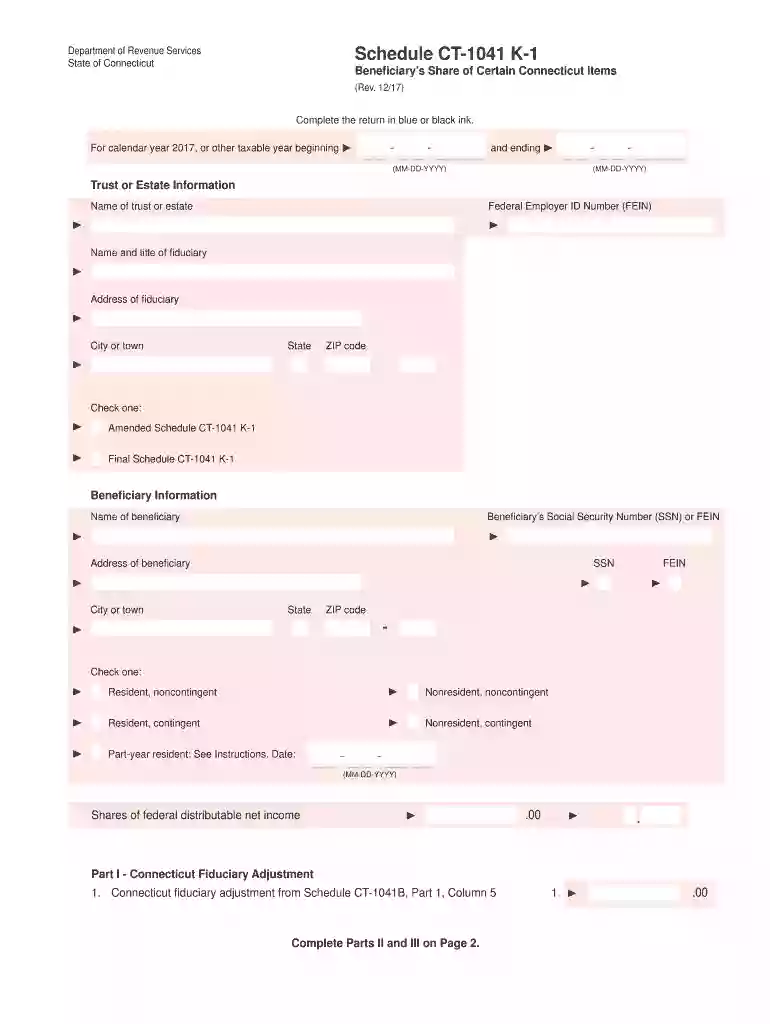
form ct 1041 k 1 Preview on Page 1

Here's how it works

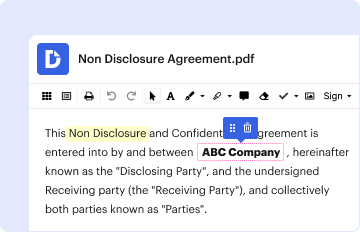
01. Edit your form online
Type text, add images, blackout confidential details, add comments, highlights and more.

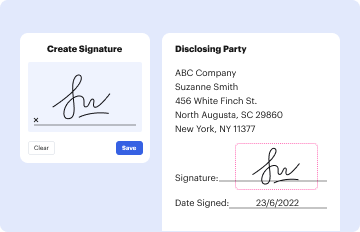
02. Sign it in a few clicks
Draw your signature, type it, upload its image, or use your mobile device as a signature pad.

03. Share your form with others
Send it via email, link, or fax. You can also download it, export it or print it out.

How to use or fill out form ct 1041 k 1 with our platform

Form edit decoration
9.5
Ease of Setup
DocHub User Ratings on G2
9.0
Ease of Use
DocHub User Ratings on G2
  1. Click ‘Get Form’ to open the CT-1041 K-1 in the editor.
  2. Begin by filling out the Trust or Estate Information section. Enter the name of the trust or estate, Federal Employer ID Number (FEIN), and details of the fiduciary including name, title, and address.
  3. In the Beneficiary Information section, input the beneficiary's name, Social Security Number (SSN) or FEIN, and their address. Ensure to check the appropriate box indicating their residency status.
  4. Complete Part I by transferring entries from Schedule CT-1041B for Connecticut fiduciary adjustments. If there are no adjustments, this part can be skipped.
  5. Proceed to Part II to report Connecticut-sourced income. Fill in amounts for interest income, dividends, capital gains, and any other relevant income sources as applicable.
  6. Finally, complete Part III for any applicable credits. Make sure all entries are accurate before saving your work.

Start using our platform today for free to simplify your form completion process!

See more form ct 1041 k 1 versions

We've got more versions of the form ct 1041 k 1 form. Select the right form ct 1041 k 1 version from the list and start editing it straight away!
Versions Form popularity Fillable & printable
2023 4.3 Satisfied (47 Votes)
2022 4.7 Satisfied (45 Votes)
2021 4.8 Satisfied (53 Votes)
2020 4.2 Satisfied (62 Votes)
2019 4.4 Satisfied (193 Votes)
2017 4.3 Satisfied (203 Votes)
2016 4.3 Satisfied (140 Votes)
2014 4.4 Satisfied (339 Votes)
2013 4 Satisfied (35 Votes)
2012 4.2 Satisfied (26 Votes)
be ready to get more

Complete this form in 5 minutes or less

Get form

Got questions?

We have answers to the most popular questions from our customers. If you can't find an answer to your question, please contact us.
Contact us
Schedule K-1 and Form 1041 An estate or trust that generates income of $600 or more; and estates with nonresident alien beneficiaries must file a Form 1041. Income received from the trust or estate and deductions and credits is reported to beneficiaries on a K-1.
Schedule K-1 is used to report the amount of income each party is responsible for in a pass-through entity, like an S corporation or partnership. Each shareholder or partner will receive a Schedule K-1.
A Form K filing is used to cancel a previous state filing and is submitted to the state agency that regulates motor carrier financial responsibility in your businesss home state.
Purpose of Schedule K-1 The corporation uses Schedule K-1 to report your share of the corporations income, deductions, credits, and other items. Keep it for your records. Dont file it with your tax return unless backup withholding is reported in box 13 using code O. (See the instructions for Code O.
IRS Schedule K-1 (Form 1041) Beneficiarys Share of Income, Deductions, Credits, etc. is used to report a beneficiarys share of income, deductions, and credits from a trust or estate. The fiduciary must file Schedule K-1 with the IRS for each beneficiary and provide each beneficiary with a copy.

Security and compliance

At DocHub, your data security is our priority. We follow HIPAA, SOC2, GDPR, and other standards, so you can work on your documents with confidence.

Learn more
ccpa2
pci-dss
gdpr-compliance
hipaa
soc-compliance

People also ask

You can file your Schedule K-1 form when you submit your Form 1065 or 1120S to the IRS. The easiest thing to do is to submit the form electronically by using IRS Free File or tax prep software. You can also file the form by mail.
A pass-through entity (PE) must furnish Schedule CT K-1, Members Share of Certain Connecticut Items, to all members. General Instructions for PEs. A PE must complete Part 1 for resident noncorporate members, nonresident noncorporate members, and members that are pass-through entities.
The fiduciary of a nonresident trust or estate must file Form CT‑1041 if the trust or estate: Had income derived from or connected with sources within Connecticut; Incurred a net operating loss for Connecticut income tax purposes, but not for federal income tax purposes; or.

Related links