



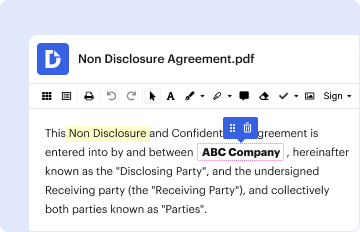
01. Edit your form online
Type text, add images, blackout confidential details, add comments, highlights and more.

Type text, add images, blackout confidential details, add comments, highlights and more.
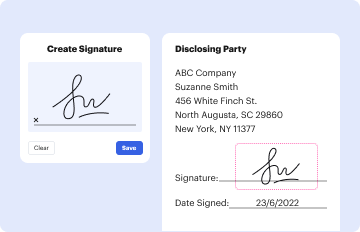
Draw your signature, type it, upload its image, or use your mobile device as a signature pad.
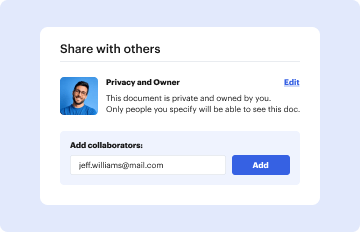
Send it via email, link, or fax. You can also download it, export it or print it out.
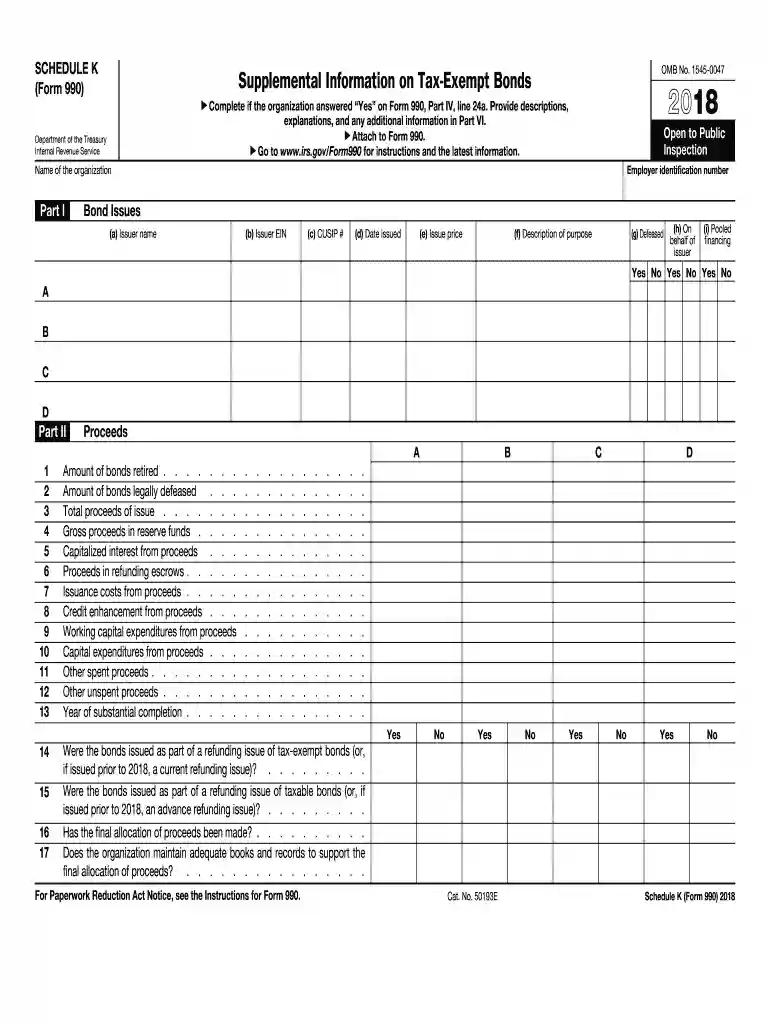
IRS Form Schedule K 2017 is designed for organizations involved with tax-exempt bonds. This form is an integral part of Form 990, which tax-exempt organizations use to provide supplemental information about their operations. Specifically, Schedule K provides detailed information regarding bond issues, proceeds, and compliance with federal tax requirements.
Completing IRS Form Schedule K 2017 requires gathering detailed information on your organization's bond activity. Organizations must carefully detail their use of proceeds, outline compliance processes, and document corrective measures if needed.
Accessing IRS Form Schedule K 2017 is straightforward. The form is available for download from the IRS website or through tax software compatible with IRS forms.
Completing Schedule K involves meticulous data entry and understanding of applicable federal tax laws regarding tax-exempt bonds.
Schedule K is predominantly used by tax-exempt organizations, such as nonprofits and educational institutions, that issue tax-exempt bonds. These entities must report their bond activities to the IRS for compliance purposes.
Understanding key terminology is critical when dealing with IRS Form Schedule K 2017 to ensure accurate completion.
Meeting filing deadlines is crucial to avoid penalties. Schedule K is filed as part of Form 990, which follows specific timelines.
Failure to timely file or accurately complete Schedule K can result in significant penalties imposed by the IRS.
These sections collectively provide a comprehensive understanding of IRS Form Schedule K 2017, and its critical role for organizations dealing with tax-exempt bonds.
We've got more versions of the irs form schedule k 2017 form. Select the right irs form schedule k 2017 version from the list and start editing it straight away!
| Versions | Form popularity | Fillable & printable |
|---|---|---|
| 2024 | 4.3 Satisfied (39 Votes) | |
| 2023 | 4.1 Satisfied (50 Votes) | |
| 2022 | 4.8 Satisfied (42 Votes) | |
| 2021 | 4.8 Satisfied (101 Votes) | |
| 2020 | 4.2 Satisfied (104 Votes) | |
| 2019 | 4.3 Satisfied (158 Votes) | |
| 2018 | 4.3 Satisfied (141 Votes) | |
| 2017 | 4.3 Satisfied (149 Votes) | |
| 2016 | 4.4 Satisfied (234 Votes) |
At DocHub, your data security is our priority. We follow HIPAA, SOC2, GDPR, and other standards, so you can work on your documents with confidence.
Schedule K-1 (K-1) is a form provided to taxpayers to inform them of the taxable income, deductions, credits, and other information that flows through to themRead more
This list identifies the codes used on Schedule K-1 for all partners and provides summarized reporting information for partners who file Form 1040. For detailedRead more


