




01. Edit your form 1041 online
Type text, add images, blackout confidential details, add comments, highlights and more.

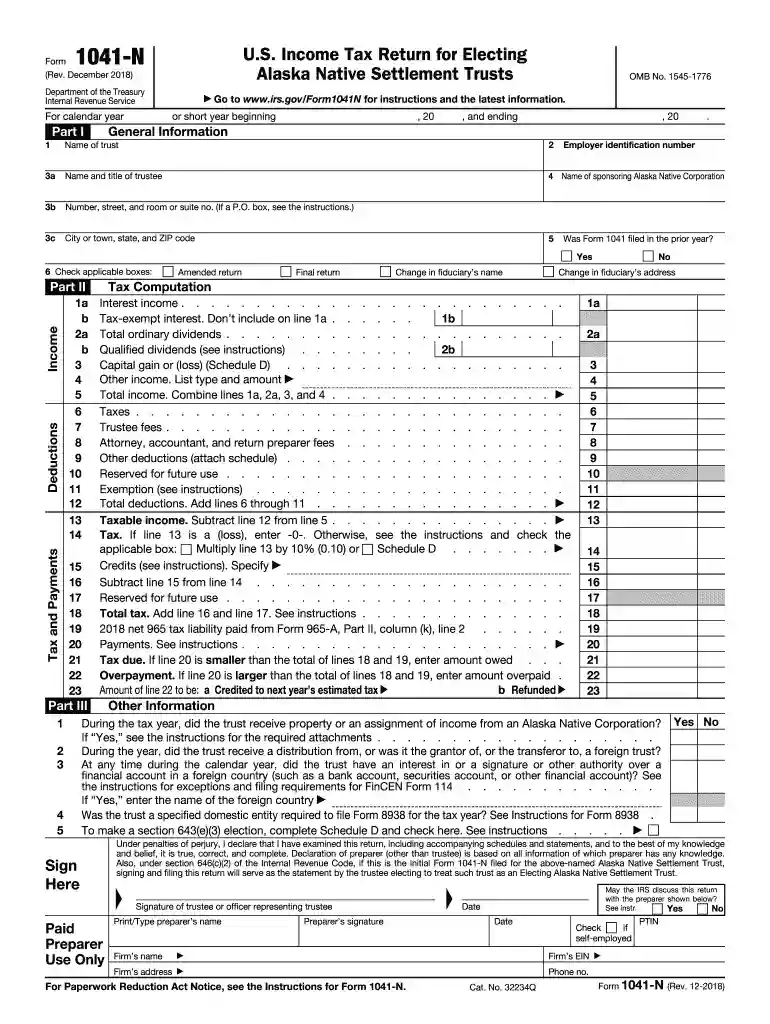
Type text, add images, blackout confidential details, add comments, highlights and more.

Draw your signature, type it, upload its image, or use your mobile device as a signature pad.

Send it via email, link, or fax. You can also download it, export it or print it out.
The 1041 form from 2005 is primarily used for reporting the income, deductions, and tax liabilities of estates and trusts. This form acts as an income tax return specifically designed for estates and trusts, which are legal entities that hold assets under the management of a trustee or executor. The form allows these entities to report financial activities during a fiscal year. Importantly, the form distinguishes between ordinary income, capital gains, and other forms of revenue and loss, ensuring comprehensive reporting and compliance with IRS mandates.
Acquiring the 1041 form for the year 2005 can be essential for reviewing past tax returns or ensuring accurate record-keeping. While the physical form from that year may not be available at every IRS location, it can typically be downloaded from the IRS archives on their official website. Additionally, electronic tax software packages often provide access to older form versions, allowing users to print or e-file as necessary.
Filling out Form 1041 for 2005 involves several steps to ensure accurate reporting. It begins with gathering all necessary financial documents related to the estate or trust.
Form 1041 in its 2005 iteration is generally used by executors of estates and trustees of trusts. Estates that have reached income thresholds requiring taxation and have an individual responsible for legal oversight fall into this category. Trusts created for asset management, typically handled by trustees for beneficiaries, also utilize this form to declare annual income and deductions.


The 1041 form is structured to cover various elements critical for complete financial disclosure.
Certain terminology is vital for understanding and completing Form 1041 accurately.
Failing to file the 1041 form accurately or timely can lead to significant penalties.
Adhering to legal standards using the 1041 form ensures compliance with IRS regulations. The fulfillment of fiduciary duties involves timely and truthful reporting to ensure the estate or trust operates transparently within the law.
We've got more versions of the form 1041 form. Select the right form 1041 version from the list and start editing it straight away!
At DocHub, your data security is our priority. We follow HIPAA, SOC2, GDPR, and other standards, so you can work on your documents with confidence.
The Commissioner may terminate an automatic extension at any time by mailing to the individual a notice of termination at least 10 days prior to the terminationRead more
Form 1041 (2005). For Privacy Act and Paperwork Reduction Act Notice Form 1041 (2005). Page 3. Alternative Minimum Tax (see pages 26 through 32 ofRead more
Any income generated by the estates assets is reported on Form 1041 for each taxable year. The income is taxed either at the estate tax rates, or passedRead more


