




01. Edit your rev 1543 online
Type text, add images, blackout confidential details, add comments, highlights and more.

Type text, add images, blackout confidential details, add comments, highlights and more.

Draw your signature, type it, upload its image, or use your mobile device as a signature pad.

Send pa rev 1543 form pdf via email, link, or fax. You can also download it, export it or print it out.
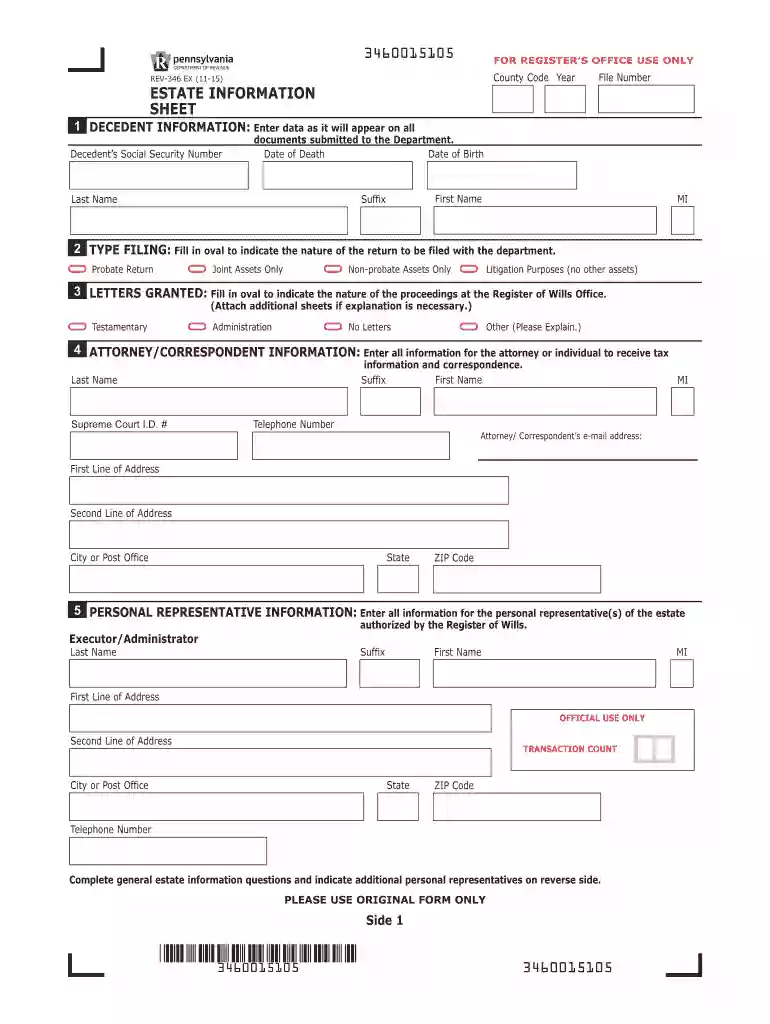
The PA Estate Information Sheet Rev 946 is a crucial document used in the administration of estates in Pennsylvania. This form serves as an essential tool for individuals filing with the Register of Wills, ensuring that all necessary data for proper estate administration is included. Key sections of this form encompass vital information about the decedent and the personal representative, and details related to the legal proceedings involved in the estate's handling.
The PA Estate Information Sheet contains several important sections, each designed to capture specific information needed for the estate administration process. Understanding these sections aids in providing complete and accurate information.
Decedent Information: This section captures the vital details about the deceased, including name, date of birth, date of death, and any aliases. Accurate entry of this information is critical to avoid delays in the estate process.
Type of Filing: Here, the filer must indicate whether this is an initial filing or a subsequent filing related to the estate, such as for the issuance of Letters Testamentary or Administration. This allows the Register of Wills to categorize the case appropriately.
Attorney/Correspondent Information: Including contact information for the attorney representing the estate or any other representatives is crucial for correspondence throughout the estate administration process.
Personal Representative Details: This section should include the name and contact information of the personal representative who will manage the estate’s affairs, ensuring all legal obligations are fulfilled.
Assets and Liabilities Overview: Although not always required, providing an overview of the estate’s assets and liabilities can expedite the review process and provide context for the filings.
Accurate contact information is critical for all parties involved in the process. The inclusion of reliable and up-to-date contact details minimizes the risk of delays caused by miscommunication. Further, it ensures that all notices, hearings, and other necessary communications reach the appropriate individuals without issue.
Understanding the filing procedures and deadlines is essential to comply with Pennsylvania's probate laws.
Submission Method: The PA Estate Information Sheet can typically be submitted either online or in-person at the county Register of Wills. Each county may have different specific requirements regarding format and submission methods.
Deadlines: Typically, the estate information sheet must be filed shortly after the decedent's death, often within a specified time frame, such as within 90 days. Missing this deadline may result in penalties or delays in the administration process.
To ensure the estate administration proceeds smoothly, it’s vital that all information is accurately reported in compliance with Pennsylvania law. Failure to do so can lead to several potential issues:
Penalties: There may be financial penalties for late filings or inaccuracies that mislead the Register of Wills.
Delays in Administration: Incorrect, incomplete, or untimely filings can prolong the estate administration process, impacting beneficiaries.
The PA Estate Information Sheet has undergone various revisions, with Rev 946 being one of the latest updates. It's important for filers to ensure they are using the most current version to comply with legal requirements.
Various scenarios necessitate the completion of the PA Estate Information Sheet. These can range from typical probate situations to more complex estate matters that involve:
Inheritance Tax Returns: The form assists in the processing of inheritance tax returns, ensuring that the necessary financial obligations are clearly documented.
Simple Estates vs. Complex Estates: Different complexities in estates can dictate how comprehensive the information must be. Simpler estates might require less documentation than those involving multiple beneficiaries or significant assets.
By understanding these key aspects of the PA Estate Information Sheet Rev 946, individuals involved in estate administration can prepare accurately and efficiently, minimizing delays and ensuring compliance with Pennsylvania probate law.
We've got more versions of the rev 1543 form. Select the right rev 1543 version from the list and start editing it straight away!
At DocHub, your data security is our priority. We follow HIPAA, SOC2, GDPR, and other standards, so you can work on your documents with confidence.
by AME Rhodes 2007 Cited by 50 INTRODUCTION. Disposing of property at the owners death can be a daunting and complex task today. There are federal and state tax concerns, probate court.Read more
The information presented in this document is based on laboratory studies, pilot tests, and full-scale projects where ISCO has been used to remediateRead more
Apr 15, 1976 If you file Form 2106, and you are not re- quired to file Form 4562, report information about listed property on that form and not on Form 4562.Read more


