LANDLORD/TENANT BASICS - California Courts - State of California 2026

Get Form
LANDLORD/TENANT BASICS - California Courts - State of California Preview on Page 1

Here's how it works

01. Edit your form online
Type text, add images, blackout confidential details, add comments, highlights and more.
02. Sign it in a few clicks
Draw your signature, type it, upload its image, or use your mobile device as a signature pad.
03. Share your form with others
Send it via email, link, or fax. You can also download it, export it or print it out.

How to use or fill out LANDLORD/TENANT BASICS - California Courts - State of California with DocHub

Form edit decoration
9.5
Ease of Setup
DocHub User Ratings on G2
9.0
Ease of Use
DocHub User Ratings on G2
  1. Click ‘Get Form’ to open it in the editor.
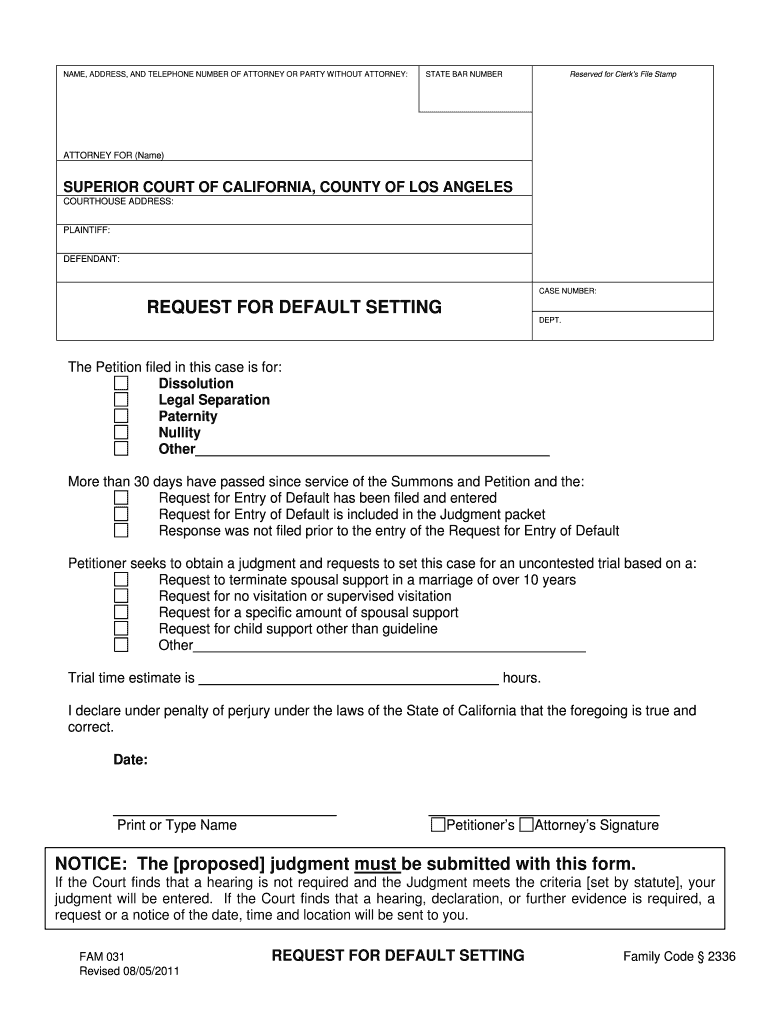
  2. Begin by entering the NAME, ADDRESS, and TELEPHONE NUMBER of the attorney or party without an attorney in the designated fields at the top of the form.
  3. Fill in the STATE BAR NUMBER and indicate who you are representing by entering their name next to 'ATTORNEY FOR (Name)'.
  4. In the COURTHOUSE ADDRESS section, provide the address of the Superior Court of California, County of Los Angeles.
  5. Complete the PLAINTIFF and DEFENDANT sections with the respective names involved in your case.
  6. Enter your CASE NUMBER for reference. This is crucial for tracking your case within court records.
  7. Select the type of petition filed from options such as Dissolution, Legal Separation, Paternity, or Nullity by checking the appropriate box.
  8. Indicate if more than 30 days have passed since service and complete any relevant details regarding requests for judgment or trial estimates.
  9. Finally, declare under penalty of perjury that all information provided is true and correct by signing and dating where indicated.

Start using our platform today to easily fill out your LANDLORD/TENANT BASICS form for free!

See more LANDLORD/TENANT BASICS - California Courts - State of California versions

We've got more versions of the LANDLORD/TENANT BASICS - California Courts - State of California form. Select the right LANDLORD/TENANT BASICS - California Courts - State of California version from the list and start editing it straight away!
Versions Form popularity Fillable & printable
2018 4.8 Satisfied (36 Votes)
2011 4 Satisfied (41 Votes)
be ready to get more

Complete this form in 5 minutes or less

Get form

Got questions?

We have answers to the most popular questions from our customers. If you can't find an answer to your question, please contact us.
Contact us
Californias Tenant Protection Act The only lawful way to evict a tenant is to file lawsuit and wait for the court to order the Sheriff or Marshal to carry out the eviction. Landlords cannot change the locks, shut off power, or remove personal property in order to force a tenant out of their home.
California passed a new landlord-tenant law that will provide additional protections for renters around just cause evictions. The law took effect on April 1, 2024, and requires landlords to have just cause to terminate tenancy after a California tenant has been placed in the unit for 12 months.
In California, a landlord cannot legally lock a tenant out of their rental unit without following the proper legal process. This is considered illegal ``self-help eviction. Here are key points regarding the issue:
If your landlord attempts to force you out without going through the eviction process, contact an attorney. A tenant who is illegally evicted may sue to reoccupy the unit and for damages. A landlord cannot retaliate against a tenant for exercising their rights under the Rent Ordinance or other laws.
A LANDLORD CANNOT EVICT SOMEONE THEMSELF: You cannot evict someone yourself without going through the proper steps. It is against the law. Only the Sheriff can evict someone. That is why you may need an Unlawful Detainer.

Security and compliance

At DocHub, your data security is our priority. We follow HIPAA, SOC2, GDPR, and other standards, so you can work on your documents with confidence.

Learn more
ccpa2
pci-dss
gdpr-compliance
hipaa
soc-compliance

People also ask

California Landlord Tenant Rental Laws Rights for 2024 Key rights include limits on rent increases through state and local rent control ordinances, just cause eviction requirements, and the right to a habitable living space.
A wave of new legislation strengthening tenant protections in California goes into effect in 2024. These laws limit evictions, cap security deposits, extend rent control, and make it easier for tenants to fight back against landlords trying to skirt housing regulations.

Related links