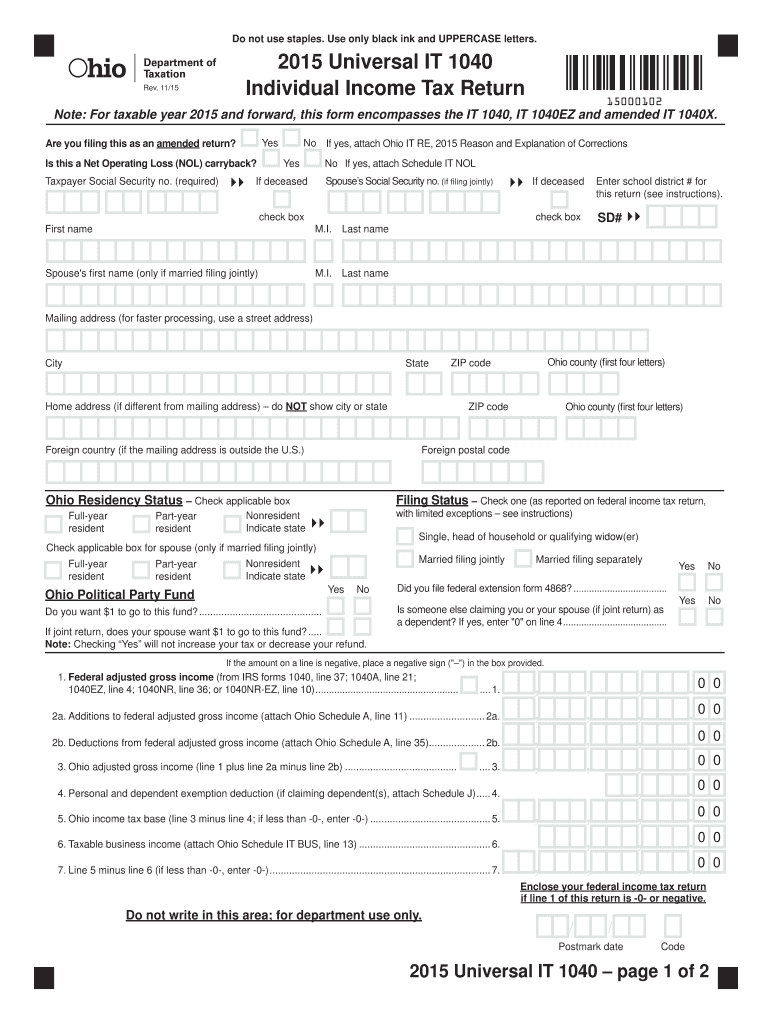







Definition and Purpose of the Ohio Universal Tax 2015 Form
The Ohio Universal Tax 2015 Form, officially known as the IT 1040 Individual Income Tax Return, serves as the standard form for reporting individual income taxes in the state of Ohio for the year 2015. This form is integral for individuals to declare their taxable income, calculate tax liabilities, claim any applicable credits, and determine the net amount owed or refund due. It ensures compliance with Ohio state tax laws by summarizing all relevant financial information required for state tax filing.
Steps to Complete the Ohio Universal Tax 2015 Form
Completing the Ohio Universal Tax 2015 Form involves several precise steps to ensure accuracy and compliance:
-
Gather Personal Information:
- Social Security Number
- Residency status details
-
Determine Income:
- Compile all sources of income, including wages, salaries, dividends, and other taxable earnings.
-
Calculate Adjustments:
- Apply any eligible deductions to adjust gross income.
-
Compute Tax Liabilities:
- Use state tax tables to compute the correct tax liability.
-
Apply Credits and Deductions:
- Determine eligibility for credits such as the Ohio Resident Credit or Senior Citizen Credit, and apply them accordingly.
-
Finalize the Calculation:
- Subtract credits from the gross tax to determine the net tax liability or refund.
Required Documents for Filing
To accurately complete the Ohio Universal Tax 2015 Form, certain documents need to be on hand:
- W-2 and 1099 forms for reporting wages and miscellaneous income
- Prior year’s tax return for reference
- Proofs of any deductible expenses, like charitable contributions
- Records of estimated tax payments made throughout the year
Carefully organizing and verifying all documents helps facilitate a smoother and more accurate tax-filing process.
Key Elements of the Ohio Universal Tax 2015 Form
Several critical sections require attention when completing the IT 1040 Form:
- Personal Information Section: Details like name, address, and Social Security Number
- Income Summary Section: Comprehensive listing of all income sources
- Taxable Income Calculation: Detailing deductions and modifications applicable to gross income
- Tax Credit Utilization: Entries for applicable credits to lower taxable income
- Amount Owed or Refund Due: Final calculations resulting in either a tax liability or a refund
Each section should be filled with precision to avoid errors that could lead to delays or additional tax liabilities.
Important Terms Related to the Ohio Universal Tax 2015 Form
Understanding relevant terms is essential for accurate filing:
- Adjusted Gross Income (AGI): Gross income minus adjustments such as student loan interest deduction
- Ohio Resident Credit: Credit for individuals who were taxed by another state
- Exemption Amounts: Standard deductions allowed based on filing status and dependents
Knowing these and other terms aids in properly utilizing deductions and credits to minimize tax obligations.
Filing Deadlines and Important Dates
For the tax year 2015, the deadline to file the Ohio IT 1040 Form was April 18, 2016. Extensions to file could be requested but required submission by the same date. Failure to file by this deadline incurs interest and penalties on any outstanding tax liabilities.
Common Scenarios for Using the Ohio Universal Tax 2015 Form
Individuals in various situations typically use this form:
- Retirees: Often file to report pensions and social security benefits
- Self-Employed Individuals: Report independent contractor earnings
- Students: File to claim withholding from part-time jobs
Each taxpayer's scenario dictates the specific credits and deductions available, necessitating careful evaluation of eligibility.
Penalties for Non-Compliance
Failing to file or submitting an incorrect Ohio Universal Tax 2015 Form can lead to several penalties:
- Late Filing Penalty: Charged for returns filed past the deadline without an extension
- Underpayment Penalty: Assessed on taxes owed if quarterly estimated payments were insufficient
- Failing to Furnish Correct Information: Additional fines for incorrect or missing taxpayer information
Ensuring full compliance by meeting deadlines and providing accurate data is crucial to avoid these penalties.