
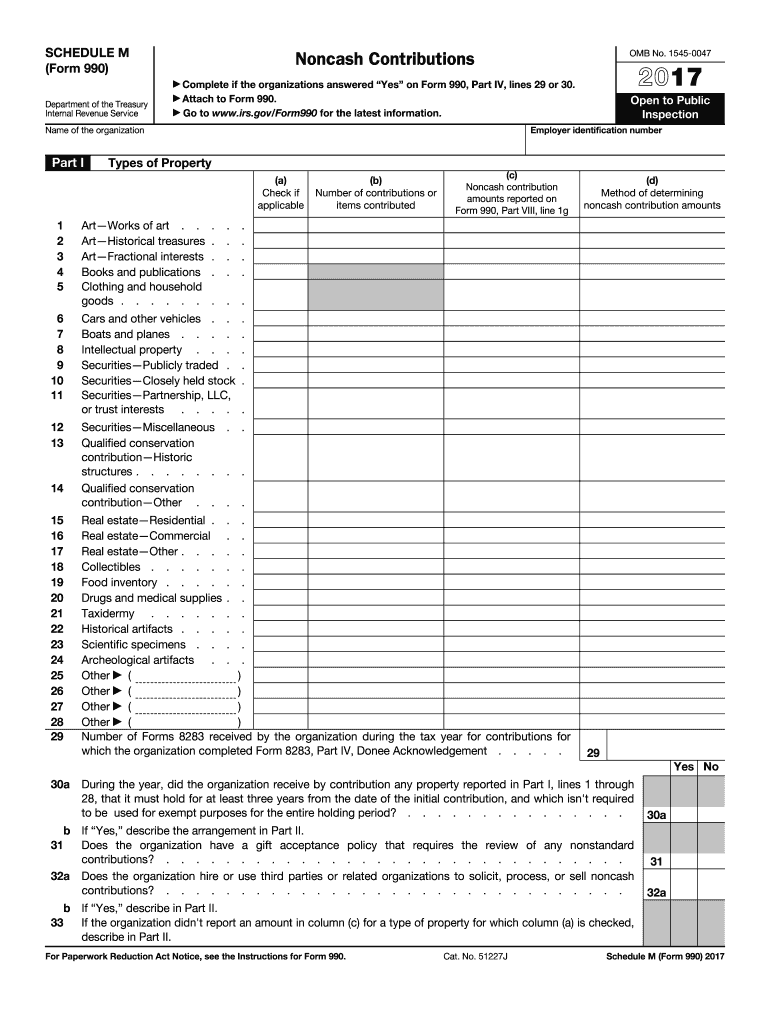







Definition and Purpose of the 2017 M Form
The 2017 M Form is utilized by organizations to disclose various types of noncash contributions received throughout the year. This form is a part of Schedule M (Form 990), which is specifically designed for reporting detailed information about the nature and amount of these contributions. It requires organizations to provide comprehensive details about different property types, including art, real estate, and intellectual property. The purpose of this form is to ensure transparency and accuracy in how organizations report their received contributions, supporting both regulatory compliance and informed decision-making.
How to Use the 2017 M Form
Using the 2017 M Form involves a systematic approach to collecting and reporting data. Organizations must identify the specific types of noncash contributions received during the tax year. This includes physical items, financial securities, and intellectual assets. Once identified, organizations need to document how the value of these contributions was determined. This often involves professional appraisals or market assessments.
- Gather detailed information about each type of noncash contribution.
- Use professional services to assess the value of unique contributions.
- Complete each relevant section of the form based on the gathered data.
- Verify all entries for accuracy to avoid potential compliance issues.
Important Considerations
- Understand the nature of each donation and its value.
- Keep supporting documents for valuation and appraisal readily available.
- Note any legal or contractual obligations tied to particular donations.
How to Obtain the 2017 M Form
The 2017 M Form can be accessed through several official channels. Organizations typically receive a notification about the need to complete this part of the Form 990 if their total noncash contributions reach a significant threshold.
- From the IRS Website: The form is available for download on the IRS website under the forms and publications section.
- From Tax Software Platforms: Many tax software solutions, such as TurboTax or QuickBooks, include the 2017 M Form in their suite of comprehensive tax filing tools.
- Professional Tax Advisors: For those utilizing professional services, tax advisors often provide the necessary forms and assist in the completion process.
Steps to Complete the 2017 M Form
Completing the 2017 M Form requires careful documentation and attention to detail. Below are the essential steps:
- Collect Necessary Information: Gather all records related to noncash contributions, including descriptions, donor details, and valuation methods.
- Determine Contribution Value: Ensure that each noncash item has a verified value supported by market comparisons or certified appraisals.
- Complete the Form: Enter data into the appropriate sections of the form, adhering to IRS guidelines and ensuring all required fields are filled.
- Review and Verify: Double-check for accuracy in values and data entries to mitigate error risks.
- Submit the Form: Submit the completed 2017 M Form along with the annual Form 990 return.
Legal Use and Compliance
The legal use of the 2017 M Form extends to fulfilling the IRS's requirements for disclosure of noncash contributions on Form 990. Organizations are obligated to provide full disclosure. Non-compliance can lead to penalties.
Compliance Tips
- Ensure all records are maintained for at least three years for auditing.
- Familiarize with IRS Publication 561, which guides valuing donated property.
- Engage legal counsel if unclear about the legal obligations binding specific noncash contributions.
Key Elements Required on the 2017 M Form
The following elements are crucial when completing the 2017 M Form:
- Type of Property: Classify the types of property donated, such as artwork, real estate, or securities.
- Value of Property: Provide the appraised or market-assessed value of the items.
- Method of Valuation: Describe the method used to assess the monetary value of the property.
- List of Donors: Include donor names and relevant details where applicable, maintaining confidentiality if required.
Common Taxpayer Scenarios
Different taxpayers and organizations might encounter distinct scenarios when dealing with noncash contributions:
- Self-Employed Individuals: Often donate intellectual property or art to schools or nonprofits.
- Corporations: May contribute excess inventory or equipment to charities.
- Educational Institutions: Typically receive donations of art or property, needing precise valuations and documentation.
Examples
- A tech startup donating outdated equipment to a nonprofit requires proper assessments and detailed reporting.
- Artists contributing their works to museums should ensure their work is appraised by a certified appraiser.


Penalties for Non-Compliance
Failure to accurately complete or submit the 2017 M Form carries potential fines and penalties. Organizations may face significant financial repercussions for neglecting to disclose noncash contributions correctly.
- Monetary Fines: Resulting from underreported contributions or incomplete documentation.
- Loss of Tax-Exempt Status: Persistent non-compliance may risk the organization’s tax-exempt status.
- Reputational Damage: Inaccurate reporting can damage trust with donors and stakeholders.
Understanding the nuances and specific requirements of the 2017 M Form is crucial for compliance and beneficial for strategic organizational transparency.




