






Definition & Meaning
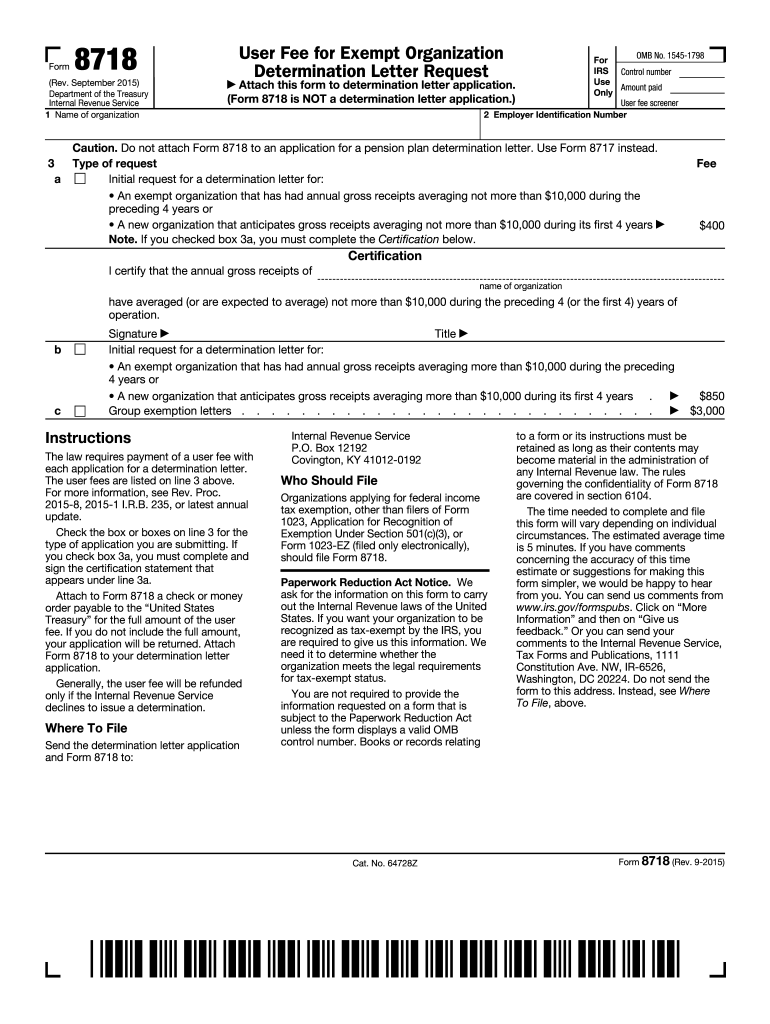
Form 8718, specifically for the year 2015, is the User Fee for Exempt Organization Determination Letter Request. It is used by organizations seeking determination letters regarding their tax-exempt status from the Internal Revenue Service (IRS). The form specifies the required fees based on the organization's gross receipts and includes instructions for submission. It also details the entities required to file it and provides a certification statement for organizations with low gross receipts.
Purpose and Utility
This form plays a crucial role for organizations wishing to affirm their tax-exempt status. By attaching Form 8718 to their determination letter application, these organizations comply with IRS requirements, thereby enabling them to qualify for exemptions and other related benefits.
How to Obtain Form 8
Form 8718 for the year 2015 can be obtained directly from the IRS website in a downloadable PDF format. It is essential to ensure the version corresponds to 2015, as variations in form structure or fee amounts might exist for other years. Once downloaded, the form can be filled out electronically, using document management tools like DocHub, or printed for manual completion.
Common Sources
- IRS Website: Locate via the "Forms & Publications" section.
- Tax Software: Available in programs that offer IRS form downloads.
- Tax Professionals: Accountants may provide copies when assisting with taxes.
Steps to Complete Form 8
- Enter Basic Information: Provide the organization's name, address, and identification number.
- Select Fee Amount: Determine the applicable user fee based on the organization's gross receipts; refer to the chart provided in the form.
- Certification: Fill out the certification statement, indicating the organization's commitment to the facts presented.
- Submit with Application: Ensure Form 8718 is attached to the determination letter application.
- Payment: Include the correct fee payment in check or money order form, payable to the United States Treasury.
Key Elements of Form 8
1. Organization Information Section
This part requires exact identification details such as the legal name, addresses, and Employer Identification Number (EIN). Completing these details accurately ensures correspondence is directed correctly and that there are no delays in processing.
2. Payment and Fee Structure
The fee amount is contingent upon the organization’s gross receipts. The form delineates several thresholds, each with its respective fee, ensuring that larger organizations contribute more to cover the cost of processing their determination request.
3. Certification Statement
Organizations must certify that the information provided is accurate and truthful, reinforcing the importance of honesty in financial representations to the IRS.
IRS Guidelines for Form 8
The IRS provides specific guidelines on how to fill out and submit Form 8718. This includes details on fee calculations and when an organization is required to file the form. Following these guidelines minimizes errors during submission and facilitates a more efficient review process by the IRS.
Detailed Requirements
- Documentation: Attach all necessary documentation to support the application.
- Deadlines: Adhere to submission deadlines set by the IRS to avoid penalties.
- Review and Accuracy: Double-check all entries for correctness and completeness.
Filing Deadlines / Important Dates
Organizations need to be mindful of particular filing deadlines associated with submitting Form 8718. These deadlines can affect the determination of their tax-exempt status and late submissions might incur penalties or delays.
Key Deadlines
- Submission Timing: Aligns with the period specified for tax-exempt application submissions.
- Payment Timing: Ensure that any fee payment accompanies the form to avoid rejection.
Penalties for Non-Compliance
Failing to properly file or pay the appropriate fees associated with Form 8718 can lead to penalties. These may include fines or interest charges on late fees. In addition, the IRS might delay processing the determination letter, impacting the organization's operations.
Potential Consequences
- Delayed Exemption Status: Impacts the organization's financial planning and donor relations.
- Financial Penalties: May be imposed for inaccuracies or late submissions.
- Reputational Impact: Can affect the credibility of the organization among stakeholders.
Who Typically Uses Form 8
Organizations such as nonprofits, charities, or other entities seeking an IRS determination letter for tax-exempt status commonly use Form 8718. The form is essential for those looking to substantiate their eligibility for federal tax exemptions and other related benefits.
Relevant Entity Types
- Nonprofit Organizations: Requiring federal tax-exempt recognition.
- Charitable Organizations: Seeking donor tax deduction eligibility.
- Foundations: Establishing their exemption from federal taxation under section 501(a).
Legal Use of Form 8
Form 8718 is governed by IRS regulations, ensuring its role in formalizing the tax-exempt status of applicable organizations. It obligates accurate data provision and adherence to federal tax requirements. Misuse of the form can lead to severe legal ramifications, including fines or loss of tax-exempt status.
Compliance Obligations
- Accurate Information: Organizations must ensure all details are correct.
- IRS Adherence: Follow IRS instructions precisely to uphold lawful status.
- Ethical Standards: Maintain ethical considerations in financial reporting and application.