






Definition and Meaning
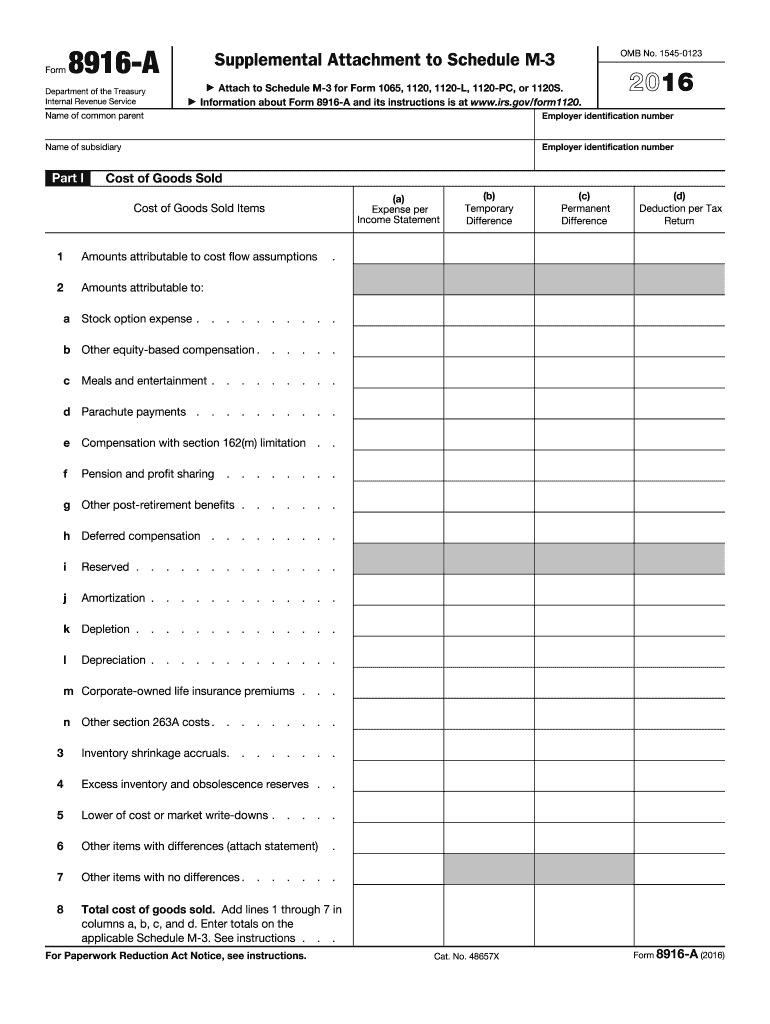
Form Schedule M-3, often referred to as "Schedule M-3," is a reconciliation form used by the Internal Revenue Service (IRS) as part of U.S. tax compliance. It plays a crucial role in detailing differences between financial accounting (book income) and taxable income for corporations and partnerships with substantial assets. The form ensures transparency and uniformity in tax reporting, preventing misreporting that could affect overall tax liabilities.
Importance in Tax Reporting
- It standardizes the presentation of adjustments between accounting and tax records.
- It is mandatory for entities with total assets of $10 million or more.
- Provides valuable insights for IRS audits, facilitating quicker identification of discrepancies.
How to Use the Form Schedule M-3 DocHubcom 2016
Using the form effectively requires a comprehensive understanding of both tax regulations and your organization's financial practices. The form is divided into parts, each focusing on specific financial aspects:
- Part I - Financial Information and Net Income: Retrieves general financial data and the starting point for adjustments.
- Part II - Reconciliation of Income: It covers specifics about income adjustments and deductions.
- Part III - Expense Adjustments: Lists detailed expenses with their reconciliations.
Utilizing DocHub enhances the process by allowing digital manipulation of the form such as annotation, adding comments, and digital signatures, ensuring an efficient workflow without paper handling.
Steps to Complete the Form Schedule M-3 DocHubcom 2016
Preparation
- Gather necessary accounting documentation, including income statements and relevant tax returns.
- Review IRS instructions specific to Schedule M-3 for the respective filing year.
Completion
- Part I - Provide basic financial and subsidiary information.
- Part II - Enter reconciliations for book income adjustments.
- Part III - List all expense-related reconciliations.
- Verify entries for accuracy and completeness before submission.
By employing DocHub, you can keep your work digitized, secure, and easily accessible, streamlining form completion and review stages.
Key Elements of the Form Schedule M-3 DocHubcom 2016
- Total Assets Detail: Critical for determining eligibility for filing.
- Reconciliation Sections: Divided into distinct income and deduction components.
- Signature Requirement: Validates the legal attestation of the information provided.
Supporting Documentation
- Ensure you include all requisite supporting documents that may be referenced during IRS audits.
IRS Guidelines
The IRS requires precise adherence to the Schedule M-3 instructions as any deviations can lead to discrepancies. Important guidelines include:
- Completing all applicable sections honestly and comprehensively.
- Strictly following sequence in reporting and reconciling accounts.
- Ensuring that data is consistent with other tax-related filings.
Non-compliance or inaccuracies can invoke penalties or detailed audits.
Required Documents
The completion of Schedule M-3 necessitates several supporting documents:
- Financial Statements (audited if applicable)
- Previous Year Tax Returns
- Consolidated Financial Data for multi-entity corporations
Timely collection and verification of these documents are paramount to confirm accuracy before submission through DocHub.
Filing Deadlines and Important Dates
Corporations generally must submit their Schedule M-3 along with their annual tax return by the due date specific to their organizational structure, typically falling on March 15 for corporations. Extensions are possible but require IRS approval.
Timeliness
Adherence to deadlines ensures avoidance of penalties and fosters favorable considerations for future extensions or negotiations with the IRS.
Penalties for Non-Compliance
Failure to submit Schedule M-3 accurately and timely may attract:
- Monetary fines
- Increased scrutiny or audits
As such, it's imperative to fully comprehend form requirements and utilize authoritative tools like DocHub for secure and precise submissions within stipulated timeframes.