


SUMMARY OF BID PRICES 2026

Get Form
SUMMARY OF BID PRICES Preview on Page 1

Here's how it works

01. Edit your form online
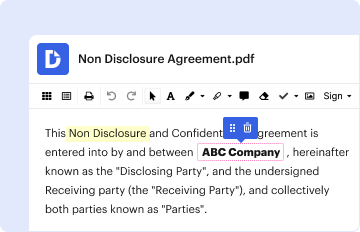
Type text, add images, blackout confidential details, add comments, highlights and more.
02. Sign it in a few clicks
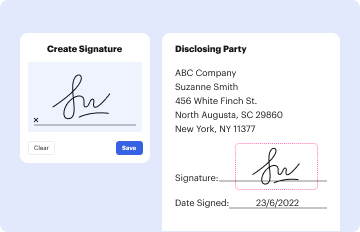
Draw your signature, type it, upload its image, or use your mobile device as a signature pad.
03. Share your form with others
Send it via email, link, or fax. You can also download it, export it or print it out.

How to use or fill out SUMMARY OF BID PRICES with our platform

Form edit decoration
9.5
Ease of Setup
DocHub User Ratings on G2
9.0
Ease of Use
DocHub User Ratings on G2
  1. Click ‘Get Form’ to open the SUMMARY OF BID PRICES in the editor.
  2. In the 'Part No.' field, enter the corresponding part number for each section of the Bill of Quantities (BOQ) where unit prices are listed.
  3. Next, fill in the 'Part Description' field with a detailed description that matches the entered 'Part No.' This ensures clarity and accuracy in your bid.
  4. For each entry, input the 'Total Amount' in Pesos for all pages that share the same 'Part Description'. This will help in summarizing your bid effectively.
  5. At the bottom of the form, calculate and enter the 'Total of Amounts' and provide a written version of this total in words under 'Total of All Amounts in words'.
  6. Finally, complete the signature section by entering your name, capacity, and signing with the date. Ensure you are duly authorized to sign on behalf of your organization.

Start using our platform today to streamline your bidding process for free!

be ready to get more

Complete this form in 5 minutes or less

Get form

Got questions?

We have answers to the most popular questions from our customers. If you can't find an answer to your question, please contact us.
Contact us
Think of it like making an offer at a flea market: if you spot an item, the price you shout out is your bid. In financial markets, a bid means Ill buy this at Rs. 100! If youre selling, this is the price youll get. Flip the coin, and we get the ask price (sometimes called offer).
Key Takeaways The bid represents the highest price a buyer will pay for a stock. The ask is the lowest price that a seller will accept. The difference between the bid and ask prices is called the spread. Trades occur when someone is willing to sell the security at the bid price or buy it at the asking price.
Consider the example of a narrow market, where the traded volume is high:A stocks bid price is ₹100 and its ask price is ₹101. A trader buys 1000 shares at the ask price, which brings the total cost to ₹1,01,000. On the next day, the stocks value increases by 4%.
Bid analysis is the process of evaluating bids in response to sourcing events. It is performed based on the cost analysis, wherein the bids submitted by all suppliers are compared and awarded to the most eligible bidder (supplier).
Example of Bid and Ask Prices Lets consider a practical example. Imagine Reliance Industries Ltd. stock has a bid price of ₹2,500 and an ask price of ₹2,510. To buy Reliance stock, you must pay ₹2,510, the ask price. If you wish to sell, you can only sell it for ₹2,500, the bid price.
be ready to get more

Complete this form in 5 minutes or less

Get form

People also ask

The bid price is the highest price a buyer will pay for a security at this moment. The ask price is the lowest price a seller will accept. The smaller the spread, the greater the liquidity of the given stock. The spread on a blue chip stock is a few pennies, indicating the large volume of shares being traded.

Related links