
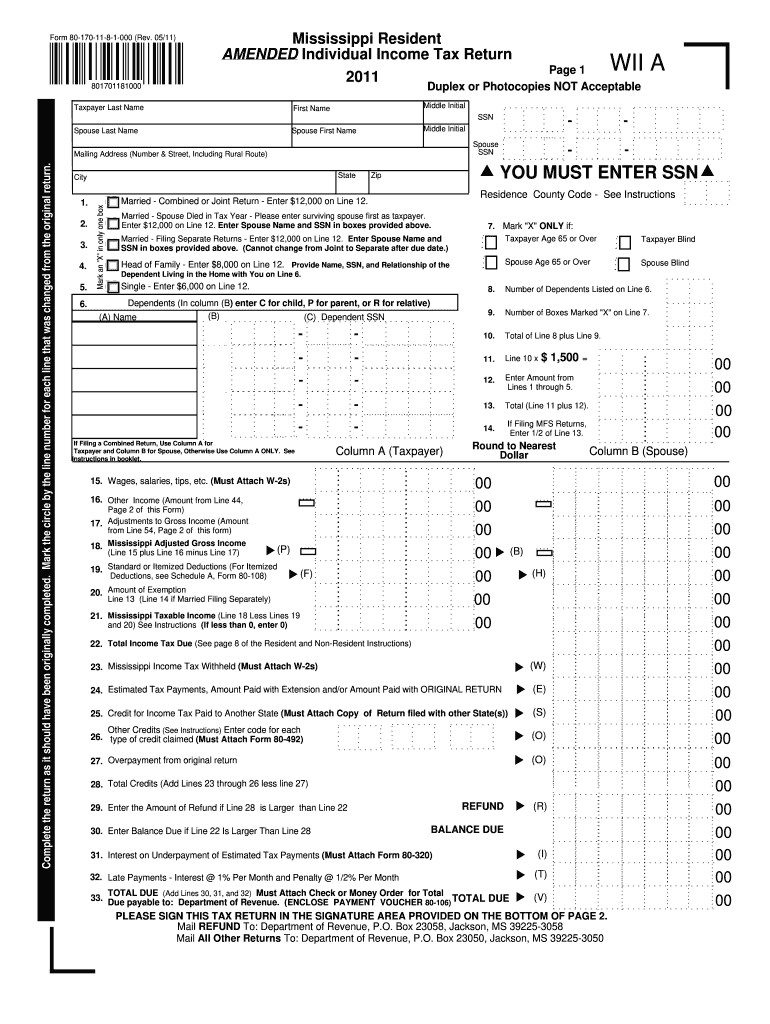







Definition & Meaning
The Mississippi State Tax Form is a crucial document for residents required to report their taxable income to the state government. It includes information on personal earnings, deductions, exemptions, and other taxable activities within the state. The form serves to calculate and ensure accurate payment of state taxes, helping to fund local infrastructure, public services, and community projects. Understanding the intricacies of this form is vital for fulfilling state tax obligations effectively.
How to Obtain the Mississippi State Tax Form
Obtaining the Mississippi State Tax Form can be done through multiple methods to suit individual preferences. Taxpayers can download the form from the Mississippi Department of Revenue's official website, ensuring they access the most recent version. Alternatively, forms can be acquired in person at local tax offices, libraries, or post offices during the tax season, which often provide printed copies for those who prefer a physical document. Utilizing trusted platforms like DocHub also allows digital access, where users can import and fill out forms online.
Steps to Complete the Mississippi State Tax Form
Filing the Mississippi State Tax Form requires attention to detail to ensure accuracy:
- Gather Required Documentation: Collect all financial documents reflecting income, deductions, and credits from the past year, including W-2s and 1099s.
- Fill Out Personal Information: Enter taxpayer and spouse details, noting filing status such as single, married, or head of household.
- Report Income Details: List all sources of income, including wages, dividends, and other earnings.
- Claim Deductions and Credits: Carefully document eligible deductions and credits to minimize taxable income.
- Calculate Tax Liability: Use the instructions provided with the form to compute taxes owed or refunded.
- Sign and Date: Ensure all parties sign and date the completed form to validate the submission.
- Submit the Form: Send through preferred submission methods – online, by mail, or in person.
Key Elements of the Mississippi State Tax Form
Several essential components compose the Mississippi State Tax Form:
- Personal Identification Sections: Includes fields for Social Security numbers, addresses, and pertinent family information.
- Income Reporting Fields: Spaces to itemize all forms of taxable income.
- Deduction and Exemption Listings: Areas to declare eligible deductions and exemptions.
- Payment or Refund Calculation: A summary section where tax liability is calculated.
- Signature Lines: Mandatory signer fields for applicant verification.
State-Specific Rules for the Mississippi State Tax Form
Mississippi has its unique tax regulations that must be acknowledged:
- Local Variations: Certain counties may have additional local taxes to report.
- Tax Credits and Incentives: Mississippi offers specific tax credits for educational expenses or certain energy efficiency upgrades.
- Fiscal Year Differences: Recognize any changes in the fiscal year that might affect tax calculations or deadlines.
- Exemption Thresholds: Identify various income thresholds for exemptions, differing from federal guidelines.
Filing Deadlines / Important Dates
Understanding critical dates ensures timely filing of the Mississippi State Tax Form:
- Regular Deadline: Typically, April 15 marks the standard due date unless it falls on a weekend or holiday, in which case it moves to the next business day.
- Extension Requests: Taxpayers can request an extension, allowing more time to complete the form, usually for an additional six months.
- Quarterly Payments: Businesses or self-employed individuals might need to make estimated quarterly payments if they expect to owe taxes, following the IRS deadlines.
Required Documents
To efficiently complete the Mississippi State Tax Form, various documents are necessary:
- Income Statements: W-2s for wage earners, 1099s for contractors, and other income records.
- Proof of Deductions: Receipts and records for eligible deductions like medical expenses and charitable contributions.
- Previous Year’s Tax Return: Useful for consistency checks and comparison.
- ID and Social Security Information: Valid identification and Social Security numbers for all filing individuals.
Form Submission Methods (Online / Mail / In-Person)
Mississippi provides flexible submission methods for ease:
- Online: Use services like DocHub or the Mississippi Department of Revenue's website for direct electronic filing. This method offers speed and instant confirmation of receipt.
- Mail: Paper submissions can be sent to the appropriate Mississippi tax office address. Ensure adequate postage and timely dispatch.
- In-Person: Hand-deliver forms to local tax offices, especially if needing assistance or instructions from staff, ensuring compliance and accuracy.
Examples of Using the Mississippi State Tax Form
The use of the Mississippi State Tax Form is common in various scenarios:
- Single Income Earners: An employee earning wages in Mississippi will report their income and any state tax withheld.
- Small Business Owners: Must include income earned through their business and itemize any business-related expenses.
- Retirees: Need to report pension or retirement income, potentially qualifying for specific credits.
- Students with Part-Time Jobs: Report all employment earnings, even if part-time, to comply with state tax statutes.




