




01. Edit your property condition report template online
Type text, add images, blackout confidential details, add comments, highlights and more.

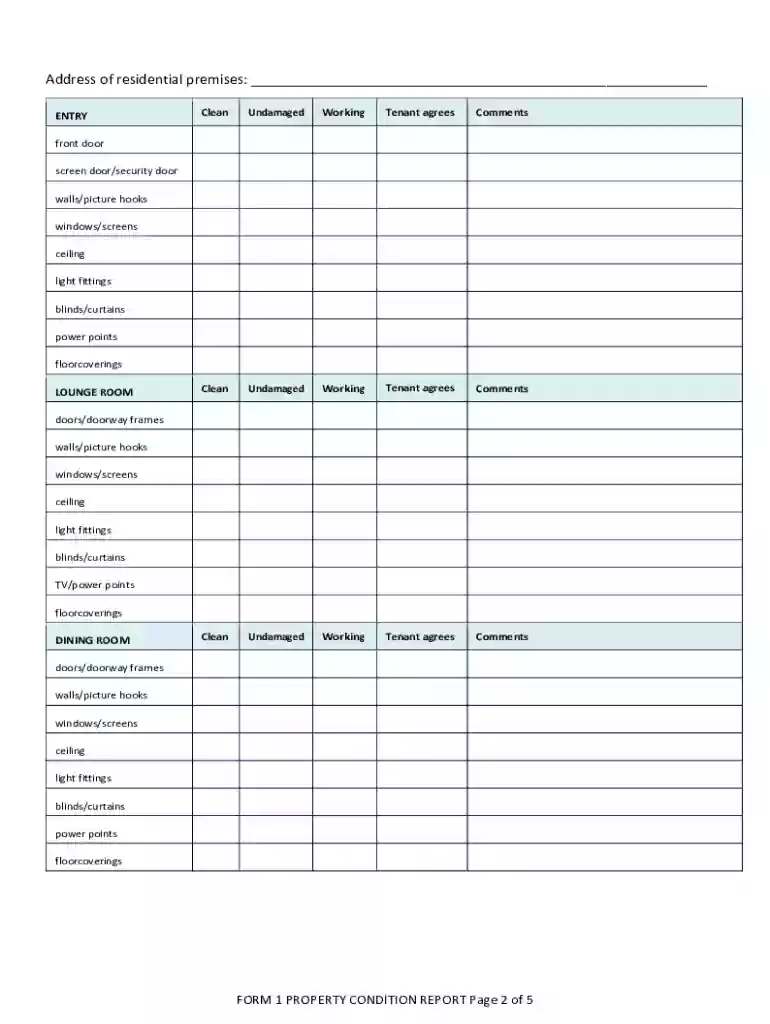
Type text, add images, blackout confidential details, add comments, highlights and more.

Draw your signature, type it, upload its image, or use your mobile device as a signature pad.

Send property condition report template free via email, link, or fax. You can also download it, export it or print it out.
A Property Condition Report is a formal document essential under the Residential Tenancies Act 1987 (WA). It serves to meticulously outline the state of residential premises prior to the commencement of a tenancy. The report includes detailed examinations of all aspects of the property, from structural components to aesthetic conditions. Both lessors (landlords) and tenants benefit from this document, as it acts as a reliable reference point for assessing any changes or damages that might occur during the lease.
The primary objective of the Property Condition Report is to document the condition of the property at the time of a tenant's move-in. This documentation helps mitigate disputes related to the security deposit and any potential damages claimed by either party at the conclusion of the tenancy. Therefore, having a comprehensive and accurate report is crucial for both landlords and tenants to ensure fair assessments regarding property condition throughout the rental period.
Completing a Property Condition Report successfully involves several key steps that should be followed meticulously to ensure accuracy and reliability.
Gather Necessary Information: Collect all relevant information about the property, including the address, date of inspection, and names of the lessor and tenant.
Conduct a Thorough Inspection: Walk through the property, inspecting each room and outdoor space. Pay close attention to:
Document Findings: As you conduct the inspection, accurately record your observations on the Property Condition Report. It's helpful to:
Review with Tenant: After the initial draft is completed, review the report with the tenant. This ensures transparency and gives the tenant an opportunity to verify or dispute findings.
Finalize and Sign: Once all parties agree on the reported condition, both the landlord and tenant should sign the document. Each party should keep a dated copy for reference.
This systematic approach not only aids in maintaining clarity but also establishes a record that can be indispensable in resolving any future conflicts.
A variety of parties typically utilize the Property Condition Report in Western Australia. Primarily, the following individuals play a key role:
Lessors (Landlords): They use the report to protect themselves against potential claims for damages and to retain the security deposit if necessary. The report provides a detailed account of the property's state upon the tenant’s entry.
Tenants: They benefit from the report as it documents the pre-existing conditions of the property, safeguarding them against unwarranted damages claimed upon vacating the premises.
Property Managers: Those managing rental properties utilize the condition reports to maintain accurate records for their clients (the landlords) and to help communicate property statuses effectively to tenants.
Real Estate Agents: Often, agents overseeing rental properties may also use the report to ensure compliance with legal requirements and maintain professional standards.
Legal Representatives: In disputes over security deposits or property damage, legal professionals may refer to the Property Condition Report as evidence in negotiations or court proceedings.
Moreover, anyone involved in property management or rental agreements should be familiar with and utilize the Property Condition Report to uphold transparency and trust in rental transactions.


Grasping essential terminology related to the Property Condition Report can help users navigate the document more effectively. Some important terms include:
Lessor: The individual or entity that owns the rental property and grants tenancy rights to the tenant.
Tenant: The individual or group that rents the property, assuming rights and responsibilities as outlined in the lease agreement.
Security Deposit: A monetary sum collected by the lessor prior to a tenant moving in, which may cover damages or unpaid rent at the tenancy's conclusion.
Inspection: The process of examining the property’s condition, typically conducted before a tenant moves in or upon their departure.
Dispute Resolution: The process of resolving disagreements that may arise concerning the property condition, often requiring mediation or legal intervention.
Move-In Inspection: The specific inspection conducted when a tenant enters a property, which the Property Condition Report is designed to document.
Understanding these terms enhances comprehension and supports better communication between all parties involved in property rental agreements.
The Property Condition Report holds significant legal weight in the context of rental agreements in Western Australia. This document not only serves as an official record but can also protect the rights of both lessors and tenants under the Residential Tenancies Act 1987 (WA). Here are crucial legal aspects to consider:
Compliance Requirement: The Act mandates that landlords conduct a property inspection and provide a thorough report to tenants before the lease begins. Failure to comply can result in penalties and disputes.
Evidence in Disputes: In case of damage claims or security deposit deductions, the report serves as a legal reference for what the property condition was at the time of tenancy commencement. This can be vital during negotiations or legal proceedings.
Binding Agreement: Once signed by both parties, the Property Condition Report becomes a binding document that details the agreement regarding the property's state, thus playing a critical role in any legal arguments.
State-Specific Regulations: It’s important to remain aware of any regional rules governing property inspections and conditions that may differ from national standards. These local regulations can impact the validity and necessity of condition reports.
Being knowledgeable about the legal implications of the Property Condition Report ensures both tenants and landlords are well-prepared to manage their rights and responsibilities effectively within the rental framework.
We've got more versions of the property condition report template form. Select the right property condition report template version from the list and start editing it straight away!
Sure, it is possible with DocHub. This secure and compliant online solution features a phone-based signing option. After you log in to your DocHub account and add your rental property condition report template to our editor, complete all blank areas and utilize the Sign feature on the upper barf. Click on Create your signature and choose Phone from the available choices. Here, you scan a QR code using your smartphone and draw your signature on your phone display, as you normally do when signing physical papers. If you access DocHub right from your mobile device, you can eSign your paperwork by drawing your electronic signature, adding its picture, or simply with a typed name.
You need only a web connection and a browser to complete your property condition report pdf by using an iOS phone. Open the DocHub website and authenticate. Then, add your file or choose it from the list in your dashboard. Then use our editing tools to complete your form and save all your modifications. You can also send it to a dedicated recipient immediately.
At DocHub, your data security is our priority. We follow HIPAA, SOC2, GDPR, and other standards, so you can work on your documents with confidence.
By signing, I hereby represent that all tenants of this apartment verify that this report is true and accurate. Check-Out Condition. Check-In Condition.Read more
Residential Property Inspection I agree the statements written on this inspection report represent a true appraisal of the condition of the property.Read more
This approach indicated that average soil conditions at the property were below standards as they exhibited TPH levels of 481 ppm (Table 3). Based on theseRead more


