




01. Edit your ems qa qi checklist online
Type text, add images, blackout confidential details, add comments, highlights and more.

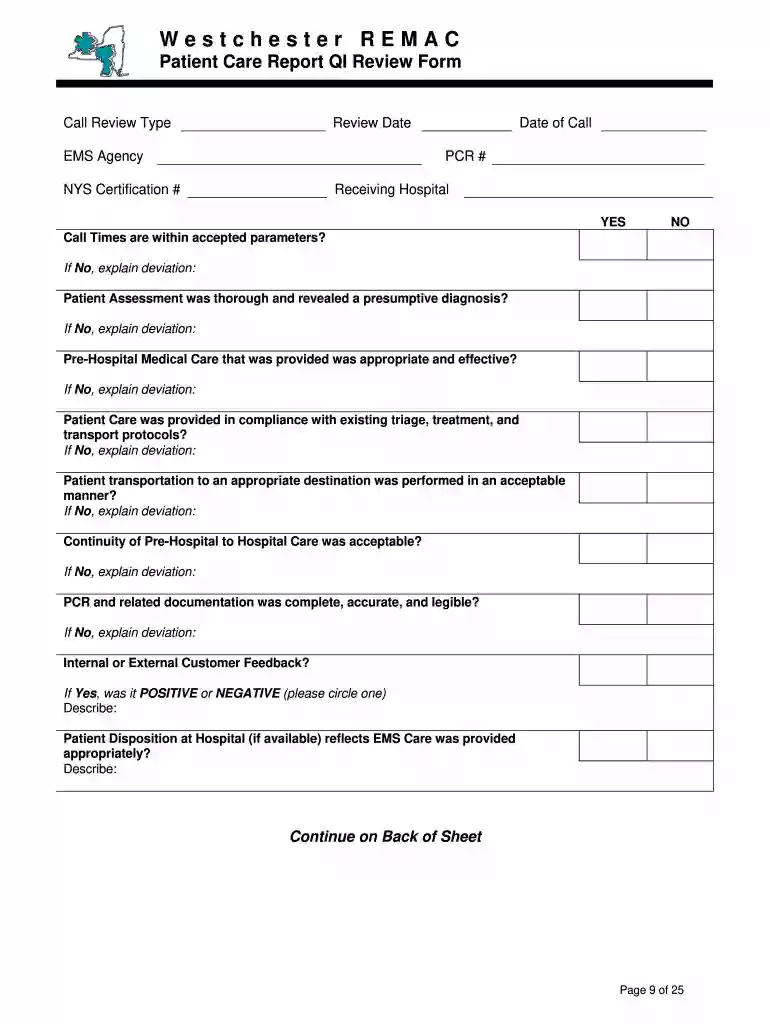
Type text, add images, blackout confidential details, add comments, highlights and more.

Draw your signature, type it, upload its image, or use your mobile device as a signature pad.

Send ems quality improvement form template via email, link, or fax. You can also download it, export it or print it out.
The EMS quality improvement form template is a structured document designed to facilitate the assessment and enhancement of emergency medical services. It is used to systematically evaluate patient care reports in order to identify strengths and weaknesses within service provision. This template serves as a foundation for quality assurance and quality improvement (QA/QI) initiatives, ensuring that EMS organizations can effectively track performance metrics, compliance with protocols, and overall patient care outcomes.
The EMS quality improvement form template comprises several critical sections that ensure comprehensive evaluation and management of services. These elements are essential for effective data collection and analysis.
Completing the EMS quality improvement form template requires a systematic approach to ensure all critical information is accurately captured. Understanding each step is vital for maintaining data integrity and promoting effective quality improvement practices.
Adhering to these steps ensures that each incident is evaluated consistently, contributing to broader organizational learning and enhanced quality in patient care.
Various stakeholders within emergency medical services use the EMS quality improvement form template. Understanding the audience can help tailor the form to meet specific needs effectively.


Understanding specific terminology related to the EMS quality improvement form template is crucial for effective communication and implementation of quality initiatives.
Familiarity with these terms enables all stakeholders to engage more meaningfully in quality discussions, fostering a shared understanding of goals and expectations.
Legal considerations are fundamental when using the EMS quality improvement form template. Proper implementation protects both the organization and the EMS personnel involved, ensuring compliance with applicable laws and regulations.
By maintaining awareness of legal implications, organizations can protect themselves from potential liabilities while fostering trust in the services provided to patients and the community.
We've got more versions of the ems qa qi checklist form. Select the right ems qa qi checklist version from the list and start editing it straight away!
| Versions | Form popularity | Fillable & printable |
|---|---|---|
| 2004 | 4.5 Satisfied (33 Votes) |
At DocHub, your data security is our priority. We follow HIPAA, SOC2, GDPR, and other standards, so you can work on your documents with confidence.
This toolkit assists QI managers in EMS agencies to implement a QI process focused on enhancing care for chest pain patients through: Focusing on these areasRead more
The environmental management system (EMS) focuses on the planning, implementation, review, and improvement of the aspects listed to continuously improve theRead more
Issue(s):. Airway. Interpersonal/Conduct. Patient Transfer. Call-In. Job Well Done. Patient Treatment. Destination. Resource Utilization. Patient Turnover.Read more


