
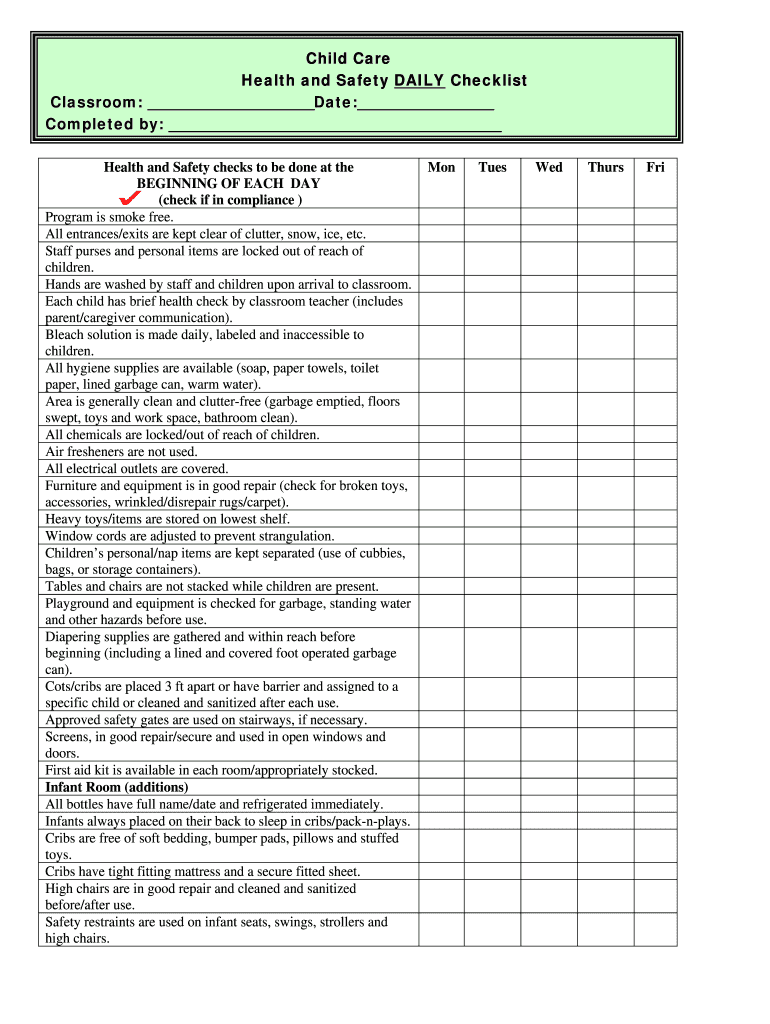





Child care safety checklist 2026

Get Form
care health checklist Preview on Page 1

Here's how it works

01. Edit your care health checklist online
Type text, add images, blackout confidential details, add comments, highlights and more.
02. Sign it in a few clicks
Draw your signature, type it, upload its image, or use your mobile device as a signature pad.
03. Share your form with others
Send child care safety checklist via email, link, or fax. You can also download it, export it or print it out.

Key Components of a Child Care Safety Checklist

A comprehensive child care safety checklist is vital for ensuring the safety and well-being of children in care environments, such as daycare centers or preschools. This checklist should cover various aspects of daily operations, maintenance, and emergency readiness.

Facility Security Measures

  • Access Control: Ensure that entry and exit points are secure. Verify that all doors and windows are locked and monitored. Use an entry system that restricts unauthorized access.
  • Visitor Policy: Establish a clear policy for handling visitors. Require identification and sign-in procedures to track who is on the premises at all times.
  • Emergency Exits: Regularly check that emergency exit paths are clear and clearly marked. Ensure that children and staff are familiar with these routes.

Hygiene and Health Protocols

  • Sanitation Practices: Implement daily cleaning routines within the facility. Focus on high-touch areas, such as doorknobs, tablets, and toys, using EPA-approved disinfectants.
  • Health Checks: Conduct daily health checks for children upon arrival, monitoring for signs of illness, such as fever or coughing. Document these checks as part of a daily health log.
  • Sick Policy: Clearly define the policy for sick children and communicate it to parents. Ensure that there’s a protocol for handling and isolating ill children.

Safe Environment Setup

  • Toys and Equipment: Regularly inspect toys and play equipment for sharp edges, loose parts, or potential hazards. Remove damaged items immediately.
  • Chemical and Medication Storage: Store all cleaning supplies and medications out of children's reach and in clearly labeled containers. Implement a secure area for any hazardous substances.
  • Outdoor Safety: Ensure that outdoor play areas are fenced and equipped with appropriate surfacing material to cushion falls. Regularly check for overhanging branches or other hazards.

Emergency Preparedness Procedures

  • Fire Drills: Conduct regular fire drills to ensure children know how to exit the building safely. Practice these drills at different times of day to enhance preparedness.
  • Emergency Contacts: Keep an updated list of emergency contacts, including parents and local authorities. Ensure that these numbers are easily accessible in case of emergencies.
  • First Aid Kits: Maintain well-stocked first aid kits throughout the facility. Train staff on how to use the supplies effectively and conduct regular inventory checks.

Staff Training and Qualifications

  • Background Checks: Require thorough background checks for all staff members before hiring. This process should include criminal history and reference checks.
  • Training Programs: Implement ongoing training programs about child development, first aid, and emergency procedures to keep staff informed and prepared.
  • Regular Evaluations: Conduct performance evaluations regularly to assess staff adherence to safety protocols and to provide opportunities for feedback and improvement.

Documentation and Compliance

  • Daily Safety Checklist: Create a daily checklist for staff to complete at the beginning of each shift. Ensure it covers all major safety aspects, including facility checks and health protocols.
  • Incident Reporting: Develop a system for documenting any incidents or safety concerns. Ensure all staff know how to report these occurrences and understand the importance of transparency.
  • Policy Updates: Regularly review and update safety policies and procedures to align with current regulations and best practices. Hold staff meetings to discuss updates and receive input from the team.

By implementing and regularly reviewing a child care safety checklist, care facilities can create a nurturing and secure environment for all children, ensuring peace of mind for parents and caregivers alike.

be ready to get more

Complete this form in 5 minutes or less

Get form

Got questions?

We have answers to the most popular questions from our customers. If you can't find an answer to your question, please contact us.
Contact us

Sign in to your DocHub account and import your child daily checklist to our editor using one of its upload options - from your device, cloud storage, protected URL, or your DocHub folders if you have already managed your form before. Open our editor, click the Sign key in the upper toolbar, and choose your signing method. You can upload a picture of your handwritten signature, draw it, enter your name, or utilize a QR code instead.

You need only a web connection and a web browser to fill out your daycare checklist pdf on an iOS phone. Open the DocHub website and authenticate. Then, add your document or select it from the list in your dashboard. Then use our editing tools to fill out your form and save all your modifications. You may also send it to a dedicated recipient straight away.

A checklist helps you list all the tasks and activities for a process or project for a set date or duration. Since all tasks are listed, the chances for errors are reduced, and there is very little scope for employees to miss a task. With checklists, employees become comfortable working on a process as a whole.
Educators observe children during different times of the day and check-off the skills and behaviours as they are observed. Checklists are an efficient and practical way to collect information about a childs development. Checklists are based on developmental norms as determined by developmental theorists.
It serves as a reminder to all teachers, assistants and early years workers of the things that should be checked daily in a setting that caters to young learners. It ensures that no areas can be forgotten or overlooked and gives reminders to check toilets and outdoor areas as well as the main classroom or playroom.

Security and compliance

At DocHub, your data security is our priority. We follow HIPAA, SOC2, GDPR, and other standards, so you can work on your documents with confidence.

Learn more
ccpa2
pci-dss
gdpr-compliance
hipaa
soc-compliance
be ready to get more

Complete this form in 5 minutes or less

Get form

People also ask

Child Care Checklist The provider/staff is open and welcoming to me and to my child. She/he smiles and looks directly at me and my child. The caregivers environment is safe and stimulating. The caregiver speaks to children in a positive, cheerful tone. The caregiver seems to enjoy working with children.
A Take 5 Safety Checklist is a tool used to identify health and safety hazards before starting work on a site. Performing health and safety checks using the Take 5 Procedure (Stop, Look, Assess, Control, and Monitor) helps workers and contractors mitigate exposure to hazards and health risks.
Checklists are designed to track a childs competencies in all the developmental domains including physical, cognitive, language, social and emotional. With a checklist, educators can easily identify whether skills have been mastered or not.
Building safety requirements include inspections to make sure the building structure, outdoor play space, and playgrounds are safe, meet fire safety codes, and are free of hazards that could hurt children. Emergency planning requirements ensure programs are prepared to keep children safe during an emergency.

childcare safety list

