







Definition and Purpose of an Affidavit of Marital Status
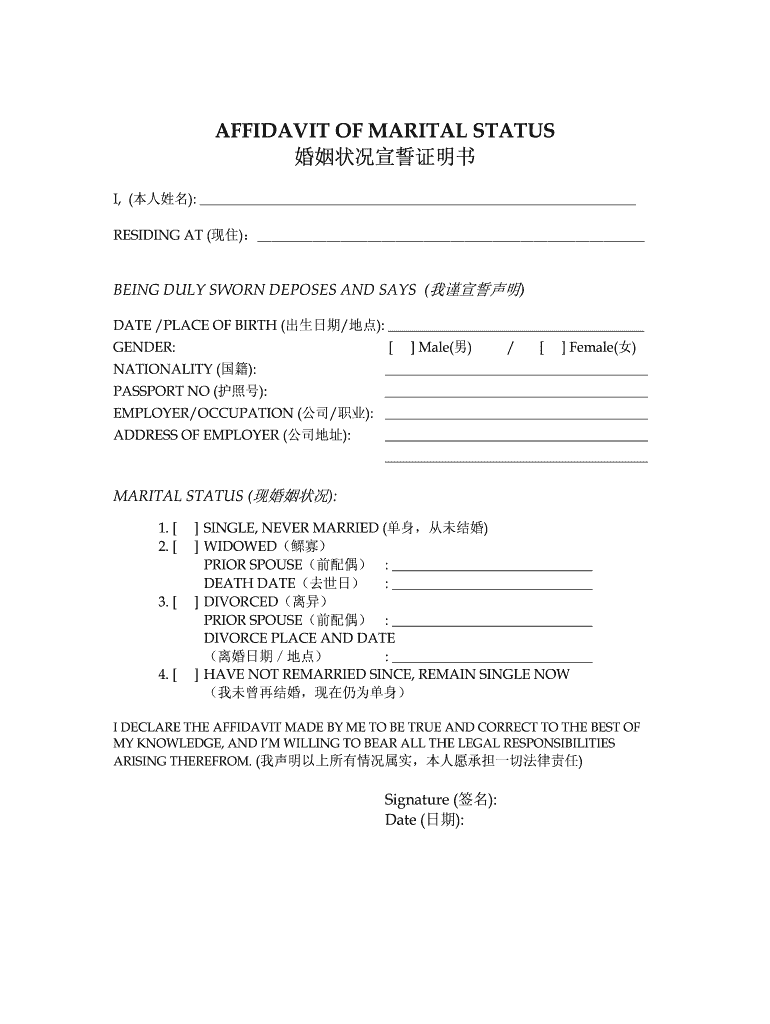
An affidavit of marital status is a legal document where an individual officially declares their marital circumstances. This form captures critical personal information including the individual’s name, residence, date of birth, gender, nationality, and current marital status. The document serves various legal and administrative purposes, ensuring that the stated information is recognized and accepted by authorities.
Regardless of the marital situation—single, divorced, widowed, or remarried—this affidavit affirms the truthfulness of the provided details. When executed, it confirms legal responsibility for the accuracy of its contents, making it a vital document for various situations including legal proceedings, immigration processes, or applying for certain benefits that require proof of marital status.
Typical Use Cases for an Affidavit of Marital Status
- Legal Proceedings: Individuals may be required to provide this affidavit in family law matters, child custody cases, or divorce proceedings.
- Immigration: It often functions as proof of marital status in immigration applications, particularly when applying for spousal visas.
- Financial Applications: Lenders may request an affidavit as part of the documentation needed for joint loans or mortgages.
- Benefit Claims: Entities such as insurance companies or government programs may require proof of marital status whether applying for benefits as a single individual or a spouse.
Importance of Accurate Information
Providing accurate information on an affidavit of marital status is essential. Misrepresentation can result in legal penalties, denial of services, or issues in custody arrangements. Therefore, it is advisable to ensure that all statements reflect the individual’s true circumstances accurately.
Key Components of the Affidavit of Marital Status
An affidavit of marital status typically includes several essential elements that contribute to its legitimacy and functionality.
-
Identifying Information: This includes the individual's full name, address, date of birth, and nationality. It helps to establish the identity of the affiant.
-
Marital Status Declaration: The affiant states their current marital status, which may include options such as:
- Single
- Married
- Divorced
- Widowed
- Remarried
-
Affirmation Statement: The document usually contains a statement affirming the truthfulness of the information provided. This affirmation signifies that the affiant understands the legal ramifications of false statements.
-
Signature and Notarization: Most affidavits require signatures from the affiant and a notary public to verify the authenticity of the document. This step is crucial in ensuring that the affidavit holds up in legal contexts.
Optional Components
In some circumstances, additional clauses or statements may be included, such as:
- Previous Marital History: This might involve declaring the status of any previous marriages and whether they have been legally dissolved.
- Specific Address: For more detailed situations, noting past addresses might be necessary, providing context to the individual’s marital status.
Steps to Complete an Affidavit of Marital Status
Completing an affidavit of marital status involves a systematic approach to ensure accuracy and legal standing.
-
Gather Necessary Information: Collect all required personal information, including full name, address, date of birth, and specific marital details.
-
Select the Correct Form: You can find several templates online, but ensure the form complies with your state’s requirements.
-
Fill Out the Form: Carefully input the gathered information into the appropriate sections. Be honest and precise to avoid any discrepancies.
-
Review Your Document: Double-check all entries for accuracy and completeness. Ensure there are no typographical errors or omissions.
-
Sign in Presence of a Notary: Once reviewed, sign the affidavit in front of a notary public. The notary will validate your identity and the authenticity of your signature.
-
Distribute the Affidavit: Depending on its use, provide copies to relevant parties, such as legal counsel, financial institutions, or immigration authorities.
Legal Validity and Use of the Affidavit of Marital Status
An affidavit of marital status is legally binding when executed correctly, meaning it can be important in various legal situations.
- Notarization: This step adds an extra layer of validation, allowing the affidavit to be recognized in courts or other legal settings.
- Usage in Different States: It is essential to be aware that certain states may have specific regulations regarding how these affidavits must be formatted or what additional information may be required.
Consequences of Misuse
Filing an inaccurate affidavit may result in:
- Legal Repercussions: Providing false information can lead to charges of perjury.
- Denying Benefits: Misrepresentation can prevent individuals from obtaining financial benefits or immigration approvals they might otherwise qualify for.
Common Variants of the Affidavit of Marital Status
There are several alternatives or specific versions of the affidavit based on context or location:
- Affidavit of Civil Status: This may be utilized in scenarios requiring evidence of one’s civil status, particularly in immigration contexts.
- Single Status Affidavit: Particularly used in marriage license applications to affirm that an individual is not currently married.
- Texas-Specific Options: In states like Texas, unique forms may be tailored to meet local statutes and jurisdictional requirements.
Variations Across Regions
While the overall purpose remains the same, be mindful of regional differences in terminology and requirements. For instance, some states may use formal names such as "Affidavit of Singleness" or "Marital Status Sworn Affidavit," while others may refer simply to the affidavit of marital status.
Examples and Templates for the Affidavit of Marital Status
Having access to a sample affidavit of marital status can provide guidance and assistance when filling out your own. Here are potential formats:
- Basic Template: A straightforward version that contains all necessary components without additional legal jargon.
- Comprehensive Version: Includes detailed fields for previous marital histories and signature blocks for multiple signatories.
- State-Specific Variations: Tailored to meet the specific legal language or requirements of different states, which can ensure compliance during use.
Example Contents of an Affidavit
- Sample Header: "AFFIDAVIT OF MARITAL STATUS"
- Body Text: “I, [Your Name], residing at [Your Address], born on [Date of Birth], declare under penalty of perjury that my current marital status is [Single/Married/Divorced].”
- Signature Block: “Signed this [Day] of [Month, Year], in the presence of a notary public.”
Utilizing templates can streamline the process while ensuring that all necessary legal provisions are addressed effectively.




