






Definition and Purpose of the Maine Tax Form
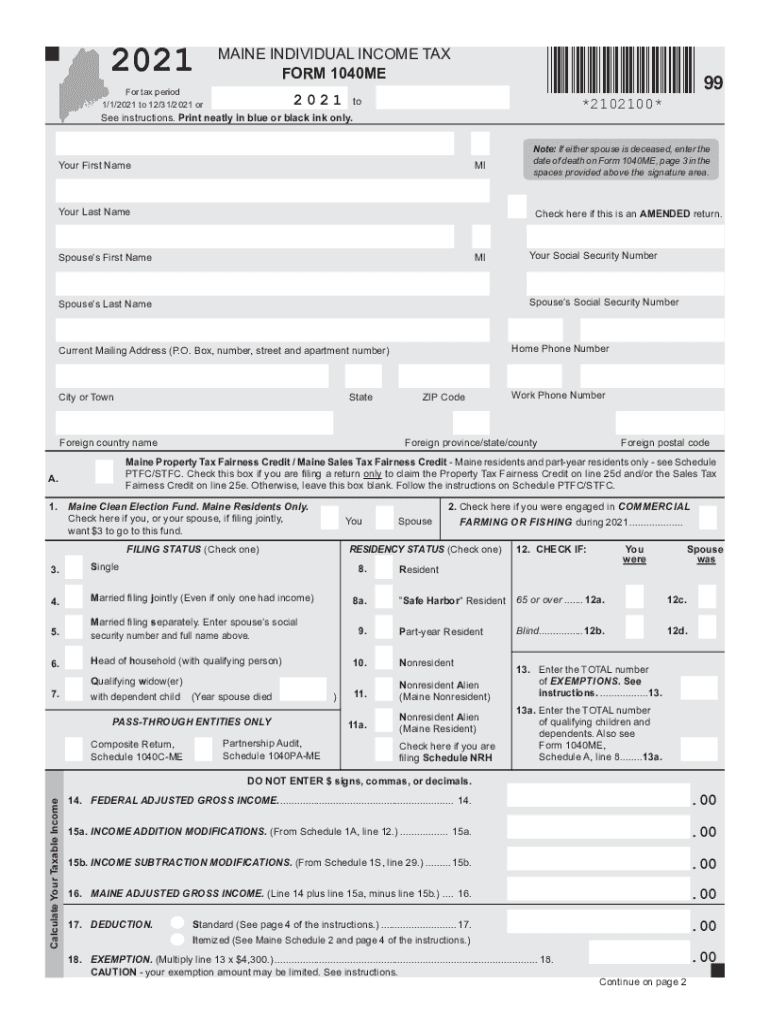
The Maine Individual Income Tax Form 1040ME is a crucial document for residents and part-year residents of Maine. It serves as the primary form used to report income, claim deductions, and calculate tax liabilities for the state of Maine. The form ensures that taxpayers properly report their earnings and any applicable credits or deductions to ascertain their tax obligations or potential refunds. Understanding the unique facets of the 1040ME helps taxpayers comply with state tax laws effectively.
Important Terminology
Certain terms are fundamental when dealing with the Maine tax form. Familiarity with these terms ensures precision in reporting:
- Residency Status: Determines whether an individual is a full-time, part-time, or non-resident, influencing tax calculations.
- Taxable Income: The income amount subject to state taxes after deductions and exemptions.
- Tax Credits: Subtractions from a tax bill which can reduce the amount owed to the state, differing from deductions that lower taxable income.
- Withholding: Taxes withheld from wages by employers, which can affect the overall tax liability.
Steps to Complete the Maine Tax Form
Completing the Maine tax form requires attention to detail and accurate data entry. Here is a detailed, step-by-step procedure:
-
Gather Required Documents:
- Collect W-2s, 1099s, and other income statements.
- Organize receipts and documentation for deductions and credits.
-
Determine Residency Status:
- Confirm if you're filing as a resident, part-year resident, or non-resident.
- Residency affects the applicable tax rules and obligations.
-
Calculate Total Income:
- Sum all income sources, including wages, interest, dividends, and other earnings.
- Include any untaxed income relevant to Maine state laws.
-
Claim Deductions and Credits:
- Identify applicable deductions such as student loan interest or retirement contributions.
- Evaluate eligibility for tax credits to reduce tax liability.
-
Complete the Form Sections:
- Fill in personal details, income calculations, deductions, and credit claims.
- Double-check each entry for accuracy.
-
Review and Sign the Form:
- Ensure all fields are correctly filled out.
- Sign the form to denote accuracy and completion.
Common Errors to Avoid
- Incorrect Residency Declaration: Misclassification can affect tax calculations and liabilities.
- Omitted Income Sources: All income must be reported to avoid penalties.
- Unsanctioned Deductions: Only legitimate deductions should be claimed as per Maine state law.
How to Obtain the Maine Tax Form 1040ME
Accessing the Maine 1040ME form can be done through various methods:
-
Online Download:
- Available on the Maine Revenue Services website for easy access.
- Users can download the PDF version for manual filing or use in tax software.
-
Request via Mail:
- Taxpayers can request a physical copy by contacting the Maine Revenue Service for those unable to access digital versions.
-
Local Government Offices:
- Forms can also be collected from local tax offices providing in-person assistance.
Digital vs. Paper Versions
Opting for a digital or paper form depends on personal preference and resources:
- Digital Version: Offers convenience and is compatible with tax software like TurboTax or QuickBooks. It allows for easier updates and error checking.
- Paper Version: Preferred by those who are less tech-savvy or do not have consistent internet access. Submission by mail might take longer, but it is still an accepted method.
Key Elements of the Maine Tax Form
The Maine tax form consists of several critical components that taxpayers must understand:
- Personal Information Section: Includes basic personal data like name, address, social security number, and filing status.
- Income Details: Comprehensive reporting of different income streams.
- Deduction Claims: Documentation of eligible deductions reducing taxable income.
- Tax Credits and Payments: Detailing credits claimed and tax payments made.
Examples of Utilizing Tax Elements
- A full-time resident claiming educational credits for a child’s tuition expenses.
- A part-year resident deducting moving expenses when relocating to or from Maine.
State-Specific Rules for Maine Tax
Maine has unique tax regulations that taxpayers must adhere to:
- State Income Tax Laws: Maine has its own tax brackets differing from federal taxes.
- Property Tax Deductions: State policies on property tax deductions may impact overall tax calculations.
- Credits for Educational and Energy Use: Certain credits could apply based on investments in energy efficiency or education expenditures.
Variations and Exceptions
- Some credits and deductions are phase-out by income level.
- Special considerations for individuals who work in Maine but live in another state.
Filing Deadlines and Important Dates
Adhering to key filing deadlines prevents late fees and penalties:
- Standard Deadline: April 15th, which coincides with federal tax deadlines, unless extended due to weekends or holidays.
- Extension Requests: Taxpayers may request an extension using specific Maine forms, providing additional time to file without penalties for late submission.
Consequences of Missing Deadlines
- Late Filing Penalties: Accumulating fees for delayed submissions.
- Interest on Unpaid Taxes: Interests accrue on any taxes owed past the due date.
Form Submission Methods
Taxpayers can choose from several submission options:
-
Electronic Filing (E-File):
- Fastest and most efficient, directly through official portals or authorized e-file providers.
- Automatically checks for errors and provides instant filing confirmation.
-
Mail Submission:
- Suitable for those who opt for paper filing.
- Requires mailing to the provided address on the Maine 1040ME instructions.
Pros and Cons of Submission Methods
- E-File: Faster processing, error checking, albeit tech-dependent.
- Mail: Tangible record, no technological requirement, but processing and confirmation can take longer.
These comprehensive sections ensure taxpayers can effectively navigate the intricacies of Maine’s tax form to fulfill their obligations accurately and efficiently.