




Here's how it works
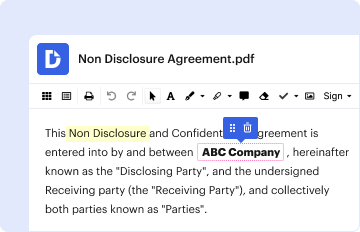
01. Edit your iq oq pq template online
Type text, add images, blackout confidential details, add comments, highlights and more.
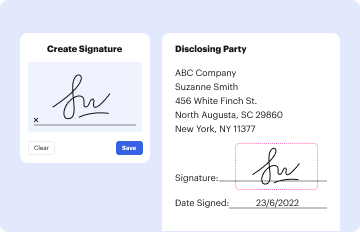
02. Sign it in a few clicks
Draw your signature, type it, upload its image, or use your mobile device as a signature pad.
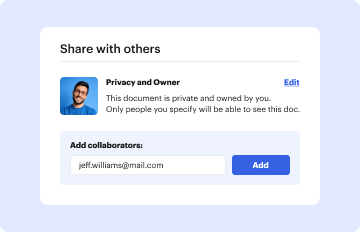
03. Share your form with others
Send iq oq pq examples pdf via email, link, or fax. You can also download it, export it or print it out.
How to use or fill out area qualification protocol template with our platform

- Click ‘Get Form’ to open the area qualification protocol template in the editor.
- Begin by filling in the project details, including Project Name, Project Number, Equipment, Serial Number, Manufacturer, and Model Number. This information is crucial for identifying the specific equipment being qualified.
- In the 'Objective' section, clearly state the purpose of the Installation Qualification (IQ) and Operational Qualification (OQ). Ensure you include why these qualifications are necessary for compliance with site requirements.
- Proceed to complete each test section by verifying installed equipment and software. For each item listed under 'Equipment Description' and 'Software Description', ensure all fields are filled accurately, including installation dates and manufacturer details.
- Review all acceptance criteria at the end of each test section. Mark whether all criteria have been met and document any deviations in the provided sections.
Start using our platform today to streamline your document editing and form completion process for free!
Fill out area qualification protocol template online
It's free
It's free
See more area qualification protocol template versions
We've got more versions of the area qualification protocol template form. Select the right area qualification protocol template version from the list and start editing it straight away!
| Versions | Form popularity | Fillable & printable |
|---|---|---|
| 2013 | 4.6 Satisfied (66 Votes) |
Got questions?
We have answers to the most popular questions from our customers. If you can't find an answer to your question, please contact us.
Contact us
What is the difference between calibration and qualification?
In summary, calibration focuses on ensuring the accuracy of measuring instruments, validation ensures the reliability and accuracy of methods and systems, and qualification verifies the suitability and compliance of equipment, facilities, and systems used in the pharmaceutical industry.
What is the OQ protocol?
The Operational Qualification Protocol is a collection of test cases used to verify the proper functioning of a system. The operational qualification test requirements are defined in the Functional Requirements Specification. Operational Qualification is usually performed before the system is released for use.
What are the tests for area qualification?
Air Velocity Measurement. Verification of Air changes: HEPA Filter Leak Testing. Air Flow Pattern Test. Monitoring of Differential Pressure. Non-viable Particle Count: Particle Recovery Study: Cleaning and Sanitization of Area.
What is area qualification?
Area Qualification in the pharmaceutical industry is a critical process that ensures that specific areas within a manufacturing facility are suitable for their intended use.
What is IQ, OQ, and PQ in pharma?
What Do IQ, OQ and PQ Mean? The meaning of IQ, OQ and PQ are installation qualification, operational qualification and performance qualification, respectively. They represent quality assurance protocols for each phase of the manufacturing process for pharmaceutical equipment.
Security and compliance
At DocHub, your data security is our priority. We follow HIPAA, SOC2, GDPR, and other standards, so you can work on your documents with confidence.
Learn more


Related forms

ACLS American Council of Learned Societies acls
The document outlines the 2020 Gillingham Pan-American Fellowship Program, which offers two six-month fellowships of $10 ...

Immunization music
The document outlines the immunization compliance requirements for students in the Music Therapy Program at Texas Woman' ...

Bridge registration form
The document is a registration and health screening form for participants in a NatureBridge program, requiring detailed ...

Oncology Program Patient and Family Advisory Council Application Form Application Form for PFAC
Oncology Program Patient and Family Advisory Council Application Form Application Form for PFAC
The document is an application form for the Oncology Program Patient and Family Advisory Council (PFAC), inviting patien ...
LI Notice of Claim-TPD WOP
The document is a Notice of Claim form for TeamCare, a Central States Health Plan, detailing the process for applying fo ...

Evicore skilled nursing form
The document is a Concurrent Review Authorization Form for Skilled Nursing Facility (SNF) requests. It outlines the nece ...
Insurance Verification Request Form - Injectafer
The document is an Insurance Verification Request Form for the American Regent IV Iron Reimbursement Hotline, designed t ...
Managing Office:
The document outlines the Workplace Safety and Injury Reporting Procedure at Alabama A&M University, emphasizing the imp ...
People also ask
What is a clean room qualification?
The sterile area can be qualified by applying following tests. 1.0 Air supply capacity: 2.0 Air velocity/Uniformity: 3.0 Air change: 4.0 Air Flow Pattern: 5.0 HEPA Filter Integrity Test: 6.0 Pressurisation Test: 7.0 Unidirectional airflow: 8.0 Particle count:
What is the protocol for qualifications?
qualification protocol. A Qualification Protocol (QP) is a written plan or procedure stating in sufficient detail how qualification will be achieved. Included are specific qualification requirements for each equipment item, each system requirement, and product requirement.
How to write a qualification protocol?
How can you create a GMP qualification protocol? Step 1: Define the scope and objectives. Step 2: Identify the risks and critical aspects. Step 3: Select the qualification strategy and approach. Step 4: Prepare the qualification plan and schedule. Step 5: Execute the qualification tests and collect the data.