




01. Edit your dollar tree tax exempt online
Type text, add images, blackout confidential details, add comments, highlights and more.

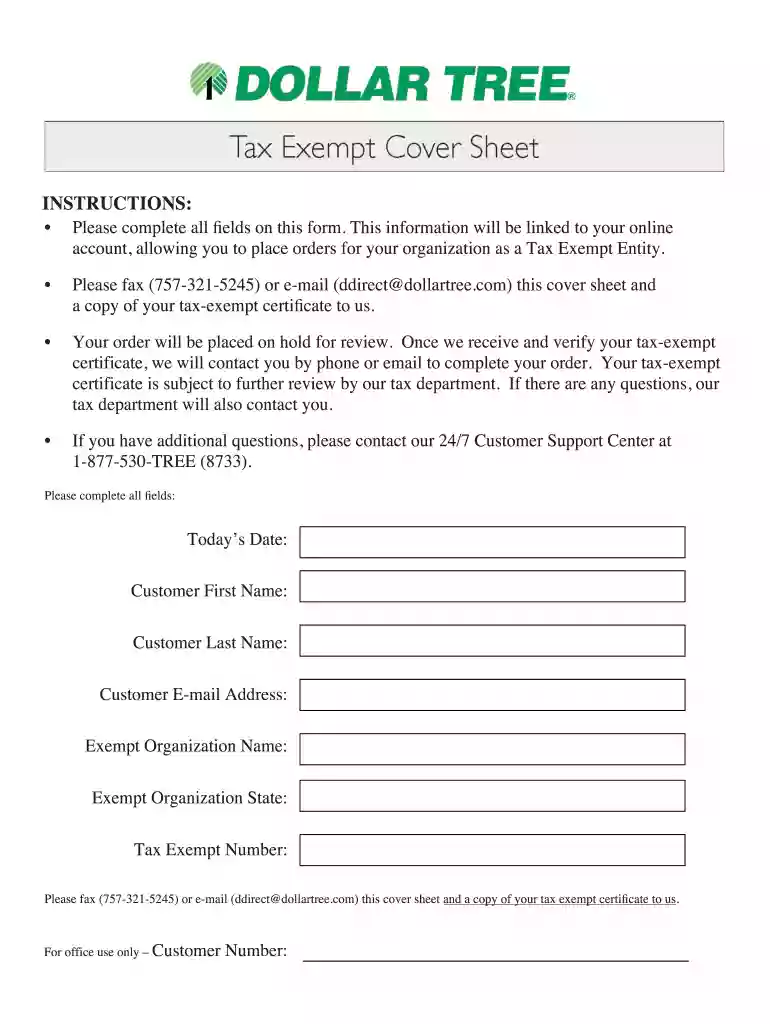
Type text, add images, blackout confidential details, add comments, highlights and more.

Draw your signature, type it, upload its image, or use your mobile device as a signature pad.

Send dollar tree tax exempt form via email, link, or fax. You can also download it, export it or print it out.
The Dollar Tree tax exemption refers to a program that allows qualified entities, such as nonprofit organizations and various government agencies, to make purchases without paying sales tax at Dollar Tree locations. This exemption is contingent upon the entity providing a tax-exempt certificate during the transaction. The concept is designed to alleviate the financial burden on organizations that serve the public interest, ensuring that funds are directed toward their core missions rather than tax expenses.
The exemption applies specifically to purchases made for the exempt entity's official use and cannot be utilized for personal purchases by employees or individuals. The underlying purpose is to promote the work of charitable, educational, and governmental organizations by reducing the costs associated with their necessary goods and services.
Numerous entities are eligible for the Dollar Tree tax exemption, including:
Utilization of the tax exemption is subject to specific state laws, which may dictate the procedures or documentation required.


Using the Dollar Tree tax exemption requires a clear understanding of the process to ensure compliance. To efficiently apply this exemption, follow these steps:
Obtain a Tax-Exempt Certificate: Acquire the necessary documentation from your state tax authority. This may include completing a specific application form to verify your tax-exempt status.
Visit Dollar Tree Locations: When visiting a Dollar Tree store, inform the cashier or sales associate that you intend to make a tax-exempt purchase.
Present Documentation: Show your completed tax-exempt certificate. This document typically includes your organization's name, tax identification number, and other relevant information.
Complete the Purchase: Once the documentation is verified, proceed with your purchase, ensuring to keep records of your transactions for future reference.
Recordkeeping: Maintain a comprehensive record of all transactions made using the tax exemption for compliance audits and financial reporting.
By following these steps, eligible organizations can streamline their purchasing processes while adhering to pertinent tax regulations.
Understanding the key elements of the Dollar Tree tax exemption can facilitate smoother operations for organizations. Essential components include:
Familiarity with these elements is critical for organizations aiming to utilize the Dollar Tree tax exemption effectively.
Understanding specific terminology associated with the Dollar Tree tax exemption can enhance comprehension and ensure proper usage:
Familiarizing oneself with these terms can help organizations navigate the tax-exempt system more effectively and responsibly.
The application process for obtaining tax-exempt status at Dollar Tree generally involves the following steps:
Research Applicable State Regulations: Different states have varying rules regarding tax exemption; it’s crucial to understand these before proceeding.
Complete the Tax-Exempt Application: This application may be available online through your state tax authority or in a physical format. Provide accurate organizational details.
Submit Required Documentation: Many states require proof of the organization’s tax-exempt status, such as IRS Form 501(c)(3) approval letters or state-issued exemption forms.
Await Approval: Processing times can vary. Monitor communications from your state tax authority for any additional information needed.
Access the Dollar Tree Tax Exempt Form: Upon approval, you may be issued a tax-exempt number, which you’ll use at Dollar Tree along with the tax-exempt form when making purchases.
Following these steps will help organizations obtain the necessary documentation to take advantage of tax-exempt purchases at Dollar Tree effectively.
At DocHub, your data security is our priority. We follow HIPAA, SOC2, GDPR, and other standards, so you can work on your documents with confidence.
Page 1. DT Checkout Barcode. Please present your barcode to a store associate at checkout. 9588815671. Expires 02-09-2026. X.Read more
Oct 5, 2018 exempt from any cost-share requirement under this paragraph.. (3) tax, fee, or charge, first taking effect after the date ofRead more


