
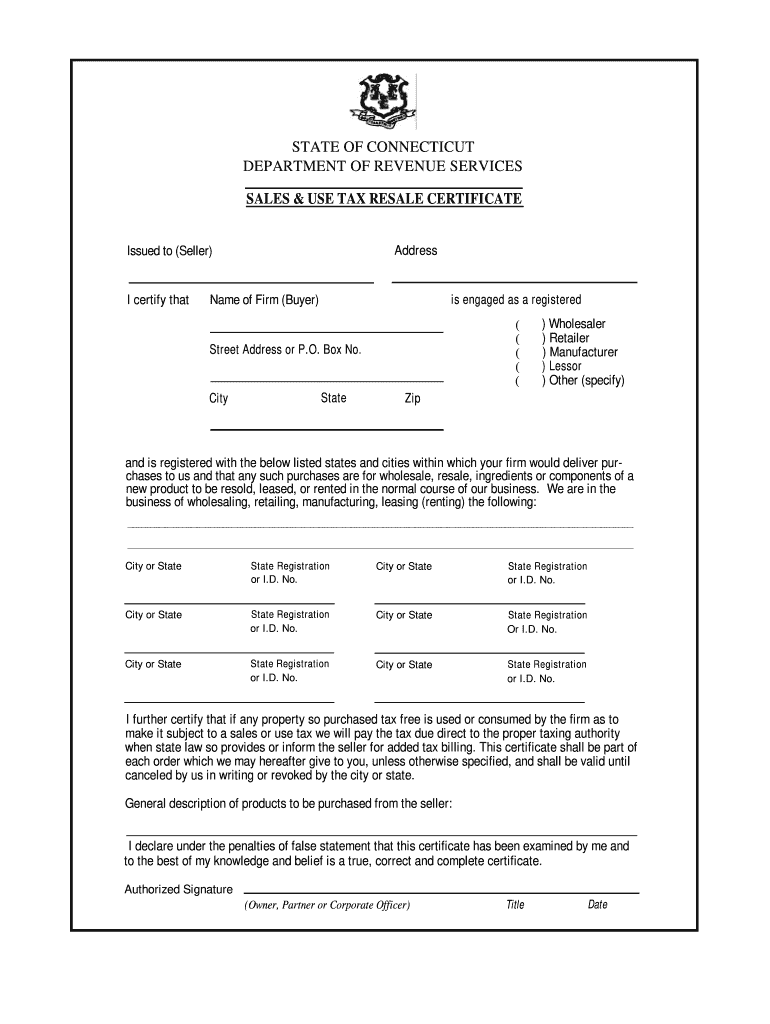







Definition and Significance of the CT Resale Certificate
A Connecticut resale certificate is a vital document issued by the Connecticut Department of Revenue Services. It allows registered buyers, such as businesses engaged in wholesaling, retailing, manufacturing, or leasing, to purchase goods without paying sales tax. The purpose of this certificate is primarily to facilitate tax-exempt purchases by ensuring that businesses involved in the resale of products do not incur sales tax on inventory intended for resale.
- Tax Benefits: This certificate streamlines the purchasing process for qualifying businesses, preventing the unnecessary financial burden of sales tax on goods that will ultimately be resold.
- Compliance and Accountability: Businesses using a resale certificate must ensure that they comply with all related tax regulations to maintain their tax-exempt status.
Understanding the role and requirements of the CT resale certificate is crucial for any business looking to manage tax obligations effectively.
How to Obtain the CT Resale Certificate
Acquiring a CT resale certificate involves a straightforward process, but it is essential to follow the correct steps to ensure compliance.
- Business Registration: The first step is to ensure that your business is properly registered with the State of Connecticut. This includes obtaining a Sales and Use Tax Permit.
- Fill Out the Application: There is no specific application form for the resale certificate itself. Instead, businesses can use the CT sales and use tax exemption certificate format, which requires various business details.
- Gather Required Information: Businesses need to collect the following:
- Business name and address
- Name and address of the seller
- Description of the nature of the business
- Tax identification number
- Maintain Documentation: Once the certificate is filled out, retain it for your records.
Obtaining this certificate ensures that your business operates within the legal frameworks established by Connecticut’s tax laws.
Steps to Complete the CT Resale Certificate
Completing the CT resale certificate accurately is necessary to avoid compliance issues. Here is a step-by-step guide on how to fill it out correctly:
- Header Information: Enter your business name, address, and Connecticut tax registration number.
- Seller Information: Provide the seller’s name and address from whom the goods will be purchased.
- Nature of the Business: Describe your business’s activities, specifically focusing on the nature of the wholesale or retail operations.
- Items to be Purchased: Clearly list the items you intend to purchase for resale. This precision helps avoid any misinterpretations by sellers or tax authorities.
- Authorized Signature: Ensure that an individual with the authority to act on behalf of the business signs the certificate. Date the document appropriately.
Following these steps ensures that the resale certificate is valid and ready to be provided to sellers at the point of purchase.
Typical Users of the CT Resale Certificate
The CT resale certificate is predominantly utilized by various types of businesses. Understanding who typically uses this document helps to clarify its applications and importance:
- Retailers: Often purchase inventory for resale directly to consumers, making the resale certificate essential for maintaining profit margins without the added cost of sales tax.
- Wholesalers: Act as intermediaries, supplying goods to retailers or businesses, and rely on resale certificates to manage multiple transactions tax-efficiently.
- Manufacturers: May also utilize this certificate when procuring raw materials that will be transformed into products for sale.
- Leasing Companies: In specific cases, leasing companies may utilize resale certificates when acquiring equipment intended for rental purposes.
By recognizing these users, businesses can appreciate the certificate's value in facilitating interstate commerce and retail operations.
Important Terms Related to the CT Resale Certificate
Familiarizing oneself with key terms associated with the CT resale certificate can enhance understanding and compliance:
- Sales Tax: A tax imposed on the sale of goods and services, where the resale certificate allows businesses to avoid this tax on purchases intended for resale.
- Tax Exemption: Refers to the exemption from sales tax granted to entities making purchases specifically for resale.
- Authorized Signature: The signature of an individual with the legal authority to bind the business to the terms outlined in the resale certificate.
- Tax Identification Number (TIN): A unique number assigned to a business for identification purposes in tax filing.
These terms create a foundational vocabulary necessary for effectively navigating the sales tax landscape in Connecticut.
Legal Use of the CT Resale Certificate
Understanding the legal parameters surrounding the use of the CT resale certificate is crucial for compliance and operational integrity. Businesses should be aware of the following legal obligations:
- Purpose Restriction: The resale certificate must be utilized exclusively for purchasing items intended for resale. Using it for personal purchases or items not intended for resale can lead to penalties.
- Document Retention: Keep a copy of issued resale certificates for a minimum of four years, as required by Connecticut's tax regulations. This documentation can serve as evidence in case of audits.
- Authority Verification: Verify that individuals signing the certificate have the authority to do so to prevent issues with tax inspection or audits.
Legally utilizing the certificate helps businesses maintain compliance while maximizing the benefits of tax exemptions.
Examples of Using the CT Resale Certificate
Practical application of the CT resale certificate can be illustrated through various scenarios within the business landscape:
- Scenario 1: A retailer purchasing clothing items for sale in their store would present the resale certificate to the wholesaler to avoid incurring sales tax on the purchase.
- Scenario 2: A manufacturer sourcing raw materials for producing goods would provide the resale certificate to suppliers. This ensures they do not pay sales tax on materials they intend to turn into products for sale.
- Scenario 3: An electronics retailer purchasing bulk electronics for resale would show their resale certificate when buying from distributors, ensuring their inputs are tax-exempt.
These examples reflect how diverse businesses leverage the CT resale certificate to achieve cost savings and compliance with taxation laws.




