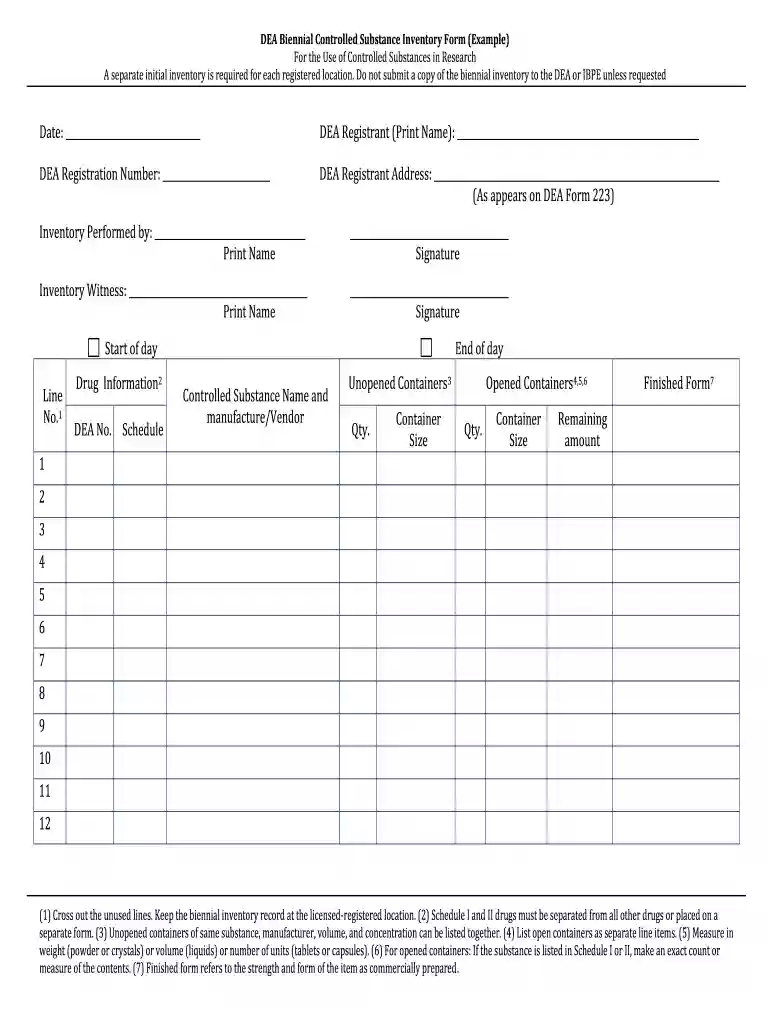
Dea controlled substance inventory log 2026

Get Form
dea biennial inventory form Preview on Page 1

Here's how it works

01. Edit your dea biennial inventory form online
Type text, add images, blackout confidential details, add comments, highlights and more.

02. Sign it in a few clicks
Draw your signature, type it, upload its image, or use your mobile device as a signature pad.

03. Share your form with others
Send dea biennial controlled substance inventory form via email, link, or fax. You can also download it, export it or print it out.

Definition and Meaning of the DEA Controlled Substance Inventory Log

The DEA controlled substance inventory log is an essential document used to track and manage controlled substances within various facilities, including hospitals, pharmacies, and research institutions. It serves as an official record that outlines the inventory of all controlled substances to ensure compliance with the Drug Enforcement Administration (DEA) regulations. This log is crucial for preventing misuse, diversion, and illegal distribution of these substances.

Purpose of the Inventory Log

The primary purpose of the DEA controlled substance inventory log includes:

  • Ensuring accurate record-keeping of all controlled substances within a facility.
  • Facilitating audits and inspections by regulatory authorities.
  • Providing a clear and concise way to document quantities, types, and locations of controlled substances.

Importance of Compliance

Adhering to the regulations set forth by the DEA is paramount. Non-compliance can result in significant legal repercussions, including fines, penalties, and loss of licensure. The inventory log helps maintain accountability and transparency in handling controlled substances.

Steps to Complete the DEA Controlled Substance Inventory Log

Filling out the DEA controlled substance inventory log requires attention to detail and adherence to specific regulations. The following steps offer a guide to ensure proper completion.

  1. Preparation of Inventory:

    • Gather all controlled substances present in the facility.
    • Verify data against previous records or existing logs for accuracy.
  2. Determine the Schedule of Substances:

    • Categorize controlled substances based on their schedules (I-V) as defined by the DEA.
    • Ensure you are aware of the regulations surrounding each schedule, including restrictions and reporting requirements.
  3. Input Information:

    • Record detailed information for each controlled substance, including:
      • Name of the substance
      • Quantity on hand
      • Location within the facility
      • Date of inventory
  4. Verification and Signature:

    • Have the inventory log reviewed and verified by authorized personnel, typically a DEA registrant.
    • Ensure the log is signed by the registrant and a witness, ensuring accountability.
  5. Maintain Records:

    • Store the completed log securely in compliance with DEA guidelines.
    • Keep records for the required retention period as mandated by federal and state regulations.

Examples of Inventory Situations

  • A research facility conducting a study on a new medication must consistently update their inventory log to reflect any changes in the controlled substances they are using.
  • A pharmacy must perform annual audits to reconcile its inventory log with actual stock to prevent discrepancies.

Key Elements of the DEA Controlled Substance Inventory Log

Understanding the key elements of the DEA controlled substance inventory log is essential for effective compliance and record management.

Required Information

Each entry in the log must include:

  • Substance Name: The common name as listed by the DEA.
  • Drug Information: Include the National Drug Code (NDC) when applicable.
  • Quantities: Precise counts of each substance.
  • Location: Specific location within the facility where the substance is stored.

Record Retention Guidelines

The DEA mandates that inventory logs be retained for a minimum of two years. This period is critical for ensuring that facilities can provide evidence of compliance during inspections.

Common Mistakes to Avoid

  • Failing to accurately report discrepancies between the log and physical inventory.
  • Incomplete or missing signatures from authorized personnel.
  • Not updating the log promptly after receiving or disposing of controlled substances.

Legal Use of the DEA Controlled Substance Inventory Log

Utilizing the DEA controlled substance inventory log correctly is vital for compliance with federal regulations. Various aspects of legal use include:

Compliance Requirements

Facilities must comply with the following:

  • Regularly update their inventory logs to reflect changes in stock.
  • Immediately report any discrepancies in inventory to the appropriate authorities.

Regulatory Enforcement

The DEA conducts periodic inspections to ensure compliance. Facilities must be prepared to present their inventory logs during these inspections. Noncompliance can lead to enforcement actions, including penalties or revocation of registration.

Who Typically Uses the DEA Controlled Substance Inventory Log?

The DEA controlled substance inventory log is predominantly used by various entities, including:

decoration image ratings of Dochub

Hospitals and Clinics

Healthcare facilities, including hospitals and outpatient clinics, are required to keep meticulous records of controlled substances used in patient care. This includes medications administered and any substances that are on-site for reference or treatment.

Pharmacies

Community pharmacies must maintain an accurate inventory log to track the controlled substances dispensed to patients, ensuring responsible medication management and adherence to regulatory standards.

Research Institutions

Researchers working with controlled substances must keep a detailed inventory to comply with regulatory requirements and to manage the substances used in their studies effectively.

Veterinary Clinics

Veterinary practices that use controlled substances for treatment must also maintain a comprehensive inventory log, documenting the use and dispensing of these medications for animals.

Important Terms Related to the DEA Controlled Substance Inventory Log

Familiarity with key terms related to the DEA controlled substance inventory log helps streamline the inventory management process.

Controlled Substances

Controlled substances are drugs that are subject to strict regulations due to their potential for abuse and dependence.

Schedule I-V

Controlled substances are classified into five schedules based on their medical use and potential for abuse. This classification impacts how they must be managed and documented.

DEA Registrant

A DEA registrant is an individual or entity authorized by the DEA to handle controlled substances, responsible for maintaining compliance with all regulations.

By understanding these elements, users can proficiently manage their controlled substance inventory, ensure compliance, and avoid legal pitfalls.

be ready to get more

Complete this form in 5 minutes or less

Get form

Got questions?

We have answers to the most popular questions from our customers. If you can't find an answer to your question, please contact us.
Contact us
Record each use of controlled substance. Record amount used, transferred, and/or disposed of, and remaining balance after each use. Ensure date of use/transfer/disposal is recorded and proper units are noted. Ensure CS expiration date is noted on each line item.
The DEA requires a physical inventory of all controlled substances to be conducted every two years for each registered location. The inventory may be taken on any date within two years of the previous inventory date.
Requirements that apply to all controlled substance records required to be kept: Must be complete and accurate. Must be stored at the registered location. Must be kept for two years.
Draw a single line through the incorrect entry, 2. Explain the mistake and indicate the log on which the entry should have been made, 3. Initial or sign the entry, 4. Make the correct entry on the correct page using the current date.
A controlled substance log is a detailed record that tracks the receipt, distribution, and administration of controlled substances within a healthcare facility. It serves as a valuable source of information for regulatory agencies, helping them monitor the flow of these substances and verify compliance.

Security and compliance

At DocHub, your data security is our priority. We follow HIPAA, SOC2, GDPR, and other standards, so you can work on your documents with confidence.

Learn more
ccpa2
pci-dss
gdpr-compliance
hipaa
soc-compliance
be ready to get more

Complete this form in 5 minutes or less

Get form

People also ask

Final answer: U.S. federal law requires inventory records of controlled substance transactions to be kept for at least 2 years. These records help in preventing misuse and illegal distribution of such substances.
The CURES log must contain: The prescribers name, address, telephone number, State license number and DEA number; Date of dispensing; Numeric quantity of controlled substance dispensed; Drug name; National Drug Code (NDC) number; Strength of the prescription (e.g. 10 mg tab, 10 mg/ml); Clients full name;
LogS is directly related to the water solubility of a drug and it is defined as a common solubility unit corresponding to the 10-based logarithm of the solubility of a molecule measured in mol/L.

biennial controlled substance inventory form