




01. Edit your hicfa online
Type text, add images, blackout confidential details, add comments, highlights and more.

Type text, add images, blackout confidential details, add comments, highlights and more.

Draw your signature, type it, upload its image, or use your mobile device as a signature pad.

Send hcfa 1500 form via email, link, or fax. You can also download it, export it or print it out.
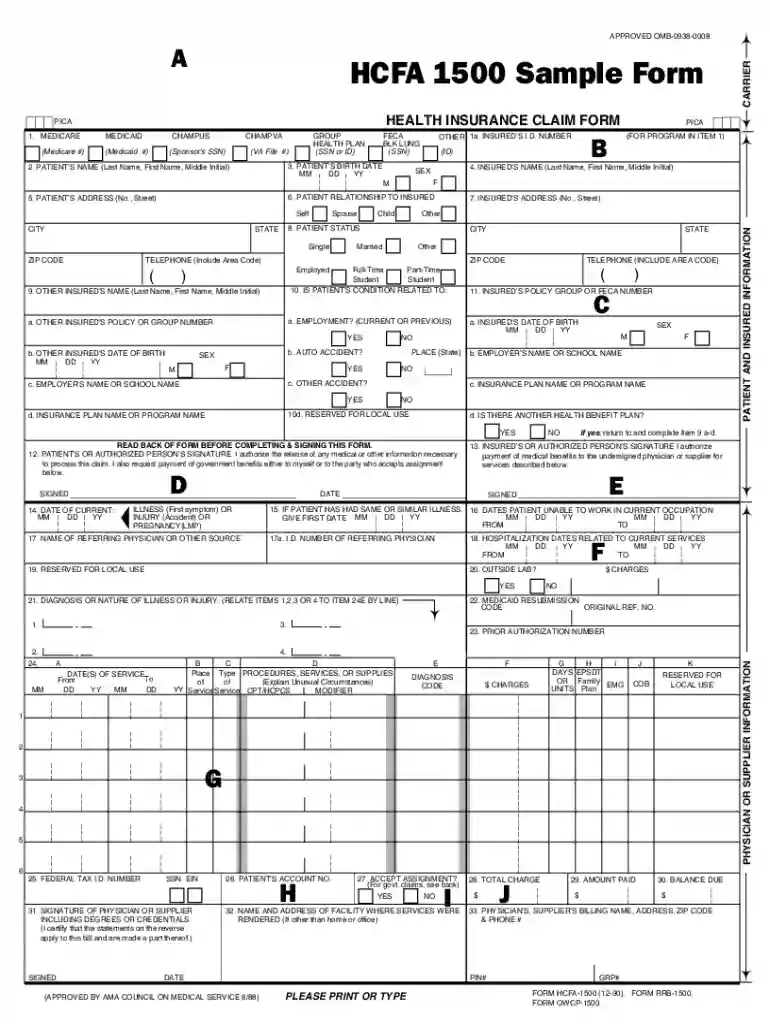
The HICFA 1500 form, officially known as the CMS-1500 form, is primarily used for outpatient medical services. It serves as a universal claim form for submitting health insurance claims for patients covered by various insurance payers, including Medicare and Medicaid. Understanding the intricacies of this form is essential for healthcare providers, administrators, and billing specialists to ensure accurate and timely reimbursement.
The HICFA 1500 form consists of multiple sections that capture critical information related to patient care and billing. Each section must be completed accurately to prevent delays in claims processing. The key components include:
When filling out the HICFA 1500 form, consider the following best practices to enhance accuracy and efficiency:
Certain mistakes can lead to delays or denials in claims processing. Common errors include:
Healthcare providers can submit the HICFA 1500 form through various methods. Each option has its advantages and may be required depending on the payer:
While the HICFA 1500 form is a standard across many insurers, specific payers may have unique requirements or modifications:
Adhering to the rules regarding the HICFA 1500 form’s completion is a legal requirement. Providers must ensure that submitted claims are truthful, accurate, and consistent with the services rendered. Misrepresentation, whether intentional or not, can result in severe penalties, including financial liabilities, loss of provider privileges, or legal action.
A wealth of resources is available to help with accurate form completion:
Navigating the complexities of the HICFA 1500 form is crucial for successful medical billing. By understanding its components, best practices for completion, and submission methods, healthcare providers can enhance their claims processing to ensure timely reimbursement for services rendered.
We've got more versions of the hicfa form. Select the right hicfa version from the list and start editing it straight away!
| Versions | Form popularity | Fillable & printable |
|---|---|---|
| 1990 | 4.8 Satisfied (48 Votes) |
eSignatures are an excellent alternative to traditional signing, as they save time, effort, and costs people spend on printing, scanning, and paper delivery. You can eSign your hcfa 1500 form aflac using a trustworthy and robust online document processing services like DocHub. It complies with main eSignature policies (ESIGN and UETA), so all documents approved there are legally binding and have the same validity as manually signed ones.
In addition to a comprehensive toolset for editing PDFs on mobile phones, DocHub allows you to sign your hcfa 1500 form pdf along the way. Open our editor in your internet browser, make modifications using DocHub’s toolset, and complete your editing by eSigning the completed form.
At DocHub, your data security is our priority. We follow HIPAA, SOC2, GDPR, and other standards, so you can work on your documents with confidence.


In administering the Medicare program, HCFA has primarily engaged in writing regulations and overseeing contractors; for beneficiaries, Medicares bill-payingRead more
by JB Doe The National Uniform Claim Committee (NUCC) released a revised 1500 Claim Form, which is commonly referred to as the CMS-1500. The revised CMS-1500 (02/12)Read more


