






Definition & Meaning of the Waste Logbook Print
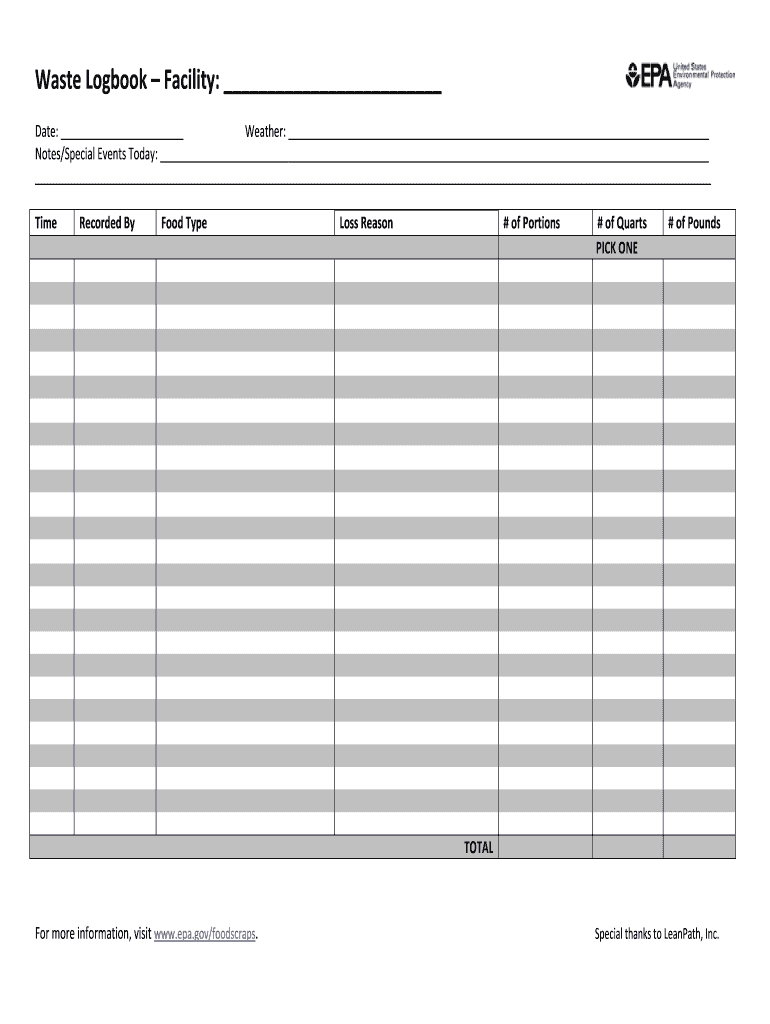
A waste logbook print is a document specifically designed for tracking and recording the pre-consumer and post-consumer food waste generated by a facility. It serves as a formal record that details various types of food waste, including reasons for disposal and quantities involved. This logbook plays a vital role in managing waste efficiently and sustainably, helping businesses adhere to regulations and identify opportunities for waste reduction.
The primary objective of a waste logbook is to provide a clear account of food waste material, which can be useful for auditing purposes, compliance with local and national regulations, and understanding a facility's operational efficiency. By documenting waste accurately, businesses can engage in practices that minimize waste, optimize inventory practices, and ultimately enhance operational sustainability.
Key Elements of the Waste Logbook Print
A comprehensive waste logbook print includes several key elements to ensure efficient tracking and management of food waste. These elements typically involve:
- Date and Time of Record: Capturing the exact moment waste is produced helps maintain accuracy in tracking patterns over time.
- Type of Food Waste: Categorizing food waste (e.g., fruits, vegetables, dairy) assists in identifying specific areas for improvement in inventory management.
- Quantity of Waste: Documenting the amount of food waste helps measure the total waste generated, allowing for better waste reduction strategies.
- Reason for Disposal: Noting why certain items are discarded (spoilage, damage, over-preparation) can inform purchasing and production decisions, reducing future waste.
- Location Within Facility: Tracking where the waste is generated (kitchen, storage, dining areas) can help pinpoint operational inefficiencies.
Each of these elements contributes to a thorough understanding of waste patterns, promoting informed decision-making and accountability.
How to Use the Waste Logbook Print
Utilizing the waste logbook print efficiently requires a systematic approach. The following steps outline how to correctly use this document:
- Immediate Recording: Always record waste immediately after disposal to ensure accuracy. Delays may result in lost details or inaccuracies in the data.
- Consistent Documentation: Maintain regular logs, ideally at designated intervals throughout the day (e.g., at each shift change) to capture daily food waste.
- Review & Analyze Data: Regularly review the collected data to identify trends and areas for potential waste reduction. Weekly or monthly analyses can be particularly beneficial.
- Integrate Findings: Use insights gained from the logbook to adapt purchasing and production practices. For instance, if a particular item consistently generates waste, consider adjusting inventory levels or preparation methods.
- Provide Training: Ensure staff members are trained on how to accurately complete the logbook to uphold the integrity of the data collected.
By following these steps, businesses can leverage the waste logbook print effectively to enhance operational efficiency and waste management strategies.
Steps to Complete the Waste Logbook Print
Completing a waste logbook print involves a detailed process to ensure all relevant information is captured accurately. The steps include:
- Gather Necessary Information: Before initiating the log, collect all relevant data, including types of food items prepared, menu changes, and anticipated spoilage based on historical usage.
- Fill in Each Section: For each instance of waste, fill in the logbook with the required information. This includes the date, time, type of food waste, quantity, reason for disposal, and location.
- Cross-Check with Inventory: Compare waste logs with inventory records to verify that data reflects actual usage and waste.
- Sign and Date Entries: Have the responsible staff member sign and date each entry to provide accountability and traceability.
- Store Logbooks Securely: Ensure that completed logbooks are stored in a secure place for future reference and compliance audits.
These steps help ensure that the waste logbook serves its purpose effectively as a tool for managing food waste.
Who Typically Uses the Waste Logbook Print
The waste logbook print is primarily utilized by various businesses and organizations involved in food preparation and service, including:
- Restaurants: Establishments track food waste to manage costs and identify operational inefficiencies.
- Catering Companies: Catering firms utilize waste logs to ensure that food waste is minimized during large events.
- Food Manufacturing Facilities: These businesses often implement waste tracking to comply with regulatory standards and enhance production processes.
- Grocery Stores: Retailers monitor waste to better manage inventory and reduce losses from spoiled goods.
- Educational Institutions & Hospitals: These organizations often require detailed waste tracking to comply with health regulations and sustainability initiatives.
By understanding who typically uses the waste logbook print, organizations can tailor their waste management strategies to specific industry needs.


Why Should You Use a Waste Logbook Print
Implementing a waste logbook print can bring several benefits to any organization dealing with food waste:
- Regulatory Compliance: Many local and state regulations require the tracking of food waste for environmental sustainability.
- Waste Reduction: By analyzing the recorded data, businesses can effectively identify patterns and areas for improvement, leading to reduced waste generation.
- Cost Savings: Reducing food waste can directly lower food purchase costs, boosting overall profitability.
- Operational Efficiency: Consistent monitoring of food waste fosters a culture of accountability and encourages staff to manage food resources wisely.
- Sustainability Initiatives: Utilizing the waste logbook supports broader sustainability goals by aiding in waste diversion efforts and responsible resource management.
These advantages underscore the importance of maintaining a comprehensive waste logbook to enhance both operational practices and environmental impact.
Examples of Using the Waste Logbook Print
Here are practical examples illustrating how different establishments implement and benefit from using a waste logbook print:
- Restaurant Scenario: A popular diner experiences high levels of vegetable waste. By analyzing their waste logbook, they discover that surplus preparations occur frequently. Adjusting ingredient quantities helps minimize waste, resulting in cost savings.
- Catering Service: A catering company notices significant food waste during large events. They use the logbook to identify trends in over-estimating guest attendance and adjust their planning to reduce surplus.
- Grocery Store Evaluation: A grocery store uses the waste logbook to track spoilage levels. They implement markdown procedures on products nearing expiration, reducing waste while increasing sales.
- Hospital Food Service: The food service department at a hospital documents food waste to comply with health standards. They utilize the data to enhance meal planning, ultimately leading to healthier meal selections and reduced waste.
Through these diverse examples, the adaptability and utility of the waste logbook print across various sectors become evident.