
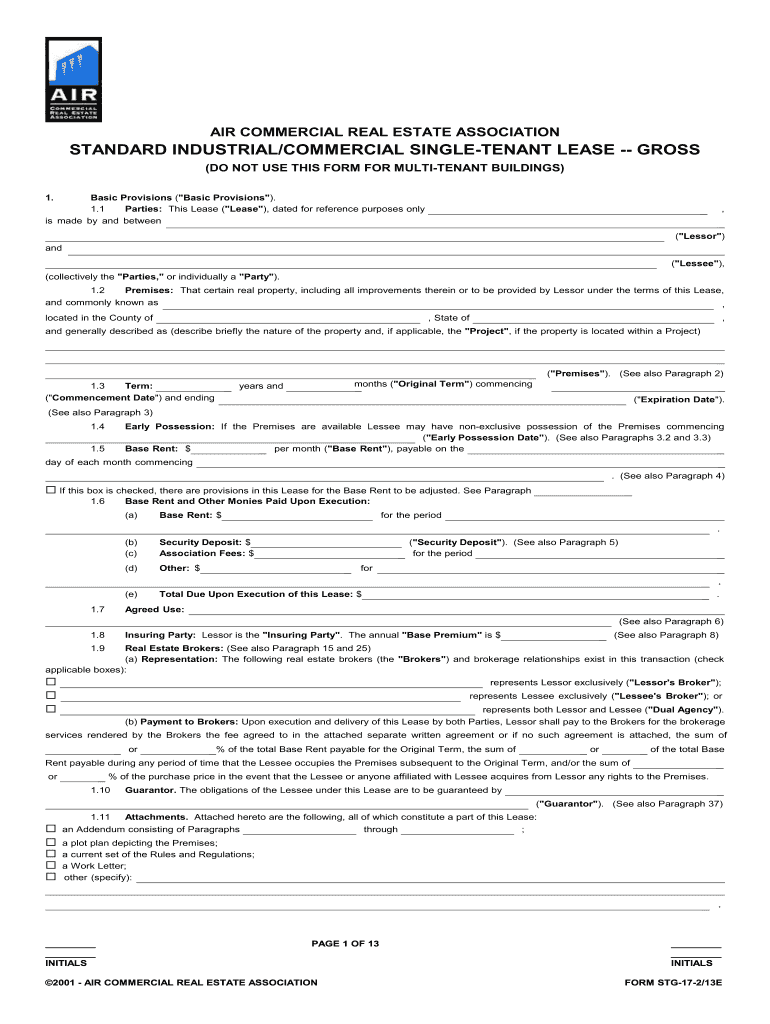







Key Elements of the Standard Industrial/Commercial Single-Tenant Lease – Gross
A standard industrial/commercial single-tenant lease – gross is a crucial legal document that delineates the terms under which a lessor leases their industrial or commercial property to a lessee. This section offers a detailed exploration of its essential components, ensuring that both parties understand their rights and obligations.
Rent and Payment Terms
The lease details the base rent that the lessee agrees to pay, usually outlined in monthly installments. In a gross lease, this amount typically covers all operating expenses, meaning the lessee is not responsible for additional costs such as property taxes, insurance, or maintenance. It is vital for both parties to clearly define:
- Base Rent Amount: Stipulates the monthly rental fee.
- Payment Schedule: Specifies when payments are due (e.g., the first day of each month).
- Late Fees: Outlines any penalties for overdue payments.
Additionally, an understanding of escalation clauses may be necessary, which may cause rent increases at predetermined intervals based on inflation or market rates.
Lease Term and Renewal Options
The duration of the lease is crucial, as it binds both parties for the specified period. The lease should clearly outline:
- Lease Duration: Common terms range from three to ten years, with options for renewal.
- Renewal Conditions: Details how and when either party can initiate lease renewal discussions.
- Rate Adjustments: Clarifies whether rent will be adjusted upon renewal and the methodology for such adjustments.
Defining these terms establishes clear expectations regarding the lease's longevity and potential future financial obligations.
Maintenance and Repairs Responsibilities
Another vital component specifies maintenance duties, particularly in a gross lease where the lessor may retain responsibility for property upkeep. Key points to consider include:
- Lessor Obligations: The lessor is usually accountable for major repairs and property maintenance (e.g., plumbing, structural repairs).
- Lessee Responsibilities: Lessees may need to manage day-to-day maintenance tasks (e.g., cleaning, minor repairs) to maintain the property in good condition.
- Inspection Rights: Often, the lessor retains the right to inspect the property periodically to ensure compliance with maintenance standards.
Clarifying these obligations avoids disputes and ensures that both parties understand their responsibilities.
Default and Termination Provisions
Default clauses outline the consequences if either party fails to fulfill their obligations under the lease. Important considerations include:
- Default Definition: Clearly defining what constitutes default (non-payment, failure to maintain the property).
- Cure Period: Giving the defaulting party a specific timeframe to rectify defaults before further action is taken.
- Termination Rights: Stipulating conditions under which the lessor may terminate the lease, including any notice requirements.
These provisions protect both parties by establishing a clear process for handling defaults, ensuring that neither party is left in uncertainty.
Insurance and Liability Requirements
Both parties should address insurance to mitigate risks associated with property use. Key elements involve:
- Types of Insurance: Typically, the lessor requires the lessee to maintain liability insurance covering accidents occurring on the premises, and the lessor may provide insurance for property damage.
- Coverage Amounts: Minimum coverage amounts that both parties must maintain.
- Indemnification Provisions: Stipulations that protect the lessor against losses associated with the lessee's use of the property.
Establishing insurance requirements is essential for reducing liability risks and ensuring a level of protection for both parties.
Compliance with Laws and Regulations
The lease must also ensure that both parties agree to adhere to all pertinent local, state, and federal regulations that may affect property use. This includes:
- Zoning Laws: Ensuring the property is used in compliance with local zoning regulations.
- Building Codes: Lessees must operate within approved building codes for safety and health.
- Environmental Regulations: Legal obligations regarding waste disposal, hazardous materials, or other environmental impacts must be acknowledged.
Ensuring compliance protects both the lessor and lessee from potential legal repercussions.
Subletting and Assignment Provisions
The lease may contain sections that specify whether the lessee can sublet the property or assign their lease rights to another party. Important considerations include:
- Lessor Approval: Typically, any subletting or assignment must receive prior approval from the lessor.
- Conditions of Assignment: Restrictions may be placed on the type of businesses that can occupy the property under a sublet arrangement.
- Continued Responsibility: Even if the lease is assigned, the original lessee might remain responsible for the lease obligations unless otherwise specified.
These provisions are vital for protecting the interests of the lessor while allowing some flexibility for the lessee.
Security Deposits and Handling
The lease may stipulate a security deposit to protect against potential damages or breaches. This section addresses:
- Amount: Specifies how much the security deposit will be.
- Return Conditions: Outlines circumstances under which the deposit may be retained or must be returned at the lease's conclusion.
- Deductions: States what types of damages or unpaid rent may lead to deductions from the security deposit.
Clearly established security deposit rules provide transparency and protect both parties' financial interests.
Signatures and Execution
Finally, the execution of the lease is crucial for its legality. This includes:
- Signatory Parties: Identification of the individuals or entities that will sign the lease on behalf of the lessor and lessee.
- Date of Signing: Recording the date when the lease is executed.
- Witness Signatures: In some jurisdictions, having a witness may be necessary to validate the lease.
Ensuring that the lease is properly executed solidifies its enforceability under the law.




