




01. Edit your form online
Type text, add images, blackout confidential details, add comments, highlights and more.

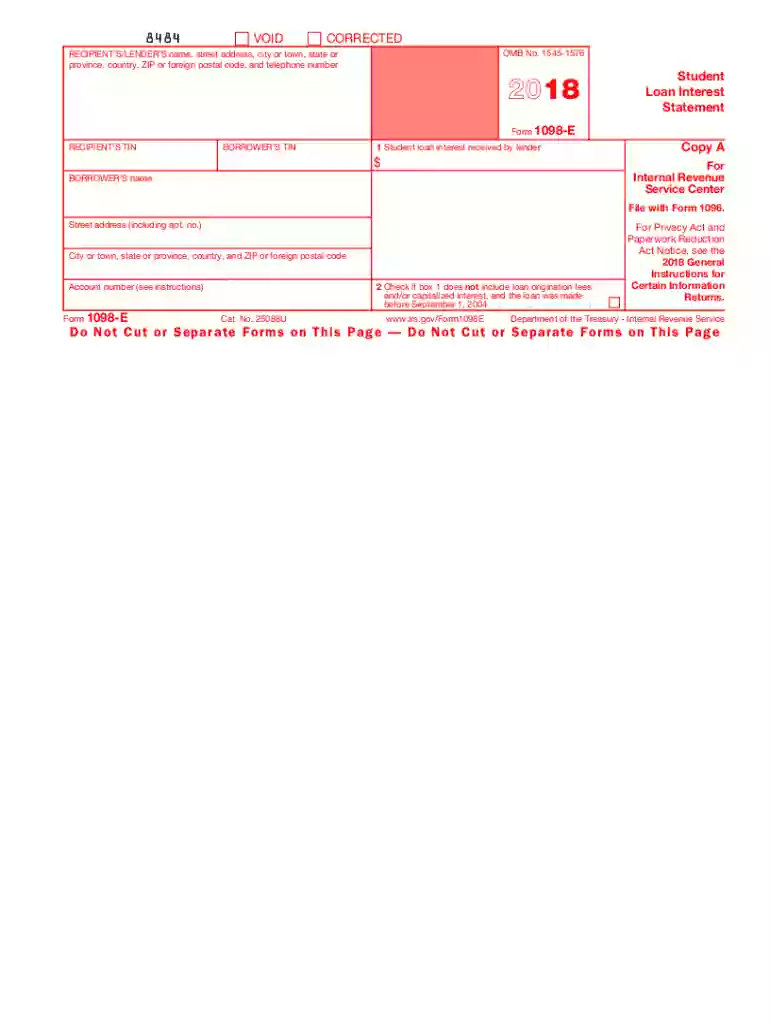
Type text, add images, blackout confidential details, add comments, highlights and more.

Draw your signature, type it, upload its image, or use your mobile device as a signature pad.

Send it via email, link, or fax. You can also download it, export it or print it out.
The 1098 form is primarily used for tax reporting purposes in the United States. It reports various types of payments made by individuals or entities, which may affect tax calculations. The most common variants include 1098-E for student loan interest, 1098-T for tuition payments, 1098-C for charitable contributions of property, and 1098-MORT for mortgage interest. Each variant serves to document specific transactions and inform taxpayers of potential deductions or credits, aiding them in preparing accurate tax returns.
To effectively use a 1098 form, recipients should understand the type of expenses it covers and how this information can be leveraged during tax filing. For example:
Individuals should compare the information on these forms with their records to ensure accuracy. This verification prevents discrepancies during tax submission and assists in maximizing eligible deductions.
Typically, the institutions involved in the reported transactions issue the necessary 1098 form by January 31 each year. For example:
Taxpayers can receive these forms through mail or digitally, depending on their preference and the issuer's policies. If the form isn't received by early February, individuals should contact the relevant institution to request a copy.
The completion of the 1098 form typically involves detailing information given by the issuer, but for informational filing:
For businesses or large entities issuing the form, precise record-keeping and adherence to IRS guidelines regarding reportable transactions and thresholds are crucial.
Every 1098 form includes specific fields and information unique to its purpose:
Each element provides the IRS and taxpayers with structured data to accurately assess applicable deductions or credits.
The entity directly associated with the financial transaction is responsible for issuing the 1098 form:
These entities are responsible for ensuring the forms are accurate and distributed to taxpayers and the IRS within the specified timeframes.
The Internal Revenue Service sets out specific rules regarding the issuance, filing, and use of the 1098 forms. These guidelines specify thresholds for reported payments, deadlines for form distribution, and acceptable uses for tax deductions or credits. Taxpayers and issuers alike must adhere to these requirements to ensure compliance and avoid potential penalties or audits.
Understanding the timeline associated with the 1098 forms is crucial:
Failure to file or distribute forms by these dates may result in penalties for the issuing institution, and potential delays in taxpayer filings.
Failure to accurately file or distribute the 1098 forms can result in severe penalties. For institutions that fail to meet IRS deadlines, fines can range based on the delay's duration and the number of forms involved. Taxpayers who inaccurately report or omit these forms when filing can face audits, fines, or denied deductions. Prompt and accurate compliance helps avoid these consequences and ensures that tax processes run smoothly.
Taxpayers and institutions can choose between digital and paper options for receiving or filing the 1098 forms. Digital versions are often preferred for their convenience and eco-friendliness, yet paper forms remain a staple for those less comfortable with technology. Regardless of the format, both forms hold the same validity and should be securely stored for future tax-related purposes or audits.
Individual scenarios illuminate the form's practical application:
These examples highlight the form's value in providing accurate tax benefits.
We've got more versions of the 1098 form form. Select the right 1098 form version from the list and start editing it straight away!
| Versions | Form popularity | Fillable & printable |
|---|---|---|
| 2025 | 4.2 Satisfied (44 Votes) | |
| 2024 | 4.7 Satisfied (41 Votes) | |
| 2023 | 4.6 Satisfied (51 Votes) | |
| 2022 | 4.7 Satisfied (24 Votes) | |
| 2021 | 4.8 Satisfied (60 Votes) | |
| 2020 | 4.3 Satisfied (92 Votes) | |
| 2019 | 4.3 Satisfied (239 Votes) | |
| 2018 | 4.2 Satisfied (43 Votes) | |
| 2017 | 4.4 Satisfied (216 Votes) | |
| 2016 | 4.4 Satisfied (120 Votes) | |
| 2015 | 4 Satisfied (41 Votes) | |
| 2014 | 4 Satisfied (52 Votes) | |
| 2013 | 4 Satisfied (29 Votes) | |
| 2012 | 4.2 Satisfied (35 Votes) | |
| 2011 | 4.2 Satisfied (45 Votes) |
At DocHub, your data security is our priority. We follow HIPAA, SOC2, GDPR, and other standards, so you can work on your documents with confidence.
A college or university that received qualified tuition and related expenses on your behalf is required to file Form 1098-T, above, with the Internal RevenueRead more
Jan 23, 2026 Use Form 1098 (Info Copy Only) to report mortgage interest of $600 or more received by you during the year in the course of your trade orRead more
Jan 31, 2018 If you receive a Form 1098 from the cooper- ative housing corporation, the form should show only the amount you can deduct. SBA disaster homeRead more


