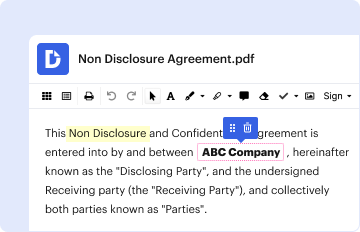
Type text, add images, blackout confidential details, add comments, highlights and more.
02. Sign it in a few clicks
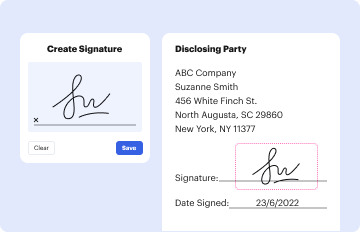
Draw your signature, type it, upload its image, or use your mobile device as a signature pad.
03. Share your form with others
Send it via email, link, or fax. You can also download it, export it or print it out.
How to use or fill out nv grant deed with our platform
Ease of Setup
DocHub User Ratings on G2
Ease of Use
DocHub User Ratings on G2
Click ‘Get Form’ to open the nv grant deed in the editor.
Begin by entering the APN # in the designated field at the top of the form. This is essential for identifying the property.
Fill in the 'Recording Requested By' section with your name and contact information, ensuring accuracy for future correspondence.
In the 'Grant, Bargain and Sale Deed' section, enter the names of both Grantor(s) and Grantee(s). Make sure to specify how they will hold title (e.g., joint tenants).
Provide a detailed legal description of the property in the space provided or attach it as Exhibit A if necessary.
Complete the signature section by signing and printing your name, along with filling out any notary requirements as needed.
Start using our platform today to easily complete your nv grant deed online for free!
A grant deed is most commonly seen when the grantee is acquiring title in a tax or foreclosure sale. General warranty deeds. A general warranty deed will almost always be required when the buyer is obtaining a mortgage to finance the purchase.
What type of grant deed is used in Nevada?
The most common deed form in Nevada is the Grant Bargain and Sale Deed. This is a type of deed that typically involves two key elements. First, it warrants that the seller has not conveyed the property to another person.
Whats the difference between a grant deed and a trust deed?
Once a grant deed has been executed, the grantor is usually no longer involved with the real estate. On the other hand, with a deed of trust, the borrower and the lender have an ongoing relationship until the loan is paid off or the property is transferred to another party.
What is a grant deed in Nevada?
With a grant deed, the grantor is granting their interest in a property to the grantee. It is guaranteeing that the property hasnt been transferred to any other grantee, and that it is free from any encumbrances, such as liens or taxes.
What are the disadvantages of a grant deed?
☞ No Safeguards Against Undisclosed Defects: A grant deed typically does not include any protection for the grantee against defects in the property that the grantor did not disclose. The grantee may be responsible for any liens or encumbrances on the property that the grantor did not disclose.
Related Searches
Nevada grant deed templateNevada grant deed pdfNevada grant deed exampleNevada grant deed form pdfNevada grant deed form onlineNevada quit claim deed PDFGrant, Bargain, Sale deed NevadaQuit Claim Deed Nevada
Security and compliance
At DocHub, your data security is our priority. We follow HIPAA, SOC2, GDPR, and other standards, so you can work on your documents with confidence.
Jan 30, 2020 GRANT, BARGAIN, SALE DEED. THIS INDENTURE WITNESSETH,. That Nevada Health and Bioscience Asset Corporation, a Nevada non-profit corporation,.
Cookie consent notice
This site uses cookies to enhance site navigation and personalize your experience.
By using this site you agree to our use of cookies as described in our Privacy Notice.
You can modify your selections by visiting our Cookie and Advertising Notice.